


BeyondHeadlines News Desk
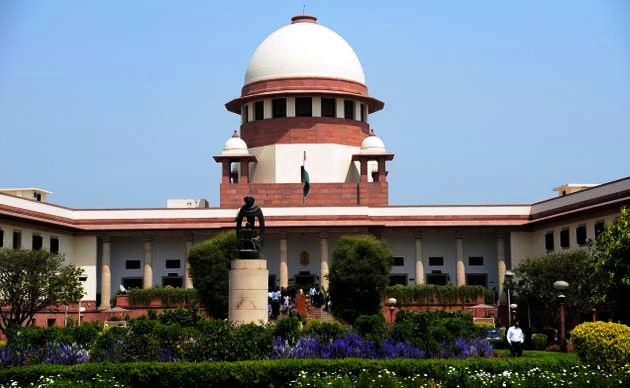
New Delhi: Asian Centre for Human Rights (ACHR) has expressed its regret over today’s Supreme Court (SC) judgment rejecting Devinder Singh Bhullar’s plea to commute his death penalty to life sentence on the ground that he underwent great agony for 11 years awaiting the President’s decision on his mercy plea.
“It is an opportunity lost for recognising ‘death row syndrome’ i.e. the traumatic stress imposed on a prisoner by having to wait on prison wings set aside for those sentenced to death,” stated ACHR Director Suhas Chakma.
“The European Court of Human Rights in its judgement in the case of Soering v United Kingdom has already recognised ‘death row syndrome’ to be in violation of Article 3 of the European Convention on Human Rights relating to torture, inhuman and degrading treatment, bearing in mind the age and mental well-being of the person concerned and the conditions and length of detention on death row,” he added.
“Mr Bhullar’s case calls for development of criteria for consideration of mercy pleas by the President. Since Mr. Justice M.B Shah in his dissenting judgment held that confessional statement of Bhullar as recorded by the investigating officer cannot be the sole basis for awarding death sentence to him, President Patil should have taken the dissenting judgement into consideration as she had commuted death sentences into life imprisonment for death-row convicts in whose cases there was no dissenting opinion of any judge. India’s tilt against political crimes is palpable.”
The decisions of the Government of India with respect to mercy pleas have been arbitrary, discriminatory, secretive and based on political considerations.
Even though all death row convicts are equal before the law after their conviction, the Government of India has been arbitrarily picking up death-row convicts to secretly hang them.
“After this judgement, India will have to resume execution including of 17 death row convicts who had filed petitions before the Courts on the grounds of delay. India must decide whether it wants the tag of the top five executioners of the world along with China, Iran, Saudi Arabia and Iraq. During 2001 to 2011, India considered cases of at least 5,776 death row convicts i.e. 4,321 convicts whose death sentences were commuted to life sentences and 1,455 convicts whose death sentence were confirmed by the Courts,” explained Chakma.
ACHR has called upon the Government of India to join increasing members of Members States of the United Nations which are abolishing death penalty and put a moratorium on death penalty with the aim to ultimately abolish death penalty.