

As GIC denies providing insurance to Kudankulam reactors
BeyondHeadlines News Desk
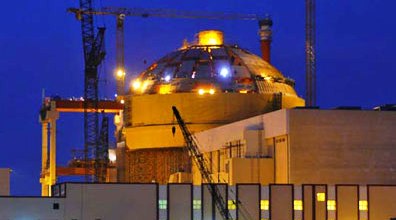
New Delhi : According to an RTI response from General Insurance Corporation of India (GIC), Kudankulam reactors will not be insured by them. The RTI request was filed by Greenpeace on the 12th of March and GIC responded to the request on the 25th of March. In its response, GIC stated that, “No insurance is offered by GIC for unit number 3&4 at Kudankulam”. It even goes on to say that, “No official communication between NPCIL and GIC pertaining to the issue has taken place”.
The Cabinet Committee on Security (CCS) gave financial clearance to build two additional reactors at Kudankulam based on information submitted by the Department of Atomic Energy (DAE) and the Nuclear Power Corporation of India (NPCIL). Officials from the DAE had stated that they were working out an insurance package with GIC for the two additional reactors at Kudankulam. To move forward, DAE required a clearance from the Election Commission. The EC granted its approval late last week.
Hozefa Merchant, Nuclear Campaigner at Greenpeace India pointed, “GIC’s denial proves that the citizens as well as the democratic institutions of this country are deliberately being misled by the DAE and NPCIL. The financial clearance granted by the CCS is therefore questionable. Also the timing of EC’s approval could mislead the election process and give unfair advantage to other contestants”.
Talks between India and Russia had reached a point of stagnation as Russian nuclear supplier was unwilling to take on the liability in case of an accident. Officials from the Department of Atomic Energy (DAE) had stated that they were in conversation with GIC to formulate a possible policy that could provide the liability cover while addressing the concerns of its Russian counterparts. However, GIC could not raise enough funds from local insurers and needed international insurance companies to raise capital.
“If GIC has not offered any insurance then it makes an already shaky situation even more insecure. It also goes on to illustrate how the most important stakeholder in this debate – the public, or rather the potential victims, is either kept in dark or misled”, added Hozefa Merchant.
The objective of including supplier liability is to ensure total accountability across the supply chain. If the accountability is limited to operators then it shields the suppliers from legal and financial repercussions. If the financial repercussions are tough, it also acts as a deterrent that prevents complacent and unsafe practises. However, it seems that NPCIL, DAE as well as the UPA led government are least bothered to recognise the importance of the Nuclear Liability Act. They seem to be adamant to bypass and undermine the Nuclear Liability Act. They seem to be working in the interest of foreign nuclear suppliers by deliberately misleading the people of this country.
“Nuclear supplier liability, insurance policy and the total cost of the project as well as the exact cost per unit of electricity, these are not matters of national security. The fact that NPCIL refuses to come clean on these details further strengthens public suspicion and mistrust in the Indian nuclear establishment as well as the current UPA led government. People who live close to nuclear power plants have a right to know the type of policy that covers them from a nuclear accident”, stated Hozefa Merchant.
The EC approval comes at time when the nation has just started exercising its democratic right to vote. Such approvals not only mislead the citizens of this country but also provide an unfair advantage to the ruling government over other political parties contesting the elections. The Election Commission must review its decision on Kudankulam reactors 3 & 4.