


Rampur: Azam Khan is often seen as having two sides. The image most familiar through the media is that of the Muslim leader in a black cap and white kurta-pyjama.
This Azam Khan refers to the Prime Minister as Wazir-e-Azam. He infuses his political rhetoric with Urdu, positions himself as a constant irritant to the RSS, and embodies the image of a Muslim leader.
He is seen as a dominant figure in Uttar Pradesh politics, with Maulana Muhammad Ali Jauhar University closely linked to his name. Newspapers describe him as a powerful Muslim leader, and many Muslims, even from a distance, take pride in him.
But there is another side to him, one that becomes clear only in Rampur: a semblance of dictatorship, a hunger for wealth, a display of power and arrogance, and, above all, a disregard for human rights.
When I arrived in Rampur, I witnessed a different side. He saw Maulana Mohammad Ali Jauhar University—founded in the name of the nation—functioning as Azam Khan’s personal domain.
I dare to reveal this other side of Azam Khan, and to give voice to the pain of those whose homes were demolished to make way for his property.
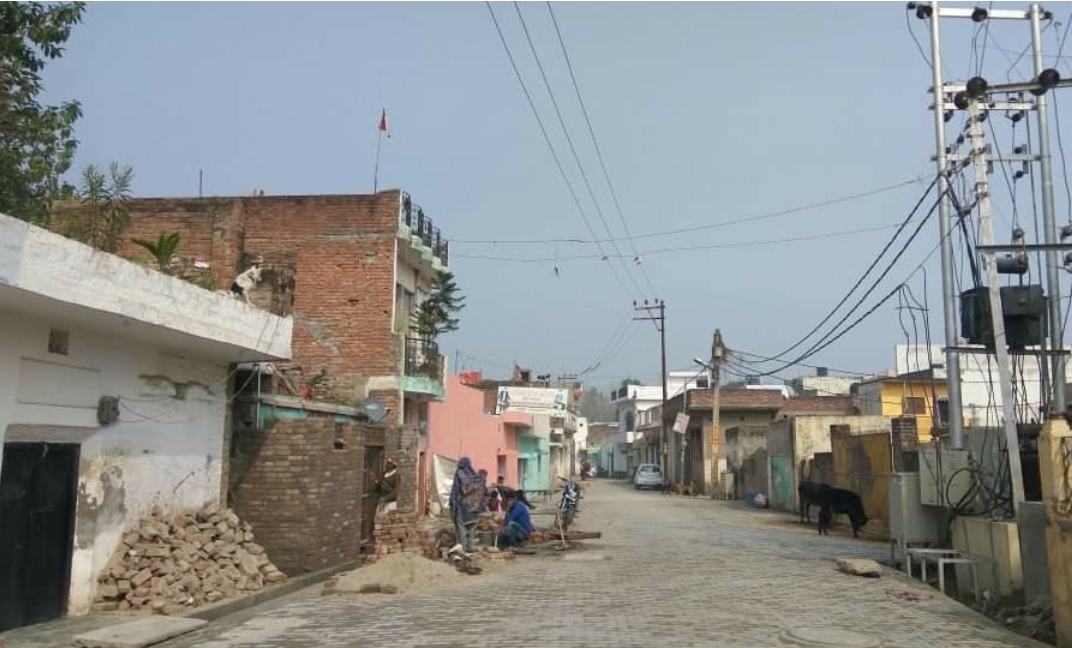
The story of Uttar Pradesh cabinet minister Azam Khan’s authoritarian rule begins in Sarai Gate, also known as Mohalla Ghosiyan, just off Maulana Muhammad Ali Jauhar Marg, near the imposing Maulana Muhammad Ali Jauhar University.
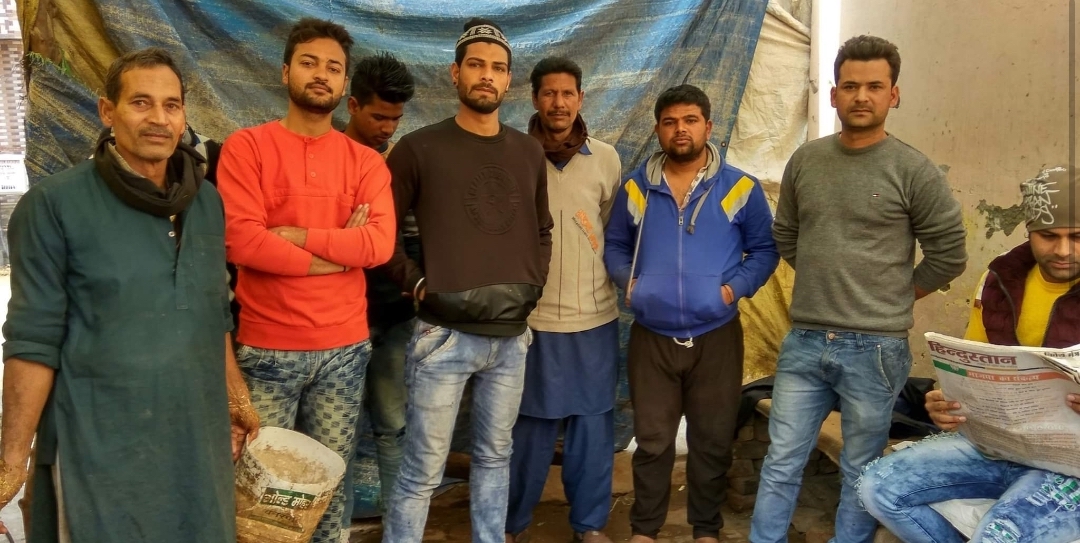
“Ishaq Mian, 42, says, ‘Even though the fear of Azam Khan runs deep across Rampur, we will not remain silent—even if it costs us our lives.’”
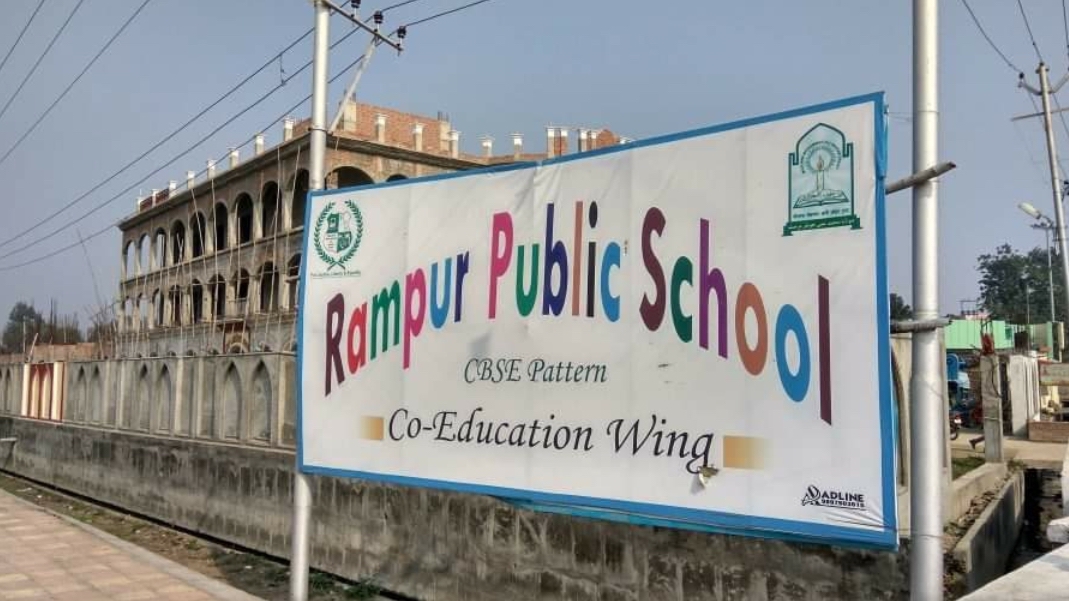
It should be noted that Ghosiyan is the same neighborhood where the homes of 47 poor families from the Ghosi community were demolished to make way for Azam Khan’s Rampur Public School. A playground for children was deemed necessary, and more than 47 families paid the price with the destruction of their homes.
Their pleas went unheard, their suffering unacknowledged. Like the decree of a king, their houses were emptied in one stroke and then razed to the ground. Left homeless, these families went from door to door seeking help, but few were willing to listen—such was the fear of Azam Khan.
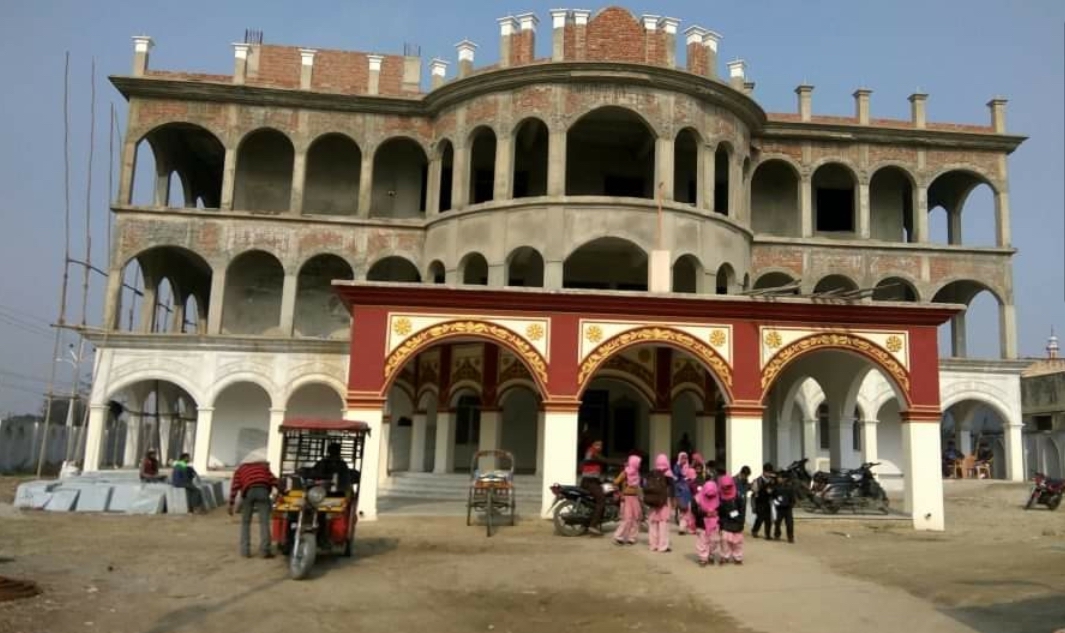
In fact, this land originally belonged to the Sunni Central Waqf Board and was designated for the construction of an orphanage. When that project did not materialize, the board rented the land to members of the Ghosi community, who paid rent and kept the receipts as proof. On this basis, the administration later allotted the land to them as well. It is important to note that Azam Khan also headed the Waqf Department in Uttar Pradesh.
Abdul Ishaq recalls, “We will never forget October 15, 2016, and the atrocities of Azam Khan. A massive contingent of the Provincial Armed Constabulary (PAC) and other armed forces demolished our 25-year-old homes and everything inside them. Our women and children were taken to Civil Lines, while we men were forced to flee.”
He continues, “During the demolition, the media was blocked on Maulana Muhammad Ali Jauhar Road. Anyone who tried to enter had their cameras broken. Reporters were only allowed in after all the debris had been cleared. And besides, which media outlet here has the courage to report against Azam Khan?” Ishaq’s account is supported by two local journalists.
Fifty-five-year-old Shakir Ali accuses Azam Khan of exploiting the poor to benefit the wealthy. “Everyone crushes the poor anyway. He took everything from us, not even leaving a single brick of our house behind,” he says.
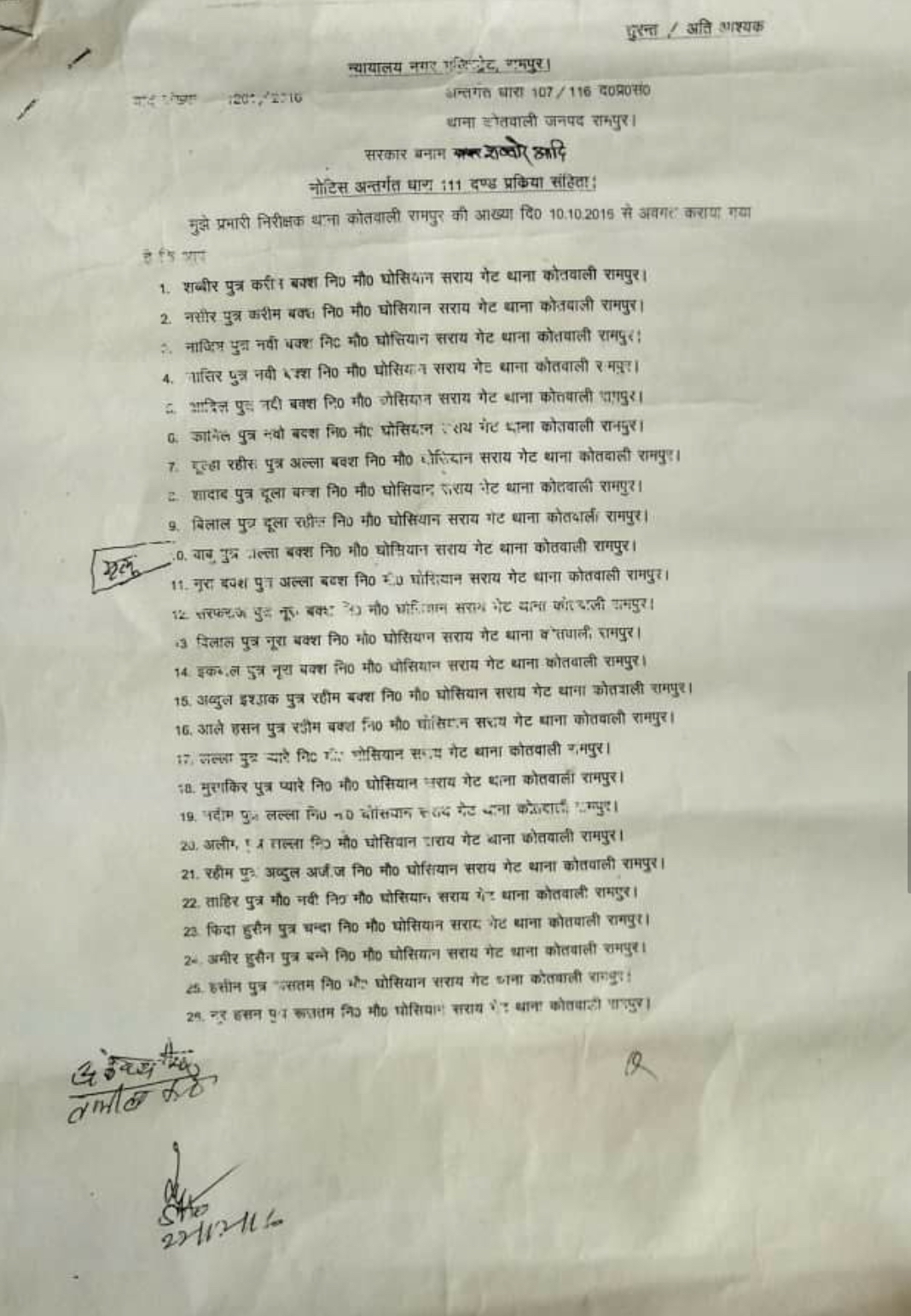
Locals report that 32 people have been charged in connection with this case. Three individuals, including one man and two women, reportedly died of shock. Those who had donated land for the school were promised compensation of up to two lakh rupees; however, only 13–14 out of 56 donors received payments, and the amounts were minimal.
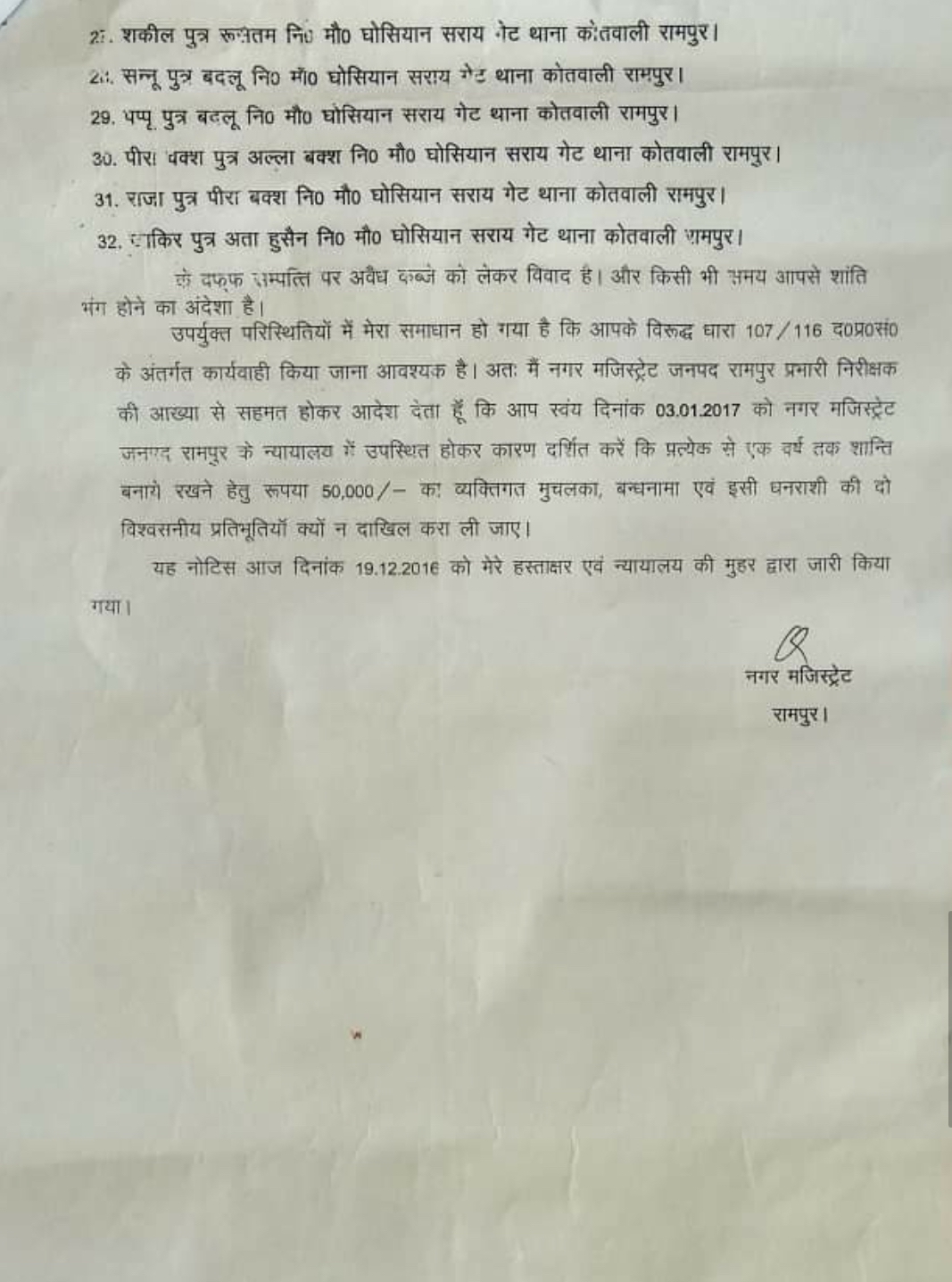 Nineteen-year-old Imran Ali says, “Until now, people here have always voted for Azam Khan. I too will be voting for the first time this year, but my first vote will be against him. Our family’s livelihoods have been taken away.”
Meanwhile, 32-year-old Shabbir Ali, who lives in the same area, says, “Development will prevail this time too; Azam Khan will win. You tell me, can everyone be happy with you? Azam Khan will soon launch a scheme for cattle herders. And anyway, the houses were demolished for the school. The school has started, and the fee is only 20 rupees.”
However, he also notes that no child from this neighborhood actually attends the school; local children study elsewhere, paying much higher fees.
Twenty-four-year-old Sarfaraz Ali adds, “The school doesn’t enroll our children. The fee is 20 rupees in name only—nursery books cost 2,800 rupees, uniforms 1,500 rupees, and there are many other charges. The school was just an excuse; the real aim was to take over the land. Now the Waqf lands are transferred under their trust.”
Attempts to obtain a comment from the school administration were unsuccessful, as they declined to speak to the media on any issue.
According to Faisal Khan Lala, vice president of the Minority Cell of the Uttar Pradesh Congress Committee, “Minister Azam Khan misused his position, illegally seizing land and quickly constructing his school. When a playground was needed, he targeted land belonging to an orphanage, where members of the Ghosi community had lived for 60–70 years. Initially, they were threatened with eviction, but when they protested, officials offered bribes and proposed giving up only part of their land. Many complied, and the administration allotted land to several others, with documents available to residents. However, Azam Khan sought the entire property. Suddenly, notices were posted on their homes at night, electricity to the area was cut off at midnight, and by morning, nearly two thousand PAC personnel were deployed to demolish the structures.”
Faisal Lala says he had met with Governor Ram Naik about this matter even before the incident, during which the Governor reprimanded both the administration and the Waqf Board. He has now filed a complaint with the National Human Rights Commission.
This is not an isolated incident in Rampur. Numerous accounts of the Waqf Board’s alleged “oppression” exist in the city, and according to residents, many were carried out at Azam Khan’s direction.
Valmiki Basti, near Ghosiyan Basti, has its own troubling story. The municipal corporation initially sought to demolish the settlement, located in front of Bapu Mall in the Topkhana area, to make way for a parking lot. When that plan failed, several homes were demolished under the pretext of widening the road. Houses built with residents’ hard-earned money were destroyed. Locals say these actions were directed by Azam Khan. Yet the fear of him is so pervasive that even today, few are willing to speak openly.
People do, however, share the truth in hushed tones. There are reports that some residents were offered jobs or other incentives in an attempt to resolve the matter, but most received nothing except humiliation and hardship. Lacking influence, their grievances largely went unheard.
Eklavya Valmiki says, “Now things are settled. The minister has embraced us. People have got jobs, land—everything.” Valmiki is associated with the Congress party. When asked whether this is genuinely true or merely a matter of political alliance, he smiles and replies, “Brother, you’re smart enough. Now you tell me how to speak against them. If the alliance doesn’t happen, then I’ll tell you the whole truth. Watch our video on YouTube; we’ll be at the forefront.”
Attempts to speak with several other families in the area were unsuccessful, as they declined to discuss the matter.
The Valmiki Basti incident took place in April 2015. At that time, 80 Valmiki families reportedly threatened to convert to Islam, arguing that if they did, Azam Khan—the local MLA and influential state minister—would protect their homes from demolition. The situation attracted media attention, and following Azam Khan’s intervention, the Municipal Corporation reportedly backed down, halting plans to build a parking lot.
However, several homes were later demolished during road-widening efforts. Locals claim that some families were evicted even before the mall was constructed. They assert that the land rightfully belongs to them, having been allotted by the Social Welfare Department 60 years ago, and they possess the official documents to support their claim.
Rampur, the city of Nawabs, contains many Waqf properties—and where there are Waqf properties, there are also those who exploit them. After visiting Rampur and speaking with residents, I discovered a troubling reality: some of these exploiters operate within the framework of existing regulations. While the claims made by the people in this story may not be fully verified, they warrant careful investigation.
Why was land that generates lakhs of rupees in annual rent leased to a politician’s trust for just one rupee? Especially when serious allegations have been made against a prominent community leader, an inquiry is essential. The question remains: who would demand an investigation into a man who has cultivated a strong public persona and established himself as a leading figure in the community, particularly when he is the second most powerful political leader in the state, and even the law seems constrained by his influence?