
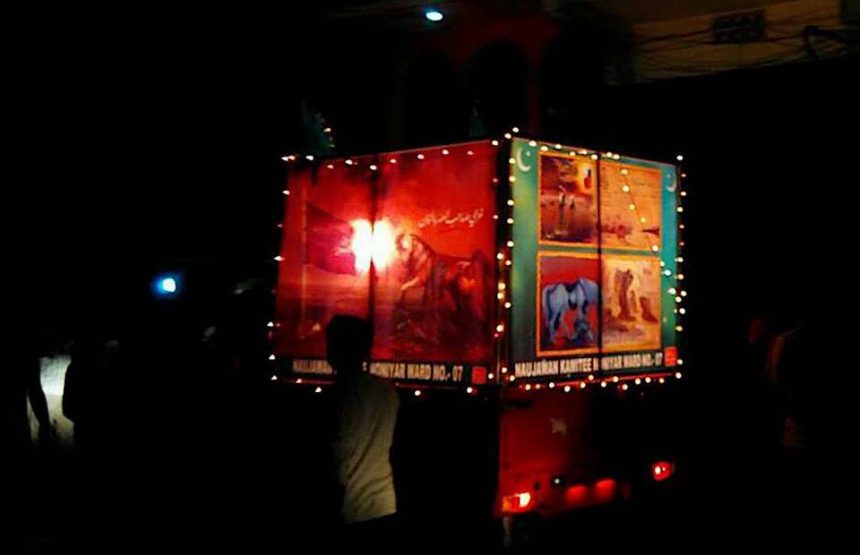
“Is it our misfortune or some special divine expediency that in this ‘paradise-like’ land of India, every festival has now become another name for ‘Hindu-Muslim riots’. So, if during the ten days of Muharram, everyone was keenly listening for news of riots, what is there to be surprised about?…”
These significant lines are from the English translation of an editorial originally published on 26 July 1926—exactly 99 years ago—in Roznama Hamdard, a renowned Urdu-language daily newspaper in India. The editorial was written by Mohammad Ali Jauhar, a prominent Indian freedom fighter, scholar, and journalist.
Reading this editorial, one realizes that even after a century, nothing has changed in India. A hundred years ago, political leaders exploited Muharram for their own gain—and today, the same patterns persist. The politicization and weaponization of religious festivals continue to this day.
The political use of Muharram in India is not difficult to understand. For instance, during a rally in Kolkata on June 1, India’s Home Minister Amit Shah criticized West Bengal Chief Minister Mamata Banerjee, claiming that an attack on the Hindu festival of Saraswati Puja had occurred to facilitate a Muharram procession. This statement reflects how religious events are often drawn into political discourse.
On the night of Sunday, July 5, an unknown individual threw pork into the premises of the Idgah Mosque in the Panjabari area of Guwahati. In response, Assam’s Chief Minister, Himanta Biswa Sarma, made a controversial statement on the social media platform X (formerly Twitter). He wrote: “Those who throw beef into temples and Namghars to drive out Hindus should not forget that tomorrow someone might start throwing pork into mosques.” He later tempered his remarks slightly by adding, “To maintain harmony in society, it is essential that we all respect all places of worship—be it a temple or a mosque.”
Earlier in June, during the festival of Eid al-Adha, communal tensions flared in Assam’s Dhubri district after reports emerged of meat allegedly being found near a Hindu temple. The incident, involving suspected beef near the Hanuman temple, sparked religious sensitivities and unrest. In response, Chief Minister Himanta Biswa Sarma issued a controversial “shoot-at-sight” order. At the heart of it, many believe the incident—like others before it—was politically motivated. It appeared to be part of a broader strategy to inflame communal divisions ahead of upcoming elections, aimed at securing political power.
Bihar is set to hold elections this year, and during Muharram, the state reported the highest number of incidents related to communal tension. Media coverage also heavily focused on Bihar. Amid this, politics around Muharram became increasingly visible. The Bharatiya Janata Party (BJP) targeted opposition leader Tejashwi Yadav over the unrest. Amit Malviya, the BJP’s national IT cell head, posted on social media blaming Tejashwi Yadav for fueling the violence. He linked the tensions to Yadav’s recent use of the slogan “Shahabuddin Zindabad” at a public event, referring to the politician Mohammad Shahabuddin. Malviya claimed that the violence across several districts was the outcome of what he described as a “Shahabuddinwadi mentality” that Yadav was promoting.
Shockingly, even after Muharram had passed, it continued to be used as a tool to spread communal hatred. On July 9, in Biju Bigha village in Bihar’s Nawada district, Jitendra Pratap Singh—a leader associated with the Vishwa Hindu Parishad and Bajrang Dal—addressed a public gathering where he urged Hindus to arm themselves with swords and sticks. Referring to Muharram processions, he criticized Hindus for spending money on expensive clothing during festivals, suggesting instead that they should invest in weapons for self-defense.
Media Amplified the Politics of Hatred
The media played a significant role in fueling communal divisions, often aligning with the political narrative of hate. During the Muharram processions that led to clashes, many news channels provided extensive coverage—but with a clear bias. In most cases, they directly blamed the Muslim community for the violence.
From Bihar and Uttar Pradesh to Rajasthan and Madhya Pradesh, several channels circulated CCTV footage and video clips showing individuals identified as Muslims clashing with police, throwing stones, or carrying sticks. In contrast, the same media largely ignored similar incidents during Hindu festivals like Ram Navami, where armed processions and acts of provocation were reported. This selective coverage contributed to a one-sided portrayal of communal conflict.
The truth is, the media has played a significant role in spreading communal fear and hatred. A striking example came on June 26, when police in Lucknow arrested a man named Salahuddin and recovered a small cache of weapons and ammunition. Almost immediately, several media outlets reported exaggerated and misleading claims—stating that 300 illegal weapons and 20 sacks containing 50,000 cartridges had been seized from his home, just days before Muharram. Some social media users even claimed the number of recovered weapons was as high as 3,000.
These inflated reports appeared designed to stoke communal tensions by linking the incident to Muharram. However, a fact-check by Alt News revealed a very different story. According to the police, Salahuddin—68 years old—was arrested in the Mirzaganj area of Malihabad by a joint team from Malihabad and Rahimabad police stations. The actual items recovered included three .32 bore pistols, one .315 bore country-made pistol, two .22 bore country-made pistols, one .22 bore rifle, seven airguns, approximately 140 cartridges of various calibers, some empty shells, and tools such as knives, saws, and hooks—along with deer skins.
In total, only 14 weapons and around 140 cartridges were found, and there was no evidence linking the incident to Muharram. This case highlights how exaggerated and misleading media coverage can dangerously distort facts to serve a communal narrative.
Similarly, on July 6, 2025, during Muharram, a video circulated showing a person sitting atop several loudspeakers holding a large flag featuring a moon and star symbol. Some news channels aired the video, claiming that the Pakistani national flag was waved during a Muharram procession in Paramatihana village, Sono block, Jamui district, Bihar. Anchors repeatedly referred to it as Pakistan’s national flag, fueling communal hatred across many media outlets.
However, a fact-check by Alt News revealed this to be false. The flag shown in the video is not the Pakistani national flag but an Islamic religious flag. It is black with a white crescent moon and star, distinct from Pakistan’s green national flag. This misinformation contributed to spreading unnecessary communal tensions.
Similarly, during a Muharram procession in Simdega, Jharkhand, some media outlets reported that a young man was seen brandishing a weapon. Taking the reports seriously, the police launched an immediate investigation and questioned the individual involved. The investigation later revealed that the so-called “weapon” was not a real gun, but actually a lighter designed to look like a gun.
Social media also played a significant role in spreading hatred through fake news and misinformation. One viral video claimed that Muslims chanted slogans of “Pakistan Zindabad” during a Muharram procession in Deoria, Uttar Pradesh. The posts accompanying the video often included offensive language targeting the Muslim community. However, a fact-check by Alt News revealed that the official Twitter account of the Deoria Police had dismissed these claims. According to the police, the video showed a Muharram procession organized by the Five Star Club, where participants were actually chanting “Five Star Zindabad,” not “Pakistan Zindabad.” The police also confirmed that the procession took place peacefully under police supervision.
One-Sided Police Action
One notable aspect of these events was the unusually active response of the police—an intensity rarely seen during other festivals like Ram Navami. In cases of unrest, police action was swift and forceful, with widespread use of batons. Numerous FIRs (First Information Reports) were filed, and in many instances, the police themselves acted as complainants to ensure these reports were registered. Immediate and strong action followed.
Consider the case of Ratlam in Madhya Pradesh, during a Muharram procession, a banner bearing the words “Hindu Rashtra” was reportedly slightly burned. This sparked protests by the Vishwa Hindu Parishad and Bajrang Dal, who called for a bandh (shutdown) and demanded that the accused be charged under the stringent National Security Act (NSA). Shortly afterward, authorities arrested four youths on charges of promoting communal animosity and disrupting peace. The accused were publicly paraded in what resembled a police procession.
But an important question remains: on what basis did the police allow someone to display a banner or flag proclaiming “Hindu Rashtra” in a secular country? India’s Constitution clearly defines the nation as secular. So, isn’t putting up a “Hindu Rashtra” banner contrary to the principle of secularism and the constitutional spirit of the country? Should such an act not be seen as challenging the nation’s integrity and sovereignty? Is it not objectionable under the law?
In a secular democracy, police should not invoke Section 198 of the Bharatiya Nyaya Sanhita (BNS) —2023 against those protesting such a banner on the grounds of protecting religious sentiments. Moreover, permission from local authorities is required to display banners or hoardings in public spaces. Even if the message itself is not objectionable, putting up a banner without official approval is illegal. So, did the individuals who displayed the “Hindu Rashtra” banner on a public road obtain permission from the local administration?
I have attempted to document significant incidents of communal tension that occurred during Muharram processions in India. These accounts are based on reports from various news websites. Videos and social media posts have been excluded due to challenges in verifying their authenticity.
— Allahabad (Uttar Pradesh): Tensions arose in Sirsa town, within the jurisdiction of Meja police station, on July 2. It was alleged that a Muharram procession took place after midnight, prompting protests from several organizations and local traders who called it a new and unwelcome tradition. However, in Uttar Pradesh and Bihar, it is a common custom for small processions to visit graveyards late at night on the 5th or 7th night of Muharram to collect soil from there.
— Aligarh (Uttar Pradesh): Tensions flared on the morning of July 5 in Jattari town, about 40 km from Aligarh, following reports that unidentified individuals desecrated the tomb of the revered Sufi saint Hafiz Allah Mehar Shah, located in the graveyard near the town’s main market. The dargah is a significant site for Muslims, especially during Yaum-e-Ashura in the month of Muharram, when many visit for prayers.
— Bahraich (Uttar Pradesh): Tensions arose during a Muharram procession in Nanpara town when a local police officer was accused of tearing down a poster of Iran’s Supreme Leader, Ayatollah Ali Khamenei, and using abusive language. The incident occurred during the traditional Tazia procession on the day of Ashura, where posters of prominent Shia leaders like Ali Khamenei and Ali al-Sistani were displayed. Participants in the procession stated, “Ali Khamenei and Ali al-Sistani are our religious leaders, and we hold them in great respect. It is deeply offensive to label us as terrorists simply because of these posters.”
— Ballia (Uttar Pradesh): On the night of July 5, several members of the Muslim community were returning from a Muharram procession in Khariyaka village, under the jurisdiction of Revati police station, when they were attacked by some villagers armed with sticks and country-made pistols. Four people were injured in the incident. According to the police FIR, the attack was reportedly carried out in retaliation for an earlier incident during the Muharram procession, in which some Muslim youths allegedly cut the electricity wire connected to Manoj Yadav’s house. Two individuals have been arrested in connection with the attack.
— Bareilly (Uttar Pradesh): Communal tension erupted in the Sahukara locality of Faridpur district during Muharram. On the morning of July 5, it is alleged that three to four youths attacked a cloth merchant’s shop, throwing stones at the shop’s shutters and breaking the glass. Following this, anger spread within the Agrawal community.
— Bijnor (Uttar Pradesh): A case was filed against four named individuals and 350 unidentified people following a clash between a group and three youths, along with some police officers, over a torn poster of Iran’s Supreme Leader, Ayatollah Ali Khamenei. Four people have also been arrested in connection with the incident.
— Churu (Rajasthan): On the evening of July 5, a Muslim teenager was beaten to death by a mob while returning from a Muharram procession. According to locals, 17-year-old Shahrukh, who was coming back from Gori Colony after participating in the procession, got into an altercation with some unidentified individuals near Ghantaghar crossing. The argument quickly escalated into a violent attack, as a mob of more than a dozen people surrounded and assaulted him. Eyewitnesses reported that no one intervened to help. Locals later rushed Shahrukh to DB Hospital, where doctors declared him dead. Shahrukh’s family stated, “This was not a simple fight. Shahrukh had no enemies. It was a well-planned conspiracy. We demand justice.”
— Darbhanga (Bihar): Tensions escalated between two communities during Muharram preparations late at night on July 5 in the Bahera police station area. According to media reports, the incident began when some children were preparing for Muharram with flags and banners. Children from the other community objected, leading to an argument. Soon, elders from both sides joined the dispute, which quickly escalated into stone-pelting and fighting. Several people were injured in the clash. The police have arrested more than 40 individuals from both communities in connection with the incident.
— Dhaulpur (Rajasthan): On July 5, in Mangrol town, tensions arose between two groups during simultaneous Muharram and Ekadashi events over the volume of loudspeakers. While a Muharram procession was underway, an Akhand Ramayan Paath ceremony was being held to mark Ekadashi. The situation was defused when police arrived promptly and restored order before it could escalate.
— East Champaran (Bihar): After the Muharram procession in Kankatti Bazar, Kothiya Hareram Panchayat of Mehsi, 32-year-old Ajay Yadav was killed in an attack reportedly stemming from an old rivalry. Two others were also injured in the incident. Police have detained 12 suspects in connection with the case. Although there were rumors that a sword was used, the police denied this. Despite the police clarification, much of the media linked the incident to Muharram, and some individuals sought to communalize the event, contributing to heightened tensions in the area.
— Gorakhpur (Uttar Pradesh): According to media reports, an inflammatory speech circulated on social media during the Muharram procession. In response, members of Hindutva organizations staged protests in the streets. A complaint was filed at the police station, and a case was registered. Three youths have been arrested, while charges have been filed against 100 unidentified individuals under various sections of the law. The viral video remains under investigation.
— Guwahati (Assam): On the night of Sunday, July 5, an unknown individual allegedly threw pork meat onto the premises of the Idgah Mosque in the Purana Basti area near Fakhruddin Ali Ahmed Path, Punjabari. The mosque’s Imam discovered the meat the following morning while preparing for the Azaan. CCTV footage shows a person wearing a blue shirt and helmet arriving on a two-wheeler, throwing a plastic packet onto the mosque grounds, and fleeing the scene. Although this appeared to be an attempt to incite communal tension, local residents chose to respond with patience.
— Jamui (Bihar): In Madwa village, under the jurisdiction of the Town police station, miscreants attempted to remove and burn two flags put up for the Muharram festival during the night of July 6. Villagers discovered the incident the following morning, leading to heightened tension throughout the village.
— Jaunpur (Uttar Pradesh): Members of the Shia community prevented BJP leader Shamsi Azad from delivering a Majlis (religious sermon) from the stage. According to media reports, the incident led to tensions in Jaunpur. In response, police detained more than 12 individuals for questioning, and challans (official notices or fines) were issued to 151 people.
— Katihar (Bihar): Tensions remained high on July 5 due to a Muharram procession. It was alleged that during the procession near Mahavir Mandir Chowk in Naya Tola, within the Nagar police station area, some miscreants threw stones at the religious site and at locals gathered there, escalating the situation. According to residents, unidentified individuals initially pelted stones at the Muharram procession, triggering a clash between the two groups. During the confrontation, Hindutva supporters reportedly chanted Jai Shri Ram and allegedly raised Islamophobic slogans, further inflaming the situation. In the violence that followed, 38-year-old Sheikh Kirani and 22-year-old Ramzan sustained gunshot injuries and later died during treatment.
— Koderma (Jharkhand): The district administration has filed an FIR against 100 unidentified individuals and arrested seven people, who have been placed in judicial custody, for allegedly playing an objectionable audio clip on a DJ system during a Muharram procession. The provocative nature of the audio is said to have contributed to rising tensions in the area.
— Kushinagar (Uttar Pradesh): During a Muharram procession in the district, a clash broke out between two communities, creating a tense atmosphere. The altercation reportedly began over the music played by a DJ during the procession. Police had to use force to bring the situation under control. In a separate incident, tensions flared again when members of the Hindu community alleged that some youths in the procession hoisted an Islamic flag in front of a temple, played provocative songs, and raised inflammatory slogans. However, police stated that these claims are still under investigation, and several individuals have been detained for questioning. Meanwhile, members of the Muslim community alleged that they were attacked by individuals linked to local Hindu groups. The situation remains under close watch by the authorities.
— Lakhimpur-Kheri (Uttar Pradesh): A tense atmosphere prevailed in Bara village, under the jurisdiction of Sharda Nagar police station, on July 5. It was alleged that individuals participating in a Muharram procession were bursting firecrackers along with a white powder-like substance, which was also thrown onto the homes of two local residents. This incident led to an argument between members of the two communities, which quickly escalated into stone-pelting. Police claim to have brought the situation under control and have registered a case against four individuals. However, notably, there is still no official clarity on what the white powder actually was.
— Malda (West Bengal): Reports of communal tension emerged from the English Bazaar area on the evening of July 5. It was alleged that some shops were attacked with bamboo sticks during a Muharram procession. Police responded swiftly to the incident and brought the situation under control. Four individuals have been arrested in connection with the case.
— Muzaffarpur (Bihar): On July 4, a violent clash broke out between two communities during a Muharram procession in Gaurihar village, under the jurisdiction of Bariyarpur police station. The situation quickly escalated into stone-pelting and physical altercations, leaving two people injured.
— Palamu (Jharkhand): On the evening of July 5, at least three people were injured in a clash in Palhe village, located in the Patan police station area. In response, on July 7, authorities imposed prohibitory orders across the village for 48 hours starting at 6 a.m., under Section 163 of the Indian Civil Security Code (previously Section 144 of the Code of Criminal Procedure), as a precautionary measure. An FIR has been filed against 70 named individuals and 250 unidentified persons in connection with the incident.
— Pratapgarh (Uttar Pradesh): In the Lalganj Kotwali police station area, flags displayed for Muharram were torn down and discarded by unidentified miscreants, leading to heightened tensions in the area. Members of the Muslim community gathered at the Kotwali police station to demand action. Police officials assured them that strict measures would be taken against those responsible, which helped defuse the situation.
— Raebareli (Uttar Pradesh): On July 4, reports emerged of tensions during the Muharram procession in Andi Majra Kudha village, Nasirabad district. It is alleged that some participants raised offensive slogans and used abusive language. Following this, around 150 people from a particular community reportedly arrived with sticks and caused disturbances in the village. The police have arrested four individuals and registered a case against 150 unidentified persons.
— Rajsamand (Rajasthan): On July 6, a dispute arose over permission for a Muharram procession at Kumbhalgarh Fort in the district. In response, the Hindu Sangharsh Samiti closed the local market on July 4 and held protests, including burning tires. BJP MLA Surendra Singh Rathore, speaking at the protest, stated that while swords are no longer needed, they would be used if the situation demands. The conflict was resolved through police intervention after the administration agreed to change the procession route.
— Ratlam (Madhya Pradesh): During the Muharram procession in the Sailana area, about 20 km from the district headquarters, a banner displaying the words “Hindu Rashtra” was reportedly set on fire. Following this, the Vishwa Hindu Parishad and Bajrang Dal protested and called for a bandh (shutdown), demanding action against the accused under the National Security Act (NSA). Subsequently, the authorities arrested four youths on charges of promoting communal tension and disturbing public harmony, and publicly paraded them.
— Simdega (Jharkhand): Some media channels reported that a youth was seen brandishing a weapon during the Muharram procession. Taking the matter seriously, the police promptly launched an investigation and questioned the individual involved. The investigation revealed that the ‘weapon’ was not a real gun but a lighter designed to look like one. The police have confiscated the lighter.
— Sitapur (Uttar Pradesh): During the Muharram procession in Mahmudabad and Imalia Sultanpur, clashes broke out resulting in multiple injuries. In Sahadatnagar, Imalia Sultanpur, a dispute over lifting bricks escalated to the use of sticks. Simultaneously, in Rewan village, Mahmudabad, a fight occurred over a request for water. Police have launched investigations in both cases and taken the accused into custody.
— Srinagar (Jammu & Kashmir): On July 5, the Jammu and Kashmir Police registered an FIR against Shia mourners who were allegedly involved in activities during the Muharram procession with the “intent to incite unrest and disrupt public order.” However, the police did not provide clear details regarding the specific actions that led to the FIR. According to media reports, the procession was held by the Shia Muslim community from Lal Chowk, the city’s central area, on Friday, 4 July, under heavy security arrangements.
— Vaishali (Bihar): On July 5, a bus lost control and entered the Muharram procession in Chiknauta, under Patepur police station area in Hajipur. Two youths were struck by the bus. Following this, angry locals set the bus on fire.
Ninety-nine years ago, I referenced the editorial from Roznama Hamdard dated July 26, 1926. In that same editorial, it states— “What is the government doing, and what are the leaders saying—there has been much discussion on these topics. Therefore, setting that aside, in this publication we want to focus on what the Muslims, who sleep in a dream of negligence and are addicted to slumber, did during this Muharram and what they are doing now. Muharram is a ‘festival’ for Muslims that comes every year to revive the memory of the ever-living martyr, who, unlike many leaders of this era, did not hide the truth, did not turn away from it, and did not choose a path against faith and justice out of fear of power and governance. We have often said that the anniversary of the martyrdom of Hazrat Imam Hussain (peace be upon him) is not observed because the event itself was tragic and sorrowful, but precisely because this memorial renews in our hearts every year the same feelings of freedom, democracy, liberty, and righteousness that elevated Hussain to that exalted status…”
You were reading the English translation of an editorial written 99 years ago. However, today the reality is that we have largely forgotten the true purpose of Muharram. Had we understood its real meaning, we might have avoided fighting among ourselves. Additionally, the country’s media would not have had the opportunity to tarnish the reputation of the entire community, as most coverage has focused on videos of internal conflicts, shaping public perception negatively.
Here, I have aimed to document only some significant incidents of conflict among Muslims. These accounts are based on reports from various news websites. Videos and social media posts have been excluded. This approach is important so that our community leaders address these issues throughout the year and remind people—through writing, speeches, or Friday sermons—whom they are truly honoring by engaging in such acts during Muharram, with the hope that such incidents do not occur in the next Muharram.
— Araria (Bihar): In the Dasana Kachhari Field of Forbesganj district, a clash broke out between two groups during a Muharram procession, involving sticks and stones. What began as a dispute during a lathi charge quickly escalated into stone pelting and chaos. However, administrative officials arrived promptly and managed to bring the situation under control.
— Aurangabad (Bihar): Police detained three individuals from Murauli Bujurg village for allegedly brandishing air guns during a Muharram procession. They are accused of creating fear and intimidation by displaying the weapons in public.
— Bhagalpur (Bihar): During the Muharram procession in Ustu village under the jurisdiction of Lodipur police station, a clash broke out between two groups, resulting in injuries to two participants. Police are currently investigating the incident.
— Giridih (Jharkhand): A clash broke out between residents of Qureshi Mohalla and Machhli Mohalla, escalating to the point where police officers and additional security forces had to be deployed in both neighborhoods as a precautionary measure.
— Gopalganj (Bihar): A clash broke out between two villages over the convergence of Muharram processions, resulting in injuries to more than 12 people. All the injured were admitted to the hospital. Police have launched an investigation into the incident, and an FIR is being registered based on the statements of the injured.
— Rourkela (Odisa): During the Muharram procession at Rawani Chowk in Rajgangpur town, members of two families clashed, leaving six people injured. The police have arrested six individuals in connection with the violence. The incident is believed to have stemmed from a longstanding personal rivalry.
— Shajapur (Madhya Pradesh): During the Muharram procession, a clash broke out between two groups from the same community. A verbal argument quickly escalated into a physical altercation. Police intervened promptly, dispersing both groups from the scene with a lathicharge.
— Ujjain (Madhya Pradesh): Barricades were put up by the police near Khajurwadi Mosque in the city, as the police had declared the route ahead as restricted, but some people involved in the procession broke the barricades to enter the restricted routes. This act increased the tension between the crowd and the police. After this, the police lathi-charged the people involved in the procession. Now a case has been registered against 16 people in this case on charges of violence and obstruction in government work.
— Vaishali (Bihar): On 6th July, a violent clash broke out between two Muharram processions at Karbala Maidan in Hajipur. People from both sides hurled stones at each other, leading to panic and chaos in the area.
Roznama Hamdard also published an editorial on 14 July 1927, highlighting the flood of innovations and meaningless rituals associated with Muharram, as well as the negligence and ignorance of Muslims. In one part of this editorial, it states, “The true and proper purpose of commemorating a national event or tragedy is to derive the lessons it offers. The teachings that can be drawn from such a commemoration should help refine the morals, habits, and emotions of its followers, and correct their wrongs. In terms of outcomes, such reflection should be beneficial and constructive for the religious, moral, cultural, and social life of that community or nation.”
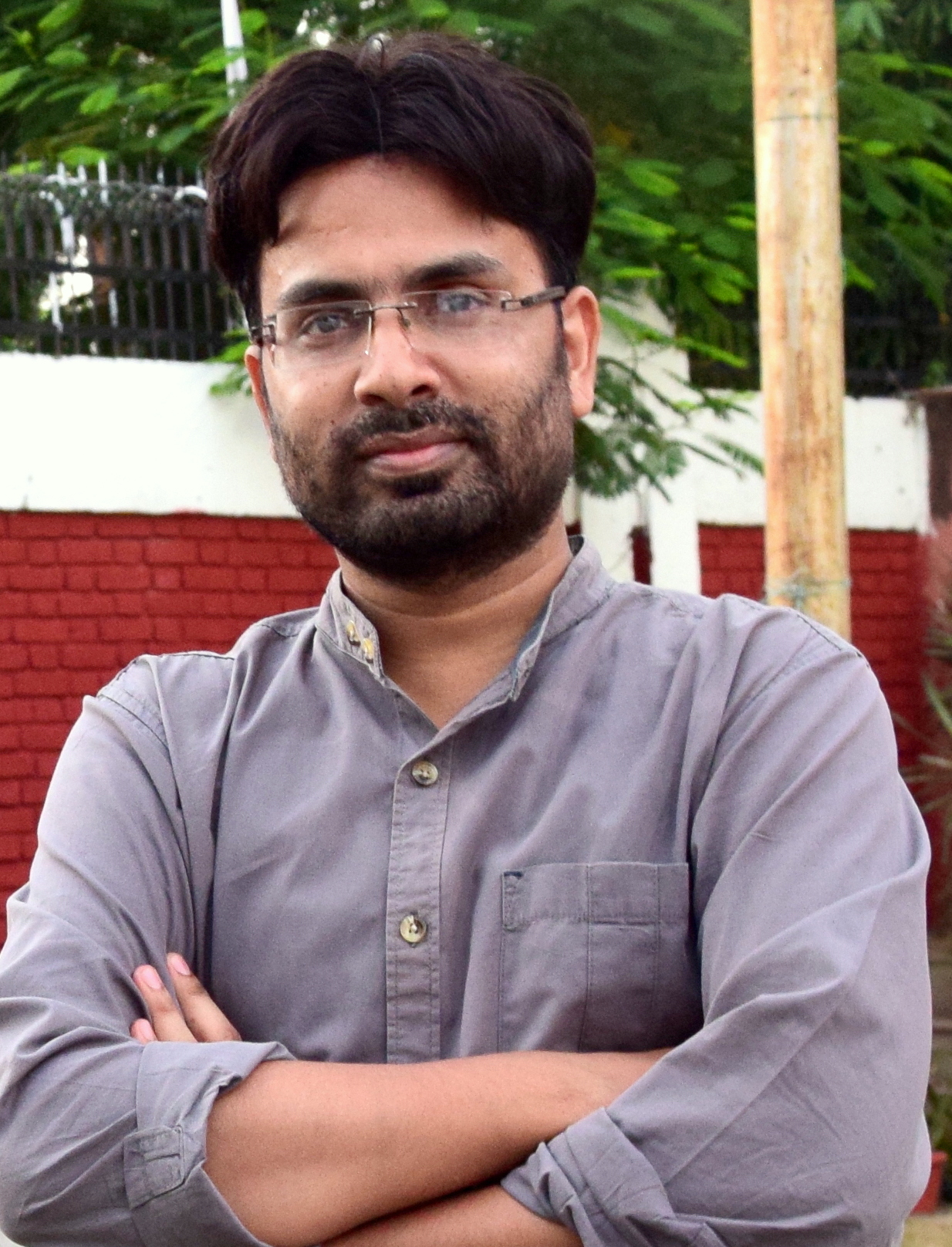
Afroz Alam Sahil is a journalist and author. He can be contacted at @afrozsahil on X.