

In an article I wrote for India Times in May 2019, I asked a question that felt urgent at the time: had India put its ties with Iran at stake just to get Masood Azhar listed as a global terrorist? I was looking at New Delhi’s decision to halt Iranian oil imports under pressure from the first Trump administration, even as it drew closer to Israel, Saudi Arabia, and the UAE. I ended with a warning: “Choosing sides in the volatile West Asia would not be a pragmatic choice for New Delhi.”
That 2019 piece reads today like an epitaph for a once-important partnership. What I saw as a worrying trend has hardened into a full-blown strategic realignment. India, which for decades carefully balanced its relationships in West Asia, has openly embraced one side. The result is that Iran — a nation with which India shares civilisational links, and has been a critical gateway to Afghanistan and Central Asia via Chabahar Port — has effectively fallen off New Delhi’s radar, it seems. The events of the past few weeks have only underscored this new reality, and the silence from New Delhi on the death of Iran’s Supreme Leader Ayatollah Ali Khamenei speaks louder than any press release.
A Friendship Forged in Trust, Not Just Transaction
To understand what has been lost, one must first understand what Iran was to India. This was not simply a transactional relationship built on oil purchases or cultural nostalgia. Iran has been a genuine strategic partner, one that stood by New Delhi through thick and thin.
When every other nation in the region lined up behind Pakistan during India’s wars, Iran maintained a studied neutrality that favoured New Delhi, including on Kashmir. When the United States pressured India to isolate Iran after the 1979 revolution, New Delhi quietly kept channels open. In Afghanistan, Iranian and Indian interests aligned in supporting the Northern Alliance against the Taliban, long before it became fashionable to do so. Iran was the only route through which India could access Central Asia without crossing Pakistan — a geopolitical fact that made Chabahar not just a port, but a strategic lifeline.
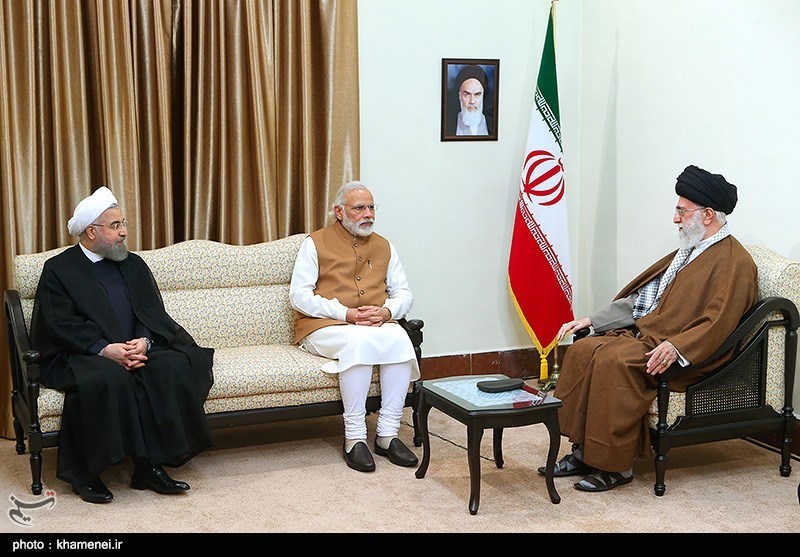
And for decades, India reciprocated. Through the UPA years and earlier, New Delhi consistently resisted Western and American pressure to cut ties with Tehran. When sanctions were imposed, India found workarounds — barter systems, rupee-rial arrangements, or payments through UCO Bank. When the Americans pushed for isolation, India pushed back, insisting that its energy security and strategic autonomy were non-negotiable. Chabahar was pursued despite US reservations. Oil was purchased despite the risk of secondary sanctions. Even Prime Minister Narendra Modi visited Iran on two days visit in May 2016. There was a quiet dignity in that resistance, a refusal to be nudged.
The Slow Unravelling: From Chabahar to the IPI Pipeline
But somewhere along the way, that dignity gave way to docility. The Modi government, which began with a high-profile visit to Tehran in 2016, has allowed itself to be nudged, then pushed, then finally abandoned.
The first Trump administration’s pressure on oil imports was the initial crack. The Masood Azhar listing at the UN may have been the immediate trigger, but the deeper shift was India’s growing comfort with the “B-Team”— the US, Israel, Saudi Arabia, and the UAE — that then Iranian Foreign Minister Javad Zarif once warned about. What was once the B-Team has now become India’s A-Team.
The abandonment, however, has deeper roots. Consider the Iran-Pakistan-India (IPI) pipeline, once promoted passionately by the Vajpayee government as a game-changer for energy security. That project was shelved years ago, largely under US pressure, leaving Pakistan and Iran to pursue it bilaterally.
The same fate has now befallen the Chabahar Port. Once touted as the jewel of India-Iran strategic cooperation — a gateway to Central Asia, bypassing Pakistan — the project is now practically dead. US sanctions have made international banks and equipment suppliers wary. The clearest signal came in the 2026-27 Union Budget: not a single rupee was allocated for it. For a government that prides itself on infrastructure, this silence is deafening. It confirms that Chabahar is no longer a priority, sacrificed on the altar of realpolitik. And with it goes India’s easy access to Afghanistan and the Central Asian republics — a strategic loss that will take years to undo.
New Delhi’s Definite Tilt in West Asia
Perhaps the most damning indicator of the current state of play is unfolding right now, as the world watches Tehran mourn and attempt to aggressively attack all possible American interests in the region, besides Israel.
The contrast in India’s recent diplomatic responses is brutally revealing. When Iran launched strikes on Israeli territory, PM Modi was swift and unequivocal. He posted on X, expressing solidarity with Israel and “strongly condemning” the attacks. He had been in Israel just last week.
It is the night of March 2, and the diplomatic scorecard from a tumultuous 48 hours in West Asia is clear. PM Modi has spoken with the Crown Prince of Saudi Arabia and the King of Bahrain. Earlier, there were calls to the leadership of the UAE and the Prime Minister of Israel. A flurry of high-level outreach to every key capital in the region — except one. Foreign Minister S. Jaishankar too has been busy making high-profile calls to Gulf capitals, including talking to his Iranian counterpart on 28 February, sharing “India’s deep concern at the recent developments in Iran and the region.” But there has been no formal statement on the death of Imam Khamenei — not a word of condolence.
As protests have spread from Lucknow to Kashmir, with members of the Shia community taking to the streets, the Government of India has offered no recognition of the event.
The Congress party has, however, condemned the “targeted assassination” of a sitting head of state, calling it a blow to international rules. Mallikarjun Kharge’s words were pointed: “No external power has the authority to engineer regime change.” AAP’s Sanjay Singh called Modi a “cowardly prime minister… a puppet of Trump.” These are not just political attacks. They reflect a deeper unease that India has abandoned its principles.
The Miscalculation: Betting on a Regime’s Collapse?
The message is clear: our primary partners in West Asia are Israel, the UAE, and other Arab states with whom India had envisioned the Middle-East Corridor, while Iran is now a secondary concern, to be managed.
Perhaps India’s allies, including the United States and Israel, have convinced New Delhi that the Iranian regime’s collapse is imminent. The US-Israeli strikes, explicitly aimed at undoing the 1979 Islamic Revolution, have been framed as a final blow. India, the thinking goes, does not want to be caught mourning a dying order. It is placing its bets on the victors.
But this may turn out to be a miscalculation – and a dangerous one.
The bet rests on a shaky assumption that the Iranian regime will, in fact, collapse. History suggests otherwise. The Islamic Republic has survived decades of sanctions, assassinations, and pressure. Its supporters are mobilising even as its detractors push for change. The immediate aftermath of a leader’s death is often when regimes consolidate, not crumble. If the Iranian state holds — and that remains a very real possibility — India will have forfeited its position in Tehran. Even if the regime collapses, New Delhi will lose face!
The Long Shadow of a Broken Bond!
India enjoys lots of goodwill in West Asia for its reputation as a non-aligned power, as a nation that maintains ties across divides in the volatile region, and above all as a former British colony, with figures like Mahatma Gandhi and Jawaharlal Nehru celebrated as legendary heroes.
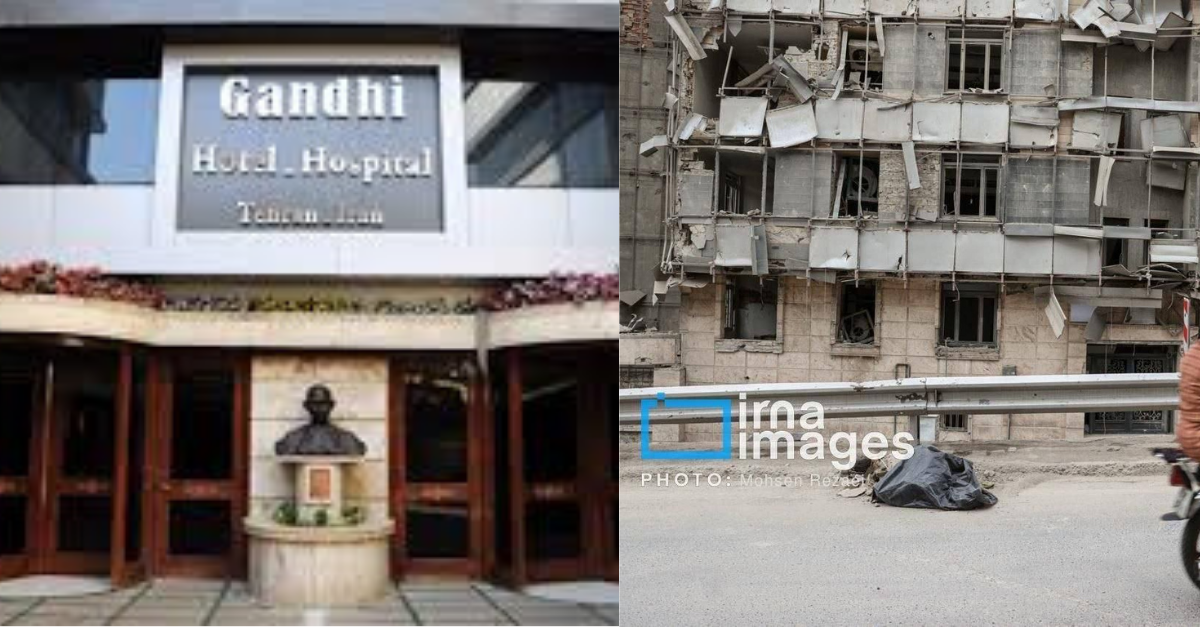
One of the largest private hospitals of Tehran was known as “Gandhi Hospital,” symbolising the goodwill between the two countries. Today, that hospital stands partially damaged and has been evacuated after the Israeli attack — a sad reflection on the ties between the two ancient civilisational nations.
(Mohamamd Reyaz is assistant professor at Aliah University, Kolkata, and tweets at @journalistreyaz.)