

Soutik Biswas
Why are leaders of opposition-ruled states making life difficult for India’s federal government?
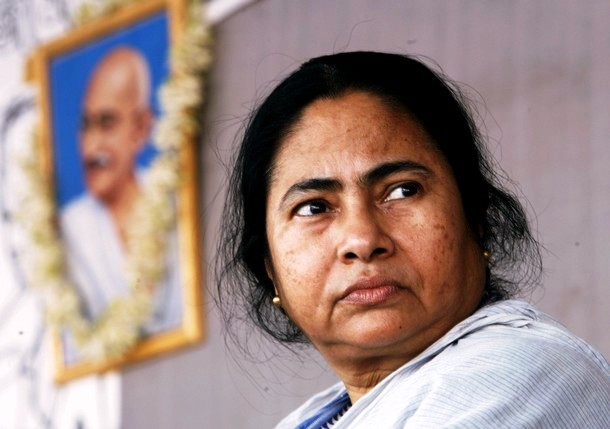
In West Bengal, the feisty Mamata Banerjee has refused to give her consent to Delhi’s water sharing treaty with Bangladesh, put her foot down on allowing foreign direct investment in supermarkets, and has complained that Delhi is not helping her state, which is drowning in debt.

Ms Banerjee has also led the charge against the centre against its plans to open a specialised counter-terrorism agency. She has not only opposed the National Counter Terrorism Centre (NCTC), but managed to lobby at least half a dozen other non-Congress chief ministers against what they call an “infringement on the rights of the states”. The Economist magazine calls her the “mischief minister”.
The beleaguered government cannot but acquiesce to Ms Banerjee’s demands as she is a key ally. Emboldened by her moves, leaders of other non-Congress ruled states are also speaking up against what is arguably one of the most enfeebled governments India has seen. Tamil Nadu’s J Jayalalitha is greatly piqued that the centre is not giving her state enough money.
Deja vu
These developments have a sense of deja vu around them.
For long, states have complained of an overbearing and arrogant centre, which defeats the spirit of federalism. They have been peeved by the centralisation of powers by the federal government which, they say, undermines their autonomy. As an example, they point to the existence of the Planning Commission, which was set up to allocate resources to states. They believe that the organisation is an anachronism in a liberalised economy. An Inter-State Council, set up in 1990 to forge a more equitable partnership between the centre and states, held its last meeting in 2006.
What national parties – specially the Congress – sometimes forget is that federalism has radically changed since the rise of smaller, regional parties and the decline of the Congress. Between 1967 and 1989 – except for a brief Janata Party government – Congress held power at the centre and the majority of states. That is now a distant memory: the rise of powerful regional identity-driven parties has virtually altered the nature of federalism. Displaying political nous, these parties support federal governments strategically, extracting concessions, like “lucrative” ministerships, money and projects. For many, this is a triumph of federalism.
But the states are hardly faultless themselves. They are often run by profligate populists. They use their clout with the centre to go soft on corruption cases involving their leaders. They are also found to be authoritarian, sectarian and reckless dispensers of patronage. Most of them have failed to articulate their views on the economy or foreign policy.
Political scientists like KK Kailash actually wonder whether these parties are true federalists themselves. Both Ms Banerjee and Nitish Kumar, the chief minister of Bihar state, model themselves as champions of federalism, but have had no “qualms in using central intervention powers to suit the interest of their respective parties”, observes Mr Kailash. When they were allies of the BJP-led NDA government, Ms Banerjee’s Trinamul Congress, AIADMK and Samata Party – all regional parties – pressured the centre to dismiss governments in West Bengal, Tamil Nadu and Bihar, clearly violative of the federal spirit.
There is much to blame on the Imperial Centre, as commentator Swapan Dasgupta calls it. He even believes that the time may have come to review the “sanctity” the constitution accords to this centre. While this may be true, regional parties also need to be more responsible and offer a larger vision. Clearly, there is a crying need for more give and take in the partisan and broken politics India is witnessing today. An energetic federal polity will follow.
(This article was first published in BBC)