

The Supreme Court of India has ruled that a Hindu temple will be constructed on the disputed site where the Babri Masjid once stood. The Court ordered that the land beneath the mosque’s former central dome be allocated to Hindu parties, based on the belief that it marks the birthplace of Lord Ram, a revered deity in Hinduism. In such a situation, this news may shock you.
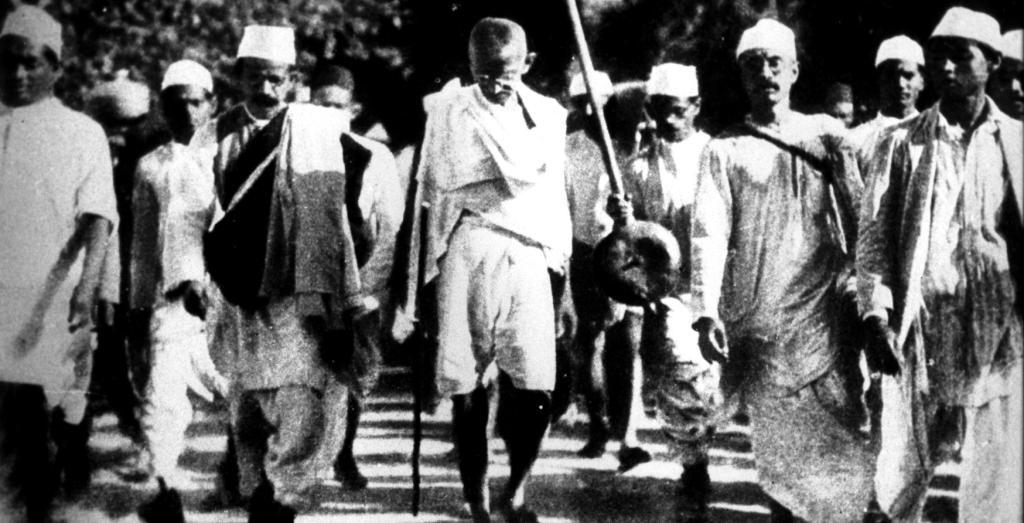
You may be surprised to learn that in 1921, there was a Ram temple in Ayodhya, which Mahatma Gandhi reportedly saw with his own eyes.
Mahatma Gandhi wrote an article for his Gujarati newspaper Navjeevan on March 20, 1921, in which he wrote, “When I arrived in Ayodhya, I was taken to a small temple that stands at the place where Shri Ramachandra is believed to have been born. The devout among non-co-operators had suggested to me that I should request the temple priest to use khadi for dressing the images of Rama and Sita. I did make the suggestion, of course, but it is hardly likely to have been acted upon. When I went for darshan, I saw them dressed in ugly muslin with brocades.”
Gandhi further writes in the same article that, “I wish that, just as the Muslim brethren have started using khadi for holy occasions, the Hindus too should begin to use khadi in the temples and for other sacred purposes.”
Gandhi’s article indicates that in 1921, there was a Ram temple in Ayodhya, and that he was led to believe it marked the birthplace of Shri Ramchandra. Decades later, the Supreme Court of India, in its judgment on the Ayodhya dispute, acknowledged that the placing of Hindu idols inside the Babri Masjid in 1949 was an act of desecration of a place of worship.
Justice Ranjan Gogoi, in the Supreme Court’s judgment, clearly stated that the eviction of Muslims from the mosque in 1949 was not lawful, and that the demolition of the Babri Masjid in 1992 was a violation of the law. The Court also acknowledged that historical records confirm Muslim worship at the mosque from 1857 to 1949.
This raises an important question: What happened to the temple that Mahatma Gandhi visited in 1921?
It is often said that Mahatma Gandhi was a devotee of Ram, as he frequently invoked the name of Ram during his prayer meetings. However, while speaking at a prayer gathering in New Delhi on April 4, 1946, Gandhi said, “My Rama, the Rama of our prayers, is not the historical Rama, the son of Dasaratha, the King of Ayodhya. He is the eternal, the unborn, the one without a second. Him alone I worship, His aid alone I seek, and so should you. He belongs equally to all. I, therefore, see no reason why a Mussalman or anybody should object to taking His name. But he is in no way bound to recognize God as Ramanama. He may utter to himself Allah or Khuda so as not to mar the harmony of the sound.” This statement of Gandhiji was also published in the Hindustan Times on April 5, 1946.