

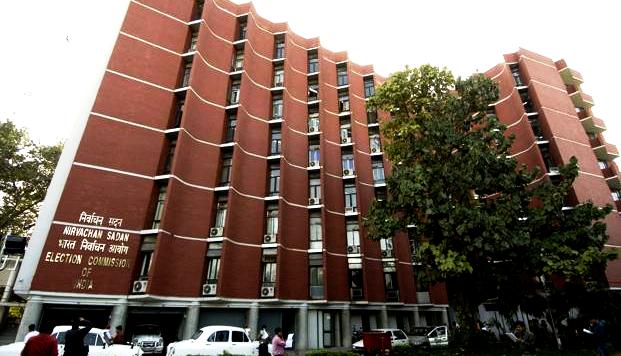
On 2 January 2024, the Election Commission (Conditions of Service of Election Commissioners and Transaction of Business) Act, 1991 was officially repealed. It has been replaced by the Chief Election Commissioner and Other Election Commissioners (Appointment, Conditions of Service and Term of Office) Act, 2023, which has now come into effect nationwide.
Although the opposition proposed several amendments, they were rejected because the ruling party held an absolute majority. The bill passed easily in the Rajya Sabha on December 12, 2023, and in the Lok Sabha on December 21, 2023. Amid ongoing parliamentary debates, unresolved questions, and limited public engagement, the President gave assent to the law on December 28, 2023.
The essential point is that the strength of India’s democracy rests on its elections—and the fairness of those elections depends on the credibility of the institution known as the Election Commission. It has long been regarded as accountable not to the government, but to the Constitution. However, the new 2023 law has introduced a subtle yet unmistakable strain on that trust.
Amid the accusations and counter-accusations, one fact remains: this law has created a framework that the framers of India’s Constitution never imagined. According to experts, appointments to the Election Commission may now fall almost entirely under the control of the ruling party. The government maintains that “this is simply a procedural reform,” while constitutional scholars warn that “this is the first law capable of creating such a profound fissure at the very core of the Commission.”
Under the new law, Election Commissioners will be selected by a committee consisting of the Prime Minister, a Cabinet Minister nominated by the Prime Minister, and the Leader of the Opposition in the Lok Sabha. The most debated provision is Section 16, which stipulates that no civil or criminal proceedings may be brought against the Chief Election Commissioner or any Election Commissioner for decisions made in the course of their official duties, either while they are in office or after they retire.
The government argues that this provision “will allow them to act without fear.” Yet it raises an important question: if an official is chosen by the government and also granted broad protection from legal challenge, how impartial can their decisions truly be? It is a concern that many citizens can readily understand.
Perhaps one day, Indian citizens may have to confront the reality that elections in India have become little more than a formality. Yet, surprisingly, there were no major protests, no public marches, no mobilization by student groups or civil society, and the media did not even feature it as a front-page story. Is this apathy simply political disagreement, or has society stopped treating a serious constitutional crisis with the urgency it deserves? Do we define democracy solely as the act of voting, or do we also value its fundamental structure and fairness?
Ignoring this could have profound consequences for India’s future—the credibility of the Election Commission may be undermined, public confidence in future elections could erode, and, most importantly, the legitimacy of democracy itself may weaken. This challenge is not unique to India; history has shown that democracies falter when citizens remain silent, fail to question institutional accountability, and neglect the protection of constitutional rights.
In this context, every Indian citizen should ask: Do we view democracy as merely holding elections, or do we also value the integrity of the electoral process itself? Democracy suffers when people stop asking questions, and the harshest truth is that this law was passed not only by the government but by the silence of society.
The 2023 law will likely be remembered in history for two reasons: it altered the functioning of the Election Commission, and it was enacted at a time of widespread public silence. History shows that institutions rarely collapse in a single blow—they erode gradually, through small laws, unanswered debates, and collective inaction. Today, India appears to be standing at such a critical juncture, where vigilance and active engagement are essential to safeguard the foundations of its democracy.