


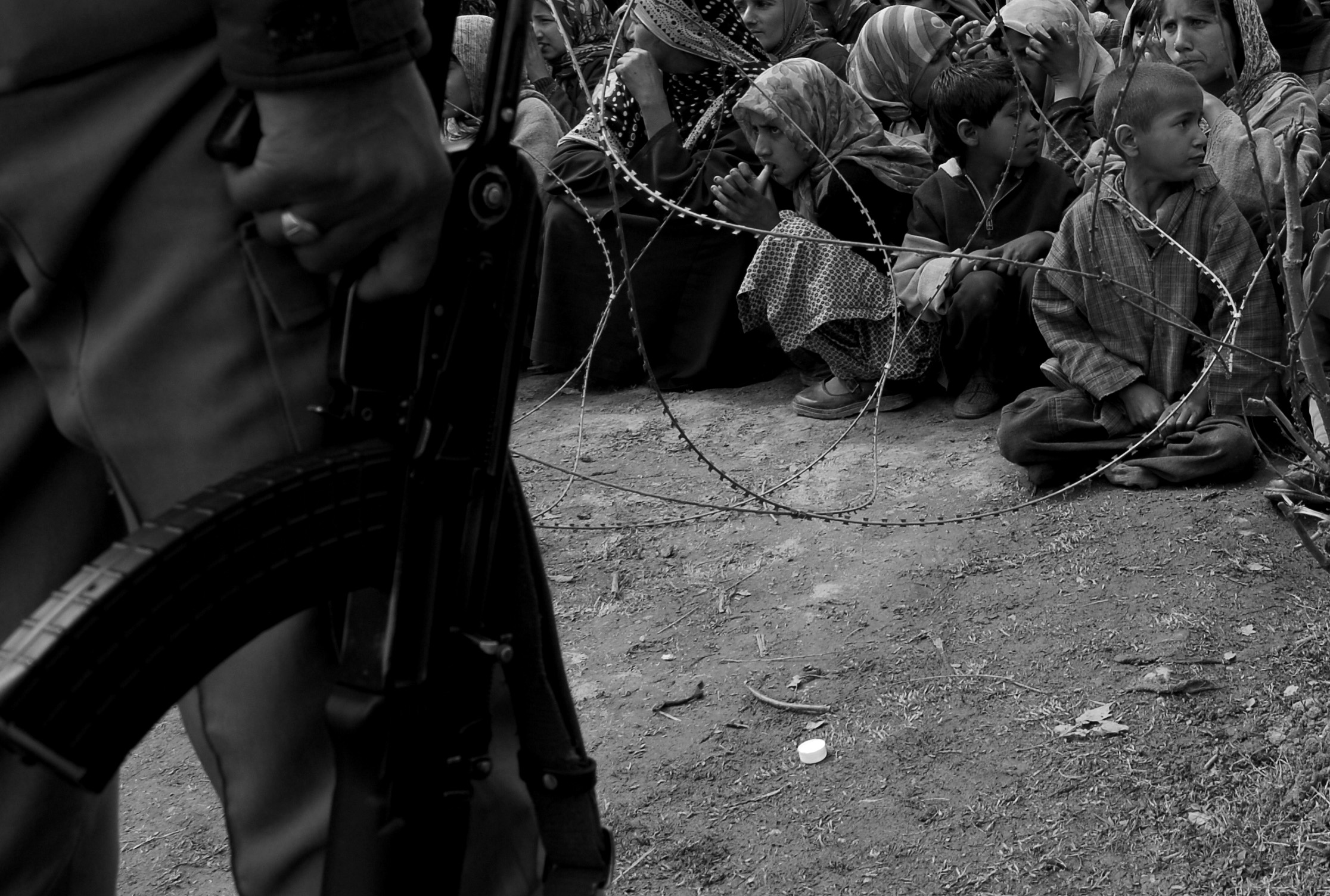
Afroz Alam Sahil for BeyondHeadlines
Although “Human Rights Day,” proclaimed by the United Nations and observed every year on December 10, is celebrated with enthusiasm around the world, it often remains a symbolic event—an obligation carried out under the umbrella of an international institution. Yet human rights violations continue across the globe every single day of the year, including on “Human Rights Day” itself.
Every human being is born free. People everywhere aspire to live without fear or intimidation, to be treated with dignity, and to enjoy freedom in their daily lives. No one should be mistreated, oppressed, violated, or exploited. These fundamental aspirations have existed for centuries, and for many, they remain unfulfilled even today.
Human rights are inherent and universal. They do not come from citizenship or nationality—they arise simply from being human. This is why, historically, they were referred to in Europe as “natural rights.”
Although it is often said that the struggle for human rights is as old as human history, discrimination and oppression based on religion, caste, color, race, and other identities have existed throughout time. Historians note that organized resistance to such injustices began in Europe roughly 350 years ago, when the lives of enslaved people in ancient Greece were considered no better than those of animals. Their conditions were dire, and it was the Stoic philosophers who first spoke out. Zeno introduced the concept of natural law, laying the foundations for the idea of human equality.
Some experts trace the origins of the human rights movement even earlier—to the 11th century, when Emperor Conrad II issued a charter in 1037 that limited the arbitrary powers of rulers. Later, in 1215, the Magna Carta was adopted, a document Voltaire famously described as a “Charter of Freedom.”
Setting historical debates aside, a major milestone came on December 10, 1948, when the United Nations General Assembly adopted the Universal Declaration of Human Rights, containing 30 articles. Following this, many governments enacted constitutional and legal frameworks to protect the basic rights of their citizens. It seemed, for a moment, that a new era had begun—one in which people would no longer be oppressed or discriminated against, and where peace and equality would prevail.
But this vision remains far from reality. Even today, despite numerous international and national laws, discrimination and violence persist in many parts of the world. In India, for example, atrocities against Dalits and minority communities continue, revealing the gap between legal commitments and lived experience.
Even within India, the situation in Kashmir—which India regards as an integral part of the country—is often described as particularly severe by human rights observers. In Indian-administered Kashmir, activists have alleged custodial deaths, enforced disappearances, and other violations involving roughly 500 Indian Army officers during counter-insurgency operations.
One 354-page report examines 214 cases of alleged human rights violations and cites the involvement of state authorities in the deaths of around 70 people, as well as the disappearance of approximately 8,000 individuals over more than two decades.
According to another report, more than 100 military personnel, including 48 officers, have been disciplined for human rights violations in Jammu and Kashmir over the past twenty years. Meanwhile, 1,514 First Information Reports (FIRs) have reportedly been filed against army personnel during the same period. The difficulties and bureaucratic hurdles involved in filing an FIR in India are widely acknowledged.
India has a National Human Rights Commission, yet human rights advocates often express concern about its effectiveness. Many complain of long delays, sometimes lasting up to a decade, before cases move forward. The commission’s limited authority also draws criticism—for example, a state governor can halt investigations into alleged extrajudicial encounters. Activists further claim that officials sometimes prepare reports favorable to law enforcement without visiting the site of the incident or speaking to affected parties.
Public confidence in the National Human Rights Commission (NHRC) has eroded significantly. In Jammu and Kashmir, for example—where some reports estimate that more than 8,000 people have gone missing—only 34 cases were registered with the NHRC. Between 1993 and 2010, the NHRC recorded just 18 cases of alleged fake encounters, 12 deaths in police custody, 9 deaths in judicial custody, 24 cases related to communal violence, and 104 cases involving atrocities against women. Of these, the Commission acknowledged human rights violations in only 20 cases and awarded a total of 4.86 million rupees in compensation. (These figures were obtained by the author through the Right to Information Act.)
Yet, for many families, compensation means very little. As residents often say, “We don’t want money; we want our children back.” Many mothers are still waiting for answers about their missing sons. People repeatedly express a simple hope: “We do not demand freedom—only the chance to live in peace.”
Locals frequently describe an overwhelming security presence and allege everyday abuses. Many young people refer to themselves as “conflict children,” saying they have never known a peaceful childhood.
The situation has, at times, been described as extremely tense. In one reported incident, paramilitary forces opened fire in the Sopore market after the death of a soldier, resulting in civilian casualties. While this episode received limited attention in Indian media, it was covered by Time magazine.
Human rights advocates often ask why such incidents do not draw broader attention. How long can this continue? If the region is considered an integral part of the country, residents argue, then why should they face such hardship? Treat them with dignity, they say, and the desire for separation will fade. At the very least, allow them the peace to live their lives without fear.
Concerns about the NHRC’s effectiveness are not limited to Kashmir. Its handling of other cases—such as the Batla House encounter in Delhi—has also been widely debated by activists and legal experts.