

BeyondHeadlinesBeyondHeadlines
  • Home
  • India
    • Economy
    • Politics
    • Society
  • Exclusive
  • Edit/Op-Ed
    • Edit
    • Op-Ed
  • Health
  • Mango Man
  • Real Heroes
  • बियॉंडहेडलाइन्स हिन्दी
Reading: SC Asks Parliament Not to Make Laws on Extra Territorial Matters
Share
Font ResizerAa
BeyondHeadlinesBeyondHeadlines
Font ResizerAa
  • Home
  • India
  • Exclusive
  • Edit/Op-Ed
  • Health
  • Mango Man
  • Real Heroes
  • बियॉंडहेडलाइन्स हिन्दी
Search
  • Home
  • India
    • Economy
    • Politics
    • Society
  • Exclusive
  • Edit/Op-Ed
    • Edit
    • Op-Ed
  • Health
  • Mango Man
  • Real Heroes
  • बियॉंडहेडलाइन्स हिन्दी
Follow US
BeyondHeadlines > India > Politics > SC Asks Parliament Not to Make Laws on Extra Territorial Matters
IndiaLatest NewsPolitics

SC Asks Parliament Not to Make Laws on Extra Territorial Matters

Beyond Headlines
Beyond Headlines Published March 7, 2011 41 Views
Share
4 Min Read
Supreme Court of India
SHARE
BeyondHeadlines News Desk
The Supreme Court has held that Parliament cannot make laws on extra-territorial matters which have no impact on the interest of the country.

“It logically follows that Parliament is not empowered to legislate with respect to extra-territorial aspects or causes that have no nexus whatsoever with India,” a five-judge Constitution bench headed by Chief Justice S H Kapadia said.
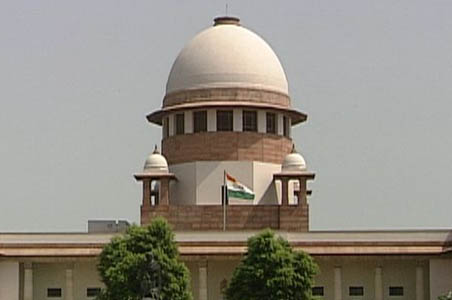
Supreme Court of India

The apex court said it did not agree that Parliament, on account of its alleged absolute legislative sovereignty, should be deemed to have the powers to enact any and all legislation, even without the requirement that it is for the benefit of India.

The apex court passed the order on a petition by a private firm challenging the validity of a provision of the Income Tax Act, which mandated the company to withhold part of its payment to a foreign company.

The company had challenged the legislative competency of the Centre in Andhra Pradesh High Court, which had upheld the validity of the impugned provision of the Act. Against the order of the high court, the company had moved the apex court.

While examining the question whether Parliament has the powers to legislate for any territory other than the territory of India or any part of it, the bench said, “The answer to the above would be ‘no’.”

“It is obvious that Parliament is empowered to make laws with respect to aspects or causes that occur, arise or exist, or may be expected to do so, within the territory of India, and also with respect to extra-territorial aspects or causes that have an impact on or nexus with India.

“Such laws would fall within the meaning, purport and ambit of the grant of powers to Parliament to make laws for the whole or any part of the territory of India, and they may not be invalidated on the ground that they may require extra-territorial operation.”

“Any law enacted by Parliament with respect to extra-territorial aspects or causes that have no impact on or nexus with India would be ultra-vires, and would be laws made ‘for’ a foreign territory,” the bench, also comprising justices B Sudershan Reddy, K S Radhakrishnan, S S Nijjar and Swatander Kumar said.

The bench opined that a “liberal” and “more extensive” interpretative analysis be undertaken to ensure that the court does not unnecessarily restrict the powers of another organ of the state.

“Moreover, the essential features of such arrangements, that give the Constitution its identity, cannot be changed by the amending powers of the very organs that are constituted by it,” the bench said.

The Constitution casts upon various organs of the state the affirmative responsibilities of protecting the interests of the welfare and security of the nation, it added.


TAGGED:Andhra Pradesh High CourtB Sudershan ReddyChief Justice S H Kapadiaextra-territorial mattersIncome Tax ActK S RadhakrishnanParliamentS S NijjarSupreme CourtSwatander Kumar
Share This Article
Facebook Copy Link Print
What do you think?
Love0
Sad0
Happy0
Sleepy0
Angry0
Dead0
Wink0
Telangana Must Order CBI Inquiry into Alleged Murder of Advocate Moizuddin in Waqf Cases
India Waqf Facts
Waqf Registration Ends With Fears of Vanishing Properties
Exclusive India Waqf Facts
The Waqf Act 2025, Supreme Court Interim Ruling, and the Role of Muslims in Protecting Waqf Properties
Waqf Facts
Supreme Court Verdict on the Waqf Act: Justice or Just Temporary Consolation?
India Waqf Facts Young Indian

You Might Also Like

ExclusiveIndiaLead

What Happened After Assam Converted Madrasas into Schools? A Ground Report on Education, Identity, and Community Impact

June 4, 2026
Edit/Op-EdExclusiveHistoryIndia

Kamal Maula Mosque Controversy Explained: How History, Politics, and Faith Collided Over a Single Monument

May 22, 2026
IndiaLeadYoung Indian

Uttarakhand’s New Minority Education Overhaul: End of Madrasa Board, Curriculum Shift, and Rising State Control Explained

May 10, 2026
IndiaLatest News

Iran Consul General Praises India’s Humanity; No Legal or UN Basis for Attack on Iran, Says Dr Ausaf Sayeed

April 15, 2026
Copyright © 2025
  • Campaign
  • Entertainment
  • Events
  • Literature
  • Mango Man
  • Privacy Policy
Welcome Back!

Sign in to your account

Lost your password?