


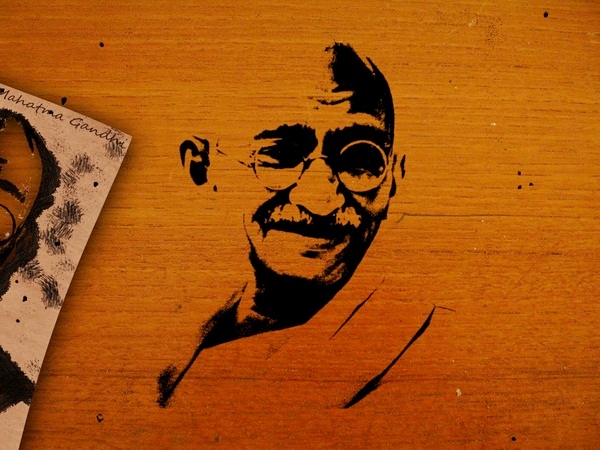
By Arun Gandhi
On Jan. 30, 1948, my grandfather Mohandas Karamchand Gandhi, the great Indian leader and champion of nonviolence, fell to an assassin’s bullets. Indian society has recently faced a sustained assault by people of the same ideological ilk as the man who fired those fatal shots.
India’s drift away from Gandhi’s ideals of nonviolence and respect for religious pluralism has been steady over the last few decades. However, events since the national election that made Narendra Modi in charge of the country last May have shown that what is now taking place is a brazen assassination of the Mahatma’s legacy.
Prime Minister Modi — who since assuming office has both been accorded a warm welcome by President Obama and played host to him in India — was long banned from entering the United States. This was because of a horrific pogrom in 2002 that happened in the state of Gujarat (Gandhi’s home province) while he was in charge.
Clearly, his electoral victory has emboldened supremacist groups across the country. This is because the Modi and the ruling party’s ideological roots lie in the Rashtriya Swayamsevak Sangh (RSS), a vast ultranationalist outfit that positions itself as a service organization but seeks to dismantle India’s secular polity in order to impose a Hindu state on India’s religiously and ethnically diverse populace. (My grandfather’s killer also belonged to this group.) The writings of the organization’s ideologues, their sustained majoritarian and anti-minority rhetoric, and the policy positions of the outfit’s political wing (the party currently governing India) have made this amply clear. Moreover, the entity and its offshoots have been implicated in mass violence against minorities over the years.
The group has spawned a closely knit mesh of organizations. This grassroots network has always been against my grandfather’s philosophy.
Modi’s views on minorities, secularism, and pluralism have been largely shaped by the RSS, whose ideology he has openly endorsed. Modi has proudly stated: “I got the inspiration to live for the nation from the RSS. … I owe it all to the RSS.” Since Modi’s party has come to power, it has engaged in cynical posturing: praising Gandhi in public, while simultaneously seeking to demolish everything he stood for.
It is not surprising that minorities in India now feel a rapidly shrinking space for religious freedom. Hate campaigns against minorities include bizarre theories of Muslim youth luring Hindu girls as a form of “love jihad.” A number of churches have been attacked in and around the country’s capital. There have been group conversions under duress of minorities to Hinduism, an affront to India’s secular Constitution. It is a measure of the sheer audacity of Hindu sectarian outfits that they are actively seeking funds to convert Muslims and Christians to Hinduism. And there have been incendiary statements by ruling party officials. A cabinet member, for instance, used expletives to refer to minorities.
Mahatma Gandhi once said the quality of democracy should be judged from the way minorities are treated. On the 67th anniversary of his assassination, I shudder to think of what lies ahead for India’s minorities. The land the Mahatma fought so hard to free from British colonialists is now hostage to a divisive and hateful ideology.
(Arun Gandhi is the grandson of Mahatma Gandhi and the author of several books on poverty, politics and nonviolence. He wrote this for Progressive Media Project, a source of liberal commentary on domestic and international issues; it is affiliated with The Progressive magazine.)
— Distributed by Tribune Content Agency, LLC (Courtesy: winnipegfreepress.com)