

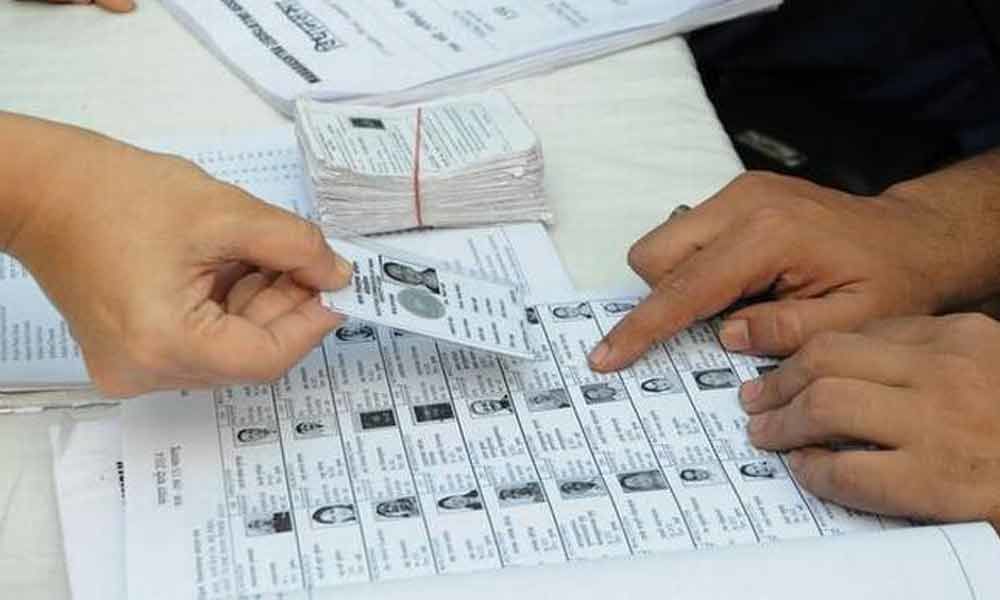
Residents of Bihar face significant hurdles in submitting the required documents for the Special Intensive Revision (SIR) of voter lists. Socioeconomic challenges, educational gaps, and weak infrastructure make the process especially difficult. These obstacles not only complicate documentation but also carry serious implications for voting rights and political participation.
The bureaucratic intricacy of election procedures is a major barrier that the people of Bihar must overcome to submit documents for SIR. Potential voters are frequently confused by the paperwork requirements since they are seen as complicated. Eligible citizens may be deterred from completing the registration procedure by the variety of forms available and the differing requirements for confirming identity and residency. According to research by the Centre for the Study of Developing Societies (CSDS), procedural ambiguity frequently discourages people from registering to vote, especially in areas with weak governance (CSDS, 2020). As a result, this ambiguity may lead to inaccurate or partial submissions, which would continue the cycle of disenfranchisement.
For the people of Bihar, obtaining the required paperwork for SIR is yet another major obstacle. Aadhaar and voter ID cards are the only necessary identity credentials that many prospective voters have, but they are not accepted in SIR procedures. High rates of illiteracy and socioeconomic limitations make this problem worse by making it more difficult for people to get alternative documents that are accepted in the SIR procedures. For example, according to a National Sample Survey Office (NSSO) report, a significant number of rural families in Bihar lack official identity, which has an immediate effect on their capacity to register to vote (NSSO, 2021). The problem is made worse by the practical difficulties in obtaining identifying documents, particularly for underrepresented groups, which raise participation obstacles.
Bihar’s socioeconomic situation has a big impact on the difficulties of submitting documents for SIR. The state’s high rates of unemployment and poverty foster a culture where people put their immediate needs ahead of their civic responsibilities. As a result, qualified voters from low-income families might not have the time, money, or drive to obtain the necessary paperwork for registration. According to Participatory Research in Asia (PRIA) research, people from low-income households frequently have conflicting demands on their time, which makes it difficult for them to participate in official procedures like voter registration (PRIA, 2022). Disparities in political representation and participation are sustained by this socioeconomic reality.
Bihar’s geographical diversity and inadequate infrastructure make it more difficult to get documents for SIR. Many locals have restricted access to local administrative offices and transportation, especially in rural or isolated locations. The process of access and submission is made more difficult by the lack of proper infrastructure, such as internet connectivity and digital literacy. Nearly 70% of rural households in Bihar do not have dependable internet access, according to a report by the Bihar Institute of Public Administration and Rural Development (BIPARD). As a result, many are unable to electronically submit documents or obtain information about the registration process online (BIPARD, 2021).
When it comes to submitting documentation for SIR, people’s experiences in Bihar are significantly shaped by gender dynamics and cultural norms. Women’s mobility and agency are frequently restricted by traditional patriarchal norms, which can make it difficult for them to get the required paperwork and take part in the registration process. Women in the state confront major obstacles because of social norms and mobility limitations, which have a direct impact on their ability to participate in civic activities, such as voter registration, according to the Bihar Human Development Report (Bihar Human Development Report, 2020). Additionally, societal stigma and prejudice may make it more difficult for underprivileged communities to engage in the political process, which presents additional challenges.
Bihar’s first Special Intensive Revision (SIR) 2025 electoral roll, which comprises 7 crores and 24 lakh voters, was released on August 1, 2025. The 65 lakh voters were eliminated, comprising 32 lakh voters who had moved, 22 lakh electors who had died, and 7 lakh voters who had multiple enrolments. The concerned BLO must receive the verification document from voters whose names appear in the updated draft rolls but not in the 2003 Electoral Rolls by September 1, 2025, to prepare the final Electoral Roll. Those who fail to provide the proof document from the eleven documents provided by the Election Commission will have their names removed from the final list of the 2025 Bihar electoral roll. It is believed that thousands of voters will be further excluded because they are unable to provide the required proof of documents, which will disenfranchise thousands of legitimate voters, primarily from under-represented and under-privileged communities, who will not be able to vote in the 2003 state election of Bihar and will have to apply as new voters to vote again.
The constitution of India granted equal political rights, such as the right to vote, as one vote equals one man, and equal political participation. But this kind of removal of electors from the electoral roll is violating the equal right to vote and political participation. This kind of step will erode the safeguards of the democracy of India. Dr B. R. Ambedkar highlighted a significant contradiction between social and economic inequality with political equality. But the exclusion of socially, economically, educationally, and geographically marginalised communities from the electoral roll through SIR is creating a new kind of contradiction in Indian democratic processes and the political system. The removal of voters through SIR challenges the only equality that prevails in Indian society, which is political equality.
In summary, bureaucratic complexities, socioeconomic disparities, lack of access to necessary documentation, geographical and infrastructural limitations, and cultural dynamics are some of the multifaceted issues that Bihar residents face when submitting documents for the Special Intensive Revision of Voter Lists. Governmental entities, civil society organisations, and community stakeholders must work together to address these problems. In order to encourage more political participation and democratic involvement among the people of Bihar, initiatives that streamline the documentation process, improve identity access, upgrade infrastructure, and raise awareness will be essential. The process of revision of the voter list should have inclusive approaches, not promote exclusion. The requirement of a document of proof for becoming a voter should be considered for those documents that are easily available and accessible to all people.
Mosharraf Alam, former faculty at the University of Delhi and Jamia Millia Islamia, is a scholar focusing on human rights and democracy. He can be contacted at mosharraflm@gmail.com