

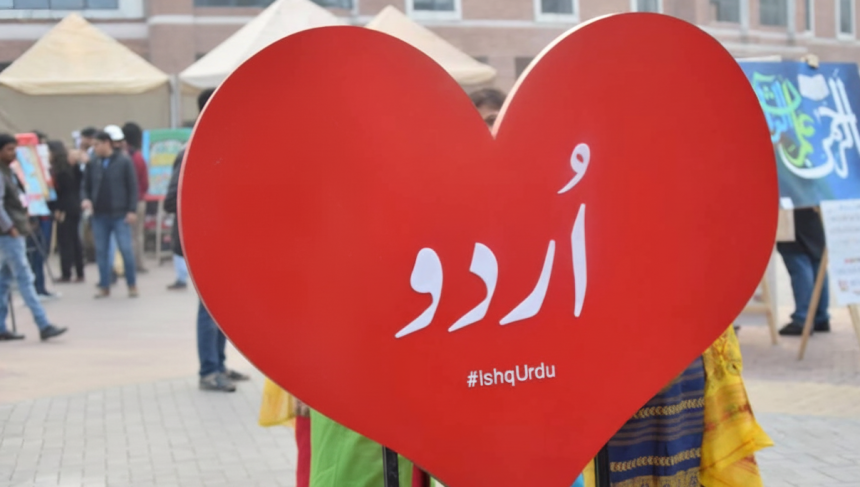
This dialogue offers a thoughtful discussion on the current state of the Urdu language and its future. According to journalist and writer Afroz Alam Sahil, practical, sustained efforts—rather than despair—are essential to nurture a love of Urdu among younger generations.
Afroz Alam Sahil is a respected journalist and author known for his investigative reporting on issues of social justice, primarily in Hindi and English. Yet, an equally important dimension of his work is his deep commitment to the Urdu language and its rich cultural heritage.
For nearly twelve years, his regular column appeared in the daily Inqilab, and for three years, he wrote for the weekly Dawat, focusing on investigative stories and reports about minority communities in India. These contributions established him as a credible and balanced voice within the Urdu-speaking world.
Beyond journalism, Sahil has written extensively for various literary journals and magazines. Although not formally associated with traditional Urdu media institutions, he has consistently upheld the freshness of Urdu prose, cultural sensitivity, and intellectual clarity in his writings.
On the occasion of World Urdu Day, Ghalib Shams spoke with him for rewaayat.com about the challenges and future prospects of Urdu in India. The following are key excerpts from their conversation:
How do you view the Urdu language?
To me, Urdu is more than just a language—it is a reflection of an entire civilization. It embodies the tenderness of love, the elegance of expression, and the depth of thought. Urdu has always served to unite hearts rather than divide them. It teaches us that even amid differences, our conversations can remain respectful and refined.
Perhaps this is why the number of Urdu speakers around the world continues to grow. Today, Urdu ranks among the ten most widely spoken languages globally. According to one report, it is also among the fastest-growing languages in the past fifty years: in 1971, there were about 11.27 crore Urdu speakers, a number that rose to approximately 23.17 crore by 2021.
What is the statistical scenario in India?
If we look at the data from India, the 1971 Census recorded around 2 crore 86 lakh Urdu speakers. Ten years later, in 1981, the number rose to 3.5 crore, and by 1991 it had reached 4 crore 40 lakh. According to the 2001 Census, Urdu speakers numbered 5 crore 15 lakh.
However, the 2011 Census revealed a slight decline, with the figure standing at 5 crore 7 lakh, a decrease of roughly 8 lakh people compared to expected growth trends. This reduction was particularly noticeable in North India, where many young people began to see carrying an English-language newspaper as a status symbol, regardless of their fluency in English.
This decline reflects deeper issues linked to educational priorities, social attitudes, and a lingering sense of linguistic inferiority. Yet, it’s important to remember that Urdu remains one of the 22 official languages recognized by the Indian Constitution.
Why did this decline of eight hundred thousand occur?
The reasons are right before us. Consider, for instance, which medium of education parents today prefer for their children—and how differently society values speakers of Urdu and English. The answer to that question reveals much of the truth.
I personally know many professors who once studied Urdu and even earned PhDs in the language, yet when given the chance to serve Urdu, they turned away from it. I also know people who built successful careers because of Urdu, but when their students translate for them, they either pay nothing or offer a token amount—despite the fact that the payment usually comes from the organizations they work for, not from their own pockets.
You only have to look at how little journalists and writers working in Urdu media are paid to understand the lack of institutional support. The government, too, has shown a dismissive attitude toward the language.
At the same time, proponents of the Hindutva ideology have gradually associated Urdu with Islam and Pakistan, fostering a misconception among many that speaking Urdu somehow signifies being “anti-Indian.” This politicization has caused real harm to Urdu’s image and its acceptance within broader Indian society.
When and how did Urdu come to be seen as a “Muslim language” rather than an “Indian language”?
Urdu was born in India, and for centuries it served as a shared language for people of all faiths and regions. In fact, even organizations like the Arya Samaj once used Urdu widely. It held great significance as an official and administrative language across the Indian subcontinent.
However, after the War of Independence in 1857, the British colonial administration began to deliberately separate Hindi and Urdu as part of their “divide and rule” policy. This period marked the beginning of Urdu being increasingly viewed as a “Muslim language.” Efforts were made to limit its use and promote Hindi instead. The Hindi movement in Banaras further demanded the removal of Urdu from government offices. Organizations such as the Nagari Pracharini Sabha and Hindi Sahitya Sabha emerged during this time, promoting the idea that “Urdu is the language of Muslims and Hindi is the language of Hindus.” This division deepened around the time of India’s independence. While Hindi was declared the national language, Urdu became identified primarily with Muslim identity.
Despite this politicization, Urdu remained a shared cultural language for decades. Many of the slogans of the Indian freedom movement were in Urdu, such as “Inquilab Zindabad” (“Long live the revolution”). Even Subhash Chandra Bose named his army “Azad Hind Fauj” using Urdu words like “Azad” (free) and “Fauj” (army).
Before Partition, Hindus, Sikhs, and Muslims all spoke and wrote in Urdu. Many celebrated Urdu writers and poets were non-Muslims—among them Prem Chand, Firaq Gorakhpuri, and Rajendra Singh Bedi. Leaders like Mahatma Gandhi and Manmohan Singh also wrote and read Urdu. Yet over time, as sections of the Hindu community distanced themselves from the language and Urdu education became largely confined to madrasas, Urdu’s identity in India narrowed. Today, it is widely perceived—though inaccurately—as an exclusively Muslim language.
Why did the Indian media distance itself from Urdu?
In my view, no one has completely abandoned the Urdu language—perhaps it isn’t even possible to do so. Even today, Hindi-language media regularly use Urdu words, since heavily Sanskritized Hindi is often difficult for the average reader to understand.
However, the situation has certainly changed over time. Urdu has been marginalized by being labeled a “Muslim language,” while English terms have increasingly replaced Urdu expressions. On television, Mushaira has largely been replaced by Hindi Kavi Sammelan.
At the same time, the growing hostility of Hindutva organizations toward Urdu has led to visible cultural and political consequences: elected representatives have been prevented from taking their oaths in Urdu, artists have been stopped from creating Urdu calligraphy or street art, and cities or neighborhoods with Urdu names have been renamed. In some cases, petitions have even been filed to remove Urdu words from school textbooks.
The government’s attitude toward Urdu has often reflected this same disregard. Yet, paradoxically, many individuals and leaders from the same ideological groups that criticize Urdu often quote its most famous poets. It’s not uncommon to hear Allama Iqbal’s celebrated verse—“Kuch baat hai ke hasti mit’ti nahin hamari” (“There is something about us that our identity will never fade”)—recited in their speeches. Even senior politicians, such as Union Minister Kiren Rijiju, have publicly described Urdu as “the most beautiful language in the world.”
And yet, despite such praise, few take any real steps to support or develop the language. This contradiction reveals that the issue is not linguistic—it is deeply political and ideological in nature.
Is the digital age creating new possibilities for the revival of Urdu?
Yes, absolutely! The rise of social media and online learning platforms has sparked a renewed interest in reading, writing, and learning Urdu among younger generations. More and more people are now expressing themselves in Urdu across digital spaces. Young learners are studying the language at their own pace and in styles that suit them—whether through apps, YouTube lessons, or online communities. The digital world has given Urdu not only a new voice but also a new arena of dialogue and creativity. For example, during the New York City mayoral election, politician Zahran Mamdani released one of his campaign videos in Urdu—something that became possible and meaningful largely because of the reach and inclusivity of social media.
But on social media, there’s also the issue of Urdu script disappearing or being mixed with English. Some people criticize this trend. Is that criticism justified?
No, not at all. Language is a means of expression — the script is only its medium. Throughout history, language has evolved through adaptation. Even great Urdu figures like Sir Syed Ahmad Khan and Altaf Hussain Hali occasionally used English words such as “Nineteenth Century” within Urdu texts. Similarly, English itself constantly absorbs words from other languages — and no one sees that as a threat. If you look at Hindi literature, you’ll also find countless Urdu words woven into its fabric.
Consider the Turkish language: its script was completely changed in 1928, yet the language not only survived but thrived. So when someone writes Urdu in Roman script, it doesn’t signify the death of the language — it represents a new way for it to live and adapt in the digital era. Interestingly, several Turkish universities today have established Urdu departments, where Urdu is taught using the Turkish script. Even in the past, many English newspapers carried sections in “Roman Urdu.” A good example is Fauji Akhbar, which used to publish Urdu news written in English letters.
Clearly, writing Urdu in Roman script has never diminished the language. If it had, Urdu might have vanished long ago. The truth is that Urdu has always been a living, flexible language — one that preserves its soul even as it borrows and evolves.
So where do you think the real problem lies?
In my opinion, the real problem lies within the Urdu community itself. Many students, professors, and professionals associated with Urdu show little interest in the practical promotion of the language. Even those who earn their livelihood through Urdu often fail to support or encourage emerging writers. Rather than focusing on tangible efforts — such as funding, institution building, publishing, or mentorship — much of the energy is spent on complaints and slogans. I once had the opportunity to serve as a jury member at a film festival. I proposed that a separate award be introduced for films or documentaries made in Urdu, to inspire the younger generation to create in the language. Sadly, we couldn’t find a single film that could genuinely be called an “Urdu film.”
In 2015, I attended the 62nd National Film Awards at Vigyan Bhawan in New Delhi. There, I learned that films were being recognized based on language. Awards were given to films in English, Hindi, Bengali, Marathi, Tamil, Malayalam, Kannada, Konkani, Haryanvi, even Bhojpuri and Manipuri. But Urdu was missing entirely.
That absence stayed with me. I began asking myself why no Urdu-language films were being made or recognized. Later, I spoke to several filmmaker friends and encouraged them to consider making their next film in Urdu. Unfortunately, none of them showed much interest.
One Hindi-speaking friend of mine, who had previously won a National Award for a Marathi film, was the only one who responded positively. He said, “Let’s make an Urdu film together—but to meet the standards for the National Awards, we’ll need a decent budget. If you know Urdu enthusiasts, try to raise some funds.” Sadly, despite my efforts, I was never able to arrange that funding.
Later, I discussed the idea with my close friend Riaz Alam, and together we decided to launch a YouTube channel dedicated to Urdu. We bought a domain name, created social media accounts, and even invested in a good camera. But once we began, we realized that success would require full-time commitment. I couldn’t afford to quit my job, and although Riaz was ready to resign from his, I advised him not to.
We even explored possible business models—such as forming a collective of twenty or thirty Urdu lovers to contribute to a small corpus fund. But unfortunately, even those who claimed to be passionate about Urdu didn’t have the time or willingness to donate even a modest amount. As a result, we had to put the idea on hold.
Throughout my journalistic career, I have written several investigative reports highlighting the neglect of Urdu, such as the absence of Urdu newspapers in government offices, the failure to reinstate Urdu teachers in Delhi, and how institutions like the Urdu Academy often spend most of their budgets on poetry recitals instead of development programs.
I even encouraged many people to take these issues directly to the government and present their concerns through delegations. This was during the UPA era, but even then, very few self-proclaimed Urdu supporters took any real action.
The truth is, Urdu speakers often make big claims but rarely raise their voices collectively or take practical steps. And in recent years, this challenge has deepened. Since the formation of the BJP government in 2014, Urdu has increasingly been viewed as the “language of Muslims.” Those aligned with Hindutva ideology have gone so far as to openly oppose its use, further isolating the language within its own country of origin.
What is practically necessary for Urdu?
If you are truly concerned about the Urdu language, then first understand the importance of Urdu yourself and educate your children in Urdu. Encourage the new generation to write in Urdu. Buy books written in Urdu yourself instead of asking for them from the author for free. Buy Urdu newspapers. Read articles and news published on Urdu websites and share them as much as possible. But no! You will not do that; you will only share English articles for show, whether you yourself know English or not.
What is needed is that a campaign should be launched today so that people teach their children Urdu. A campaign should be launched so that people write their language as Urdu in the upcoming census, even if they have been writing Urdu in Roman Urdu. A campaign should be launched against this government, which is treating Urdu step by step and making it disappear from government jobs. Run a campaign against those who take selfies with Indresh Kumar from a distance and call him an ‘Urdu lover’ to become a member of a government organization.
Despite the countless shortcomings, we do not need to be too disappointed; we just need to eliminate our sense of inferiority. A person working in all other languages of the world is proud of his language, but I have found Urdu speakers to be suffering from a sense of inferiority complex. But now it is time to remove this feeling from our lives. Instead of focusing on negative things, think positively about what we can do for Urdu. The written form of Urdu has indeed weakened in India, but in other parts of the world, Urdu is reaching new heights. There are also large numbers of Urdu speakers in countries like America, Canada, Britain, and Australia.