


This morning, my friend Mohammad Reyaz shared two photos from the well-known newspaper The Telegraph on Facebook. He also mentioned that the paper had published a report about Bangladesh on page three. As per the report itself man lynched in Bangladesh is a gangster, but his religious identity “Hindu” is so important it gets to the Headline.
Mohammad Reyaz also pointed out another report in the same newspaper, published on page five, a migrant from Bengal’s Murshidabad is “murdered” in Odisha. His religious identity is not so important to make it to the headline; he remains a nameless “migrant”. Although the family version that he was labelled a “Bangladeshi” is given in the deck, it is already nullified by first mentioning the police version.
In his post, Reyaz also made an important observation. He noted that “No doubt the Murshidabad migrant story is more exhaustive and provides all details, as does the Bangladesh story. However, the point is that most readers will not read the entire article, and it is headlines that help “frame” the agenda; hence, it appears to be problematic to me.”
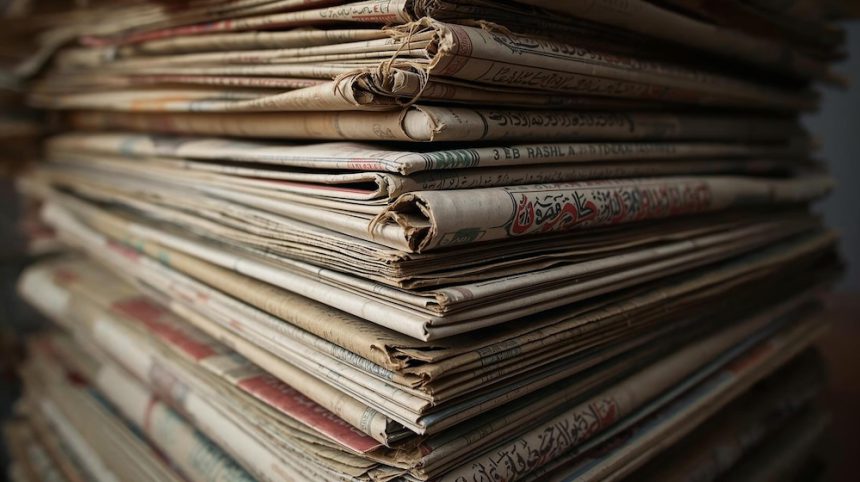
After reading Reyaz’s post, I felt it was important to see how Urdu newspapers had covered the story, or whether they had covered it at all. I should note that I was not able to review every Urdu newspaper; I only examined those that are available online.
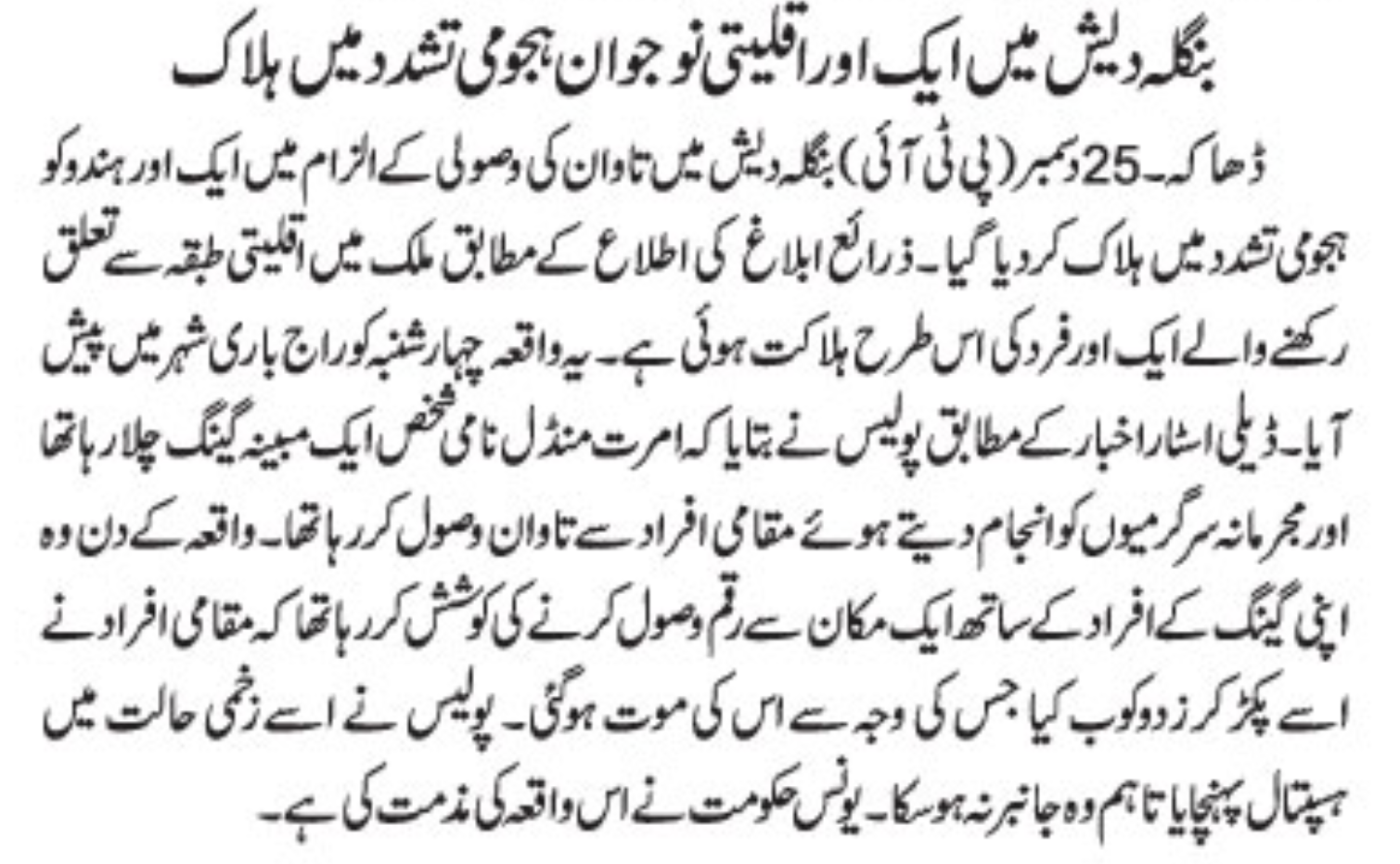
I first looked at the Urdu newspaper Etemaad, published in Hyderabad. It is probably unnecessary to discuss its ownership or political affiliations. What is noteworthy, however, is that the paper gave space to both stories. Its front page carried a report about Bangladesh with the headline: “Bangladesh mein ek aur aqliyati naujawan hujumi tashaddud mein halak.” (Another minority youth killed in mob violence in Bangladesh.) Although the headline refers only to a “minority,” the victim’s identity is specified in the opening line as “Hindu.”
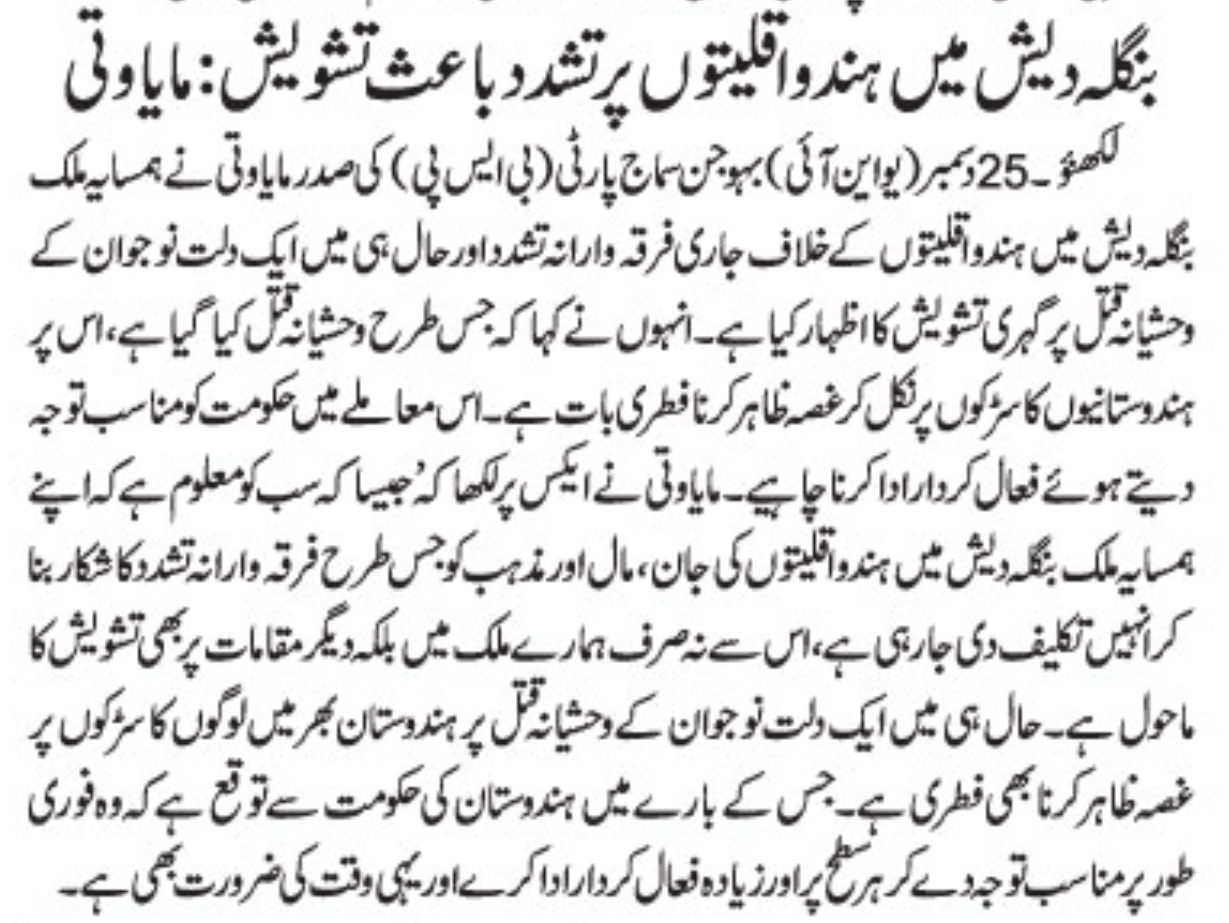
On the same page, the newspaper also published a statement by Bahujan Samaj Party president Mayawati, in which she expressed deep concern over the brutal killing of a Dalit youth in Bangladesh. Her concern is, in itself, appropriate. However, this raises an important question: why did she not issue a similar statement following the recent killing of Ram Narayan, a Dalit youth who was lynched in Kerala?
Ram Narayan had travelled from Chhattisgarh to Kerala in search of work. He was allegedly mistaken for a “Bangladeshi” and killed by a mob in the Walayar area of Palakkad district. Five people were arrested in connection with the case, four of whom were reportedly linked to the BJP and the RSS. This context makes the absence of a public response from Mayawati all the more striking.
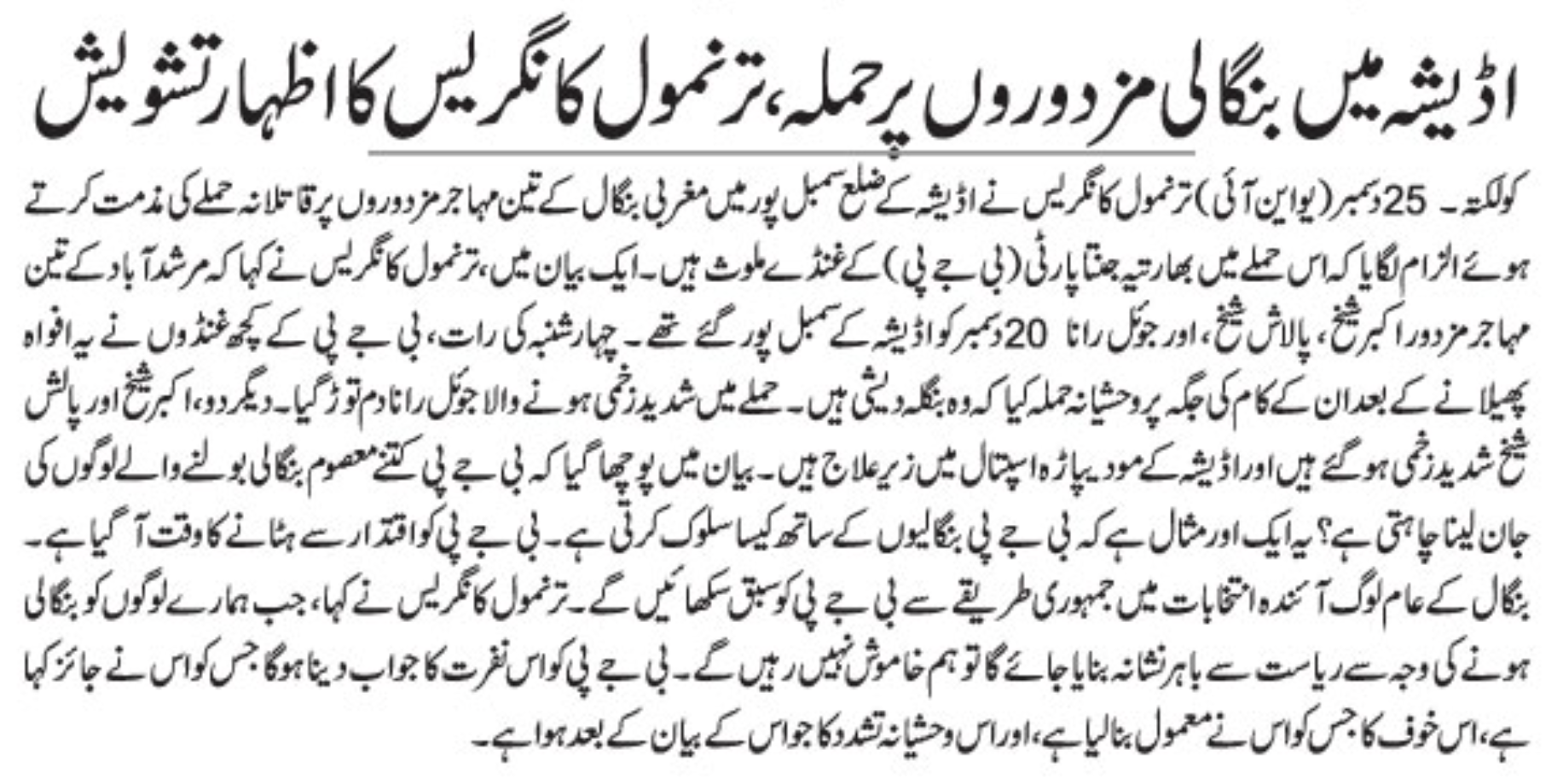
On page four of the same newspaper, there is a report about Odisha with the headline: “Odisha mein Bengali mazdooron par hamla, Trinamool Congress ka izhar-e-tashwish” (Attack on Bengali workers in Odisha; Trinamool Congress expresses concern.) The article is based entirely on a statement issued by the Trinamool Congress. The Telegraph has published a detailed report on this incident.
The well-known Urdu daily Siasat appears to have gone a step further than Etemaad in its coverage. On page three, it published a report with the headline: “Bangladesh mein ek aur Hindu naujawan ka qatal” (Another Hindu youth killed in Bangladesh.) On page five, it carried the same statement by Mayawati that had also appeared in Etemaad. It is unfortunate, however, that Siasat did not consider the attack on Muslim workers in Odisha newsworthy. The incident did not receive coverage anywhere in the newspaper’s 28 pages.
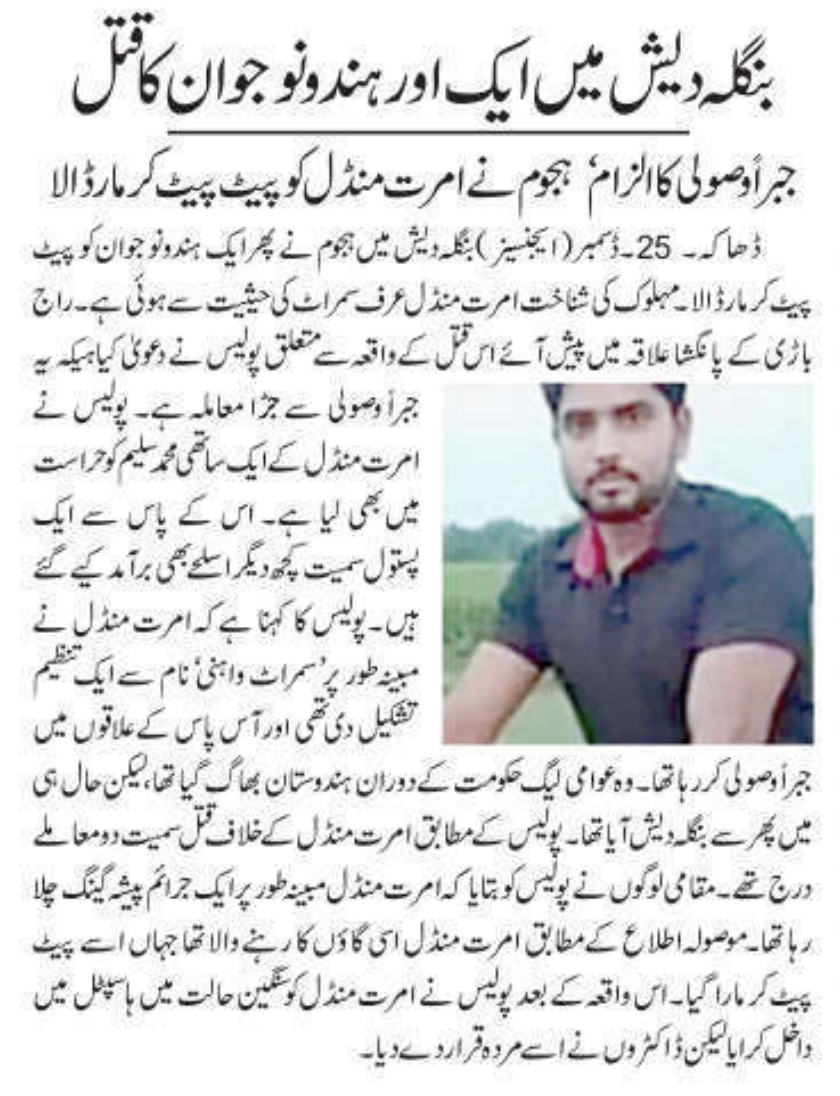
I also reviewed Munsif, another Hyderabad-based Urdu newspaper. This paper did not give prominence to either of the two incidents, although it did publish Mayawati’s statement.
In addition, I searched for coverage in the Kolkata editions of Siyasi Taqdeer, Qaumi Tanzeem, Rashtriya Sahara, and Hamaara Samaj, all national-level Urdu newspapers. None of these papers appeared to have reported on these incidents.
This is not a new pattern. Earlier, when Ram Narayan was brutally lynched in Kerala, and the police stated that four of the five people arrested were affiliated with the BJP and the RSS, I did not see this incident reported in any Urdu newspaper—at least not in the publications I was able to review.
The current state of many Urdu newspapers is deeply disappointing. Today, much of the Urdu press in the country appears to function as an echo of the state rather than as an independent source of journalism. News is often presented not as reporting, but as official statements. In practice, these newspapers now seem dominated by press releases and quotations from political figures or so-called national leaders.
The uncomfortable truth is that the very Muslims in whose name many of these newspapers operate appear to show little genuine concern for the suffering, pain, lives, and property of ordinary Muslims. Incidents of oppression in other countries are readily turned into headlines, yet similar injustices within one’s own country—affecting one’s own people—are often ignored or deemed unworthy of coverage.
This silence raises serious questions regarding Urdu journalism and potentially jeopardizes its credibility. If Urdu journalism, too, becomes afraid to speak the truth, then who will speak? And if those who are meant to raise questions fall silent, where will the answers come from?
If truth is published only when it aligns with power, and silence is chosen when the truth is uncomfortable, then what distinguishes journalism from an official narrative? Newspapers are not merely vehicles for delivering news; they are the conscience of society. When that conscience is compromised, the loss is not borne by any single group, but by society as a whole, by the entire country.
If the voices of the oppressed are being suppressed today, then tomorrow their very identities may be erased. This is the true concern and the real danger.