

We may still not fully understand the scale of the damage that figures and movements associated with Hindutva ideology have inflicted on India’s standing in the world. This harm is not the result of a single incident, statement, or election speech. Rather, it is the outcome of a prolonged and cumulative process, gradual yet deeply consequential. Hostility toward Muslims, once largely visible in street-level violence, online discourse, or political rhetoric, has begun to seep into broader realms. It is quietly undermining India’s global reputation, reshaping its cultural identity, and affecting the fabric of everyday life, subtly, but persistently.
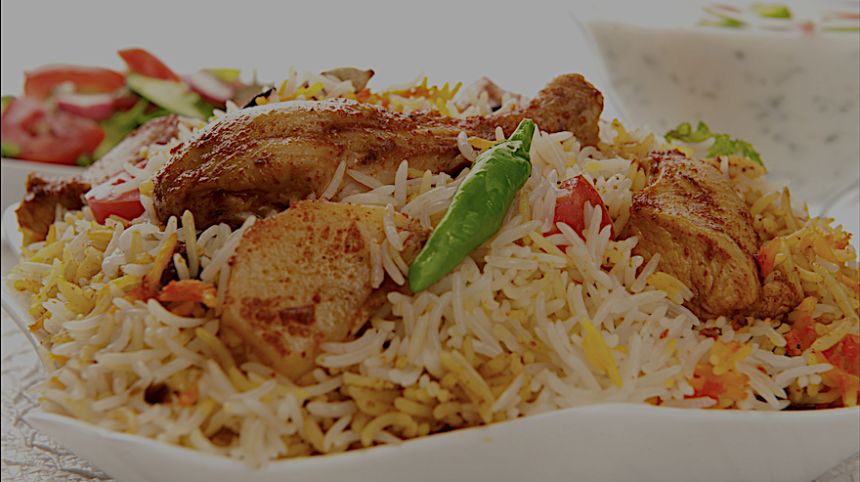
A few days ago, a friend of mine from Austria visited me in Istanbul. During one of our conversations, he said, “Let’s eat something different today—I’ve had enough Turkish food.” I excitedly suggested an Indian restaurant nearby and offered to treat him with biryani. To my surprise, he declined without hesitation. Instead, he suggested a Yemeni restaurant to have mandi, where I also usually go when I need a change in my taste buds.
His reaction stayed with me. I couldn’t help but wonder: what explained this sudden reluctance toward biryani?
After the meal, I couldn’t hold back and asked him directly, “Don’t you like Indian food?”
His response caught me off guard. “I used to like it a lot,” he said, “but not anymore.” What he added next made me even more uncomfortable: “Please don’t mind, but I think Indian food isn’t hygienic. It’s prepared in a very unhygienic way. And I don’t understand why.”
I tried to respond. I explained that this was a sweeping generalization; every country has both good and bad kitchens, and that Indian cuisine is globally celebrated for its variety and dishes full of flavor. I wanted to say that only few cuisines match Indian food in richness of flavors. But he wasn’t in the mood to listen. In the end, I had no choice but to fall silent.
Some time later, we were sitting in a café, talking about something entirely different. As we spoke, he was scrolling through his phone when he suddenly stopped and showed me a video. In it, a man was preparing biryani and pouring sewer water into the pot.
At that moment, everything became clear to me. It was the same video that had gone viral on social media in India some time earlier. I had already seen it—and had also read the fact-check. Alt News had stated clearly that the video was fake, generated using AI, and created with the sole purpose of spreading hatred against Muslims.
I told my friend, “This is an AI-generated video, another attempt to defame India.”
I don’t know how much he believed in my answer—perhaps he did, perhaps he didn’t. But the question this raises is far deeper than our conversation. People working in the media know the video is fake. Fact-checking organizations have exposed it as false. Yet how many people within our own country would have accepted it as true? And for those who have little or no familiarity with India, it would appear entirely believable. That is what makes it most dangerous.
By fostering hatred toward Muslims, we are ultimately harming our own country. Indian cuisine once carried a strong global identity—defined by its rich use of spices, its extraordinary range of flavors, and its distinctive balance of vegetarian and non-vegetarian traditions. Today, however, the uncomfortable reality is that in many parts of the world, people are beginning to avoid Indian food altogether. And I am not exaggerating.
This was not an isolated incident. In 2024, after moving into a new rented home, we sent biryani to our neighbors, carefully limiting the oil and spices. They accepted it warmly and praised the dish. A few days later, they returned the gesture by sending us delicious Turkish food.
Thinking back, we realized we had sent only a small portion of biryani the first time, worried about whether they would enjoy it. Since they had appreciated it, we decided to send a larger portion so the whole family could share it.
But when my wife brought the biryani over, the first question she was asked was, “Is it made with Indian spices?” My wife replied that it used only Turkish ingredients—nothing imported—and explained that it was simply inspired by culinary traditions learned in India. She reluctantly accepted it, but this time there was no message of thanks or appreciation. My wife also sensed something unusual in her question about spices.
Later, our neighbour shared a news link with us on WhatsApp and asked about its reliability. The report was unsettling. It stated that in April 2024, Hong Kong had banned the sale of certain MDH and Everest spice products after tests found pesticide residues exceeding permissible limits. Following this, India’s food regulator, the FSSAI, conducted inspections of spices sold domestically. The findings showed that nearly 12 percent of the samples failed to meet quality and safety standards. That was when it became clear that our biryani’s fate had probably been decided long before it reached the dining table.
This was a sobering moment for a country that is the world’s largest producer, consumer, and exporter of spices. The report went on to note that the United Kingdom had called for stricter monitoring of Indian spice imports, while the European Union raised concerns about carcinogenic compounds found in chili and black pepper. New Zealand, the United States, and Australia also initiated reviews of these products.
These issues are serious in themselves. Adulteration, regulatory gaps, and weak food safety enforcement are real and urgent problems. But layered onto these concerns is another narrative—one that is even more dangerous.
On social media, a coordinated propaganda campaign linked to groups associated with Hindutva ideology began circulating claims that Muslims contaminate food by spitting in it. A neologism was coined, “thook jihad.”While videos were manufactured, selectively edited, or taken out of context to present misinformation as facts. The sole aim of this content was to defame Muslims.
Its impact went far beyond individual communities, casting suspicion on food across India as a whole. Many assumed these videos were deliberately produced to incite hatred against Muslims—and that assumption proved correct. Fact-checking organization Alt News investigated a large number of these clips and found most of them to be fake or misleading, concluding that their primary purpose was to vilify Muslims.
Perhaps we have forgotten that, for those outside India, there is no distinction between “Muslim food” and “Hindu food.” There is only “Indian food.” When social media repeatedly portrays it as unsanitary, through images of people spitting into dishes or working in unhygienic kitchens, it damages the image of the country as a whole. After being exposed to such narratives, it is hardly surprising that many would hesitate to eat Indian food at all.
The irony is that those who spread this hatred may never have considered who they were truly harming. In targeting Muslims, they have weakened India’s soft power and cast doubt on the country’s very identity.
Today, Indian cuisine is not being maligned only because of concerns over adulterated spices. It is also being damaged by hatred deliberately deployed as an ideological weapon. This hostility is no longer contained within India; it now circulates globally through WhatsApp forwards, Instagram reels, and AI-generated videos.
This is not only about Muslims. It is about India itself, about the identity of a country that once took pride in its cuisine and its cultural diversity.
If we dismiss this as “just social media” or assume that it does not matter, we are deceiving ourselves. When hatred is exported, a nation’s reputation is exported with it. And once that reputation is damaged, it is among the hardest things to restore—no matter how loudly a country proclaims its global stature or leadership.
The question today is no longer whether a particular video is real or fake. It is why we have created an environment in which lies spread faster than truth and facts. The longer this continues, the higher the cost we will all pay.
For those living outside India, a person from India is seen first as Indian, not as Hindu or Muslim. Perceptions formed through social media, therefore, attach themselves to the country as a whole. This is already contributing to growing suspicion toward Indian cuisine. When people abroad repeatedly encounter images of unhygienic food, fabricated videos, or sensational clips of individuals consuming cow urine or cow dung, a distorted narrative of India begins to take root in their minds. Added to this are existing concerns over adulterated spices, which further reinforce negative impressions.
If India is to protect its global standing, it must confront not only regulatory failures and misinformation but also the politics of hate that feeds them. A nation’s reputation is not tainted overnight, nor is it rebuilt easily. It is shaped every day by what we choose to believe, share, and normalize. The future of India’s identity, culture, and soft power depends on these choices.
Afroz Alam Sahil is a journalist and author. He can be contacted at @afrozsahil on X.