


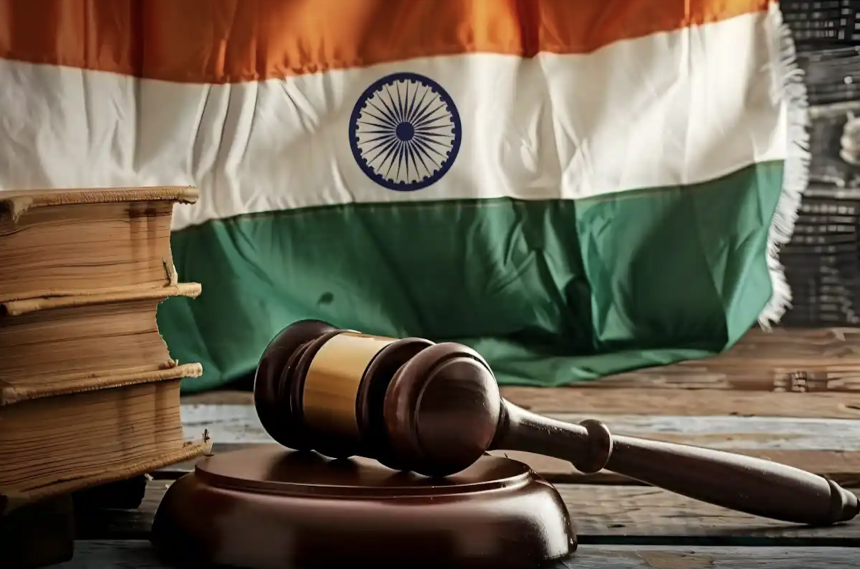
It all began on a quiet afternoon when my seventh-grade cousin dropped his Civics textbook onto my desk with a look of utter exhaustion and let out a long sigh. “I just hate Civics,” he said. Next moment, I was instantly recalling my own childhood, where Civics meant nothing more than empty rote learning. But his complaint wasn’t just a child’s grumble, it was a small echo of a vast national reality. In 2015, a survey by the Magna Carta Trust revealed that 39 percent of people surveyed in India had never even heard of the Constitution of India, the very document that defines the rights and duties of every citizen. Far from being confined to a seventh-grader’s classroom, this systemic ignorance pervades every strata of Indian society.
Why Constitutional Literacy Matters
As Dr. B.R. Ambedkar reminded us, a Constitution can provide the framework for democracy, but its real meaning depends on whether people know it, understand it and use it. A Constitution without an informed citizenry risks becoming only a framework on paper, a “skeleton” without the life of public participation. Knowing our rights, freedoms and the responsibilities that accompany them enables us to exercise our rights, question institutions, demand accountability and participate meaningfully in democracy, rather than passively accepting circumstances as fate. The Constitution is not merely a document that governs us; it is also a tool that empowers us to ask what we are entitled to, what we can demand, and what we can do as citizens to shape the society we live in.
Highlighting this founding vision, Dr. Rajendra Prasad remarked during the adoption of the Constitution: “Our Constitution is a democratic instrument seeking to ensure to the individual citizens the freedoms which are so invaluable. India has never prescribed or prosecuted opinion and faith and our philosophy has room as much for a devotee of a personal god, as for an agnostic or an atheist. We shall, therefore, be only implementing in practice under our Constitution what we have inherited from our traditions, namely, freedom of opinion and expression. Under the new set-up, which we are inaugurating today, we hope to live up to the teachings of our Master and help in our own humble way in the establishment of peace in the world.”
Far from an abstract academic exercise, constitutional literacy serves as a vital lifeline for India’s marginalized communities including Dalits, Adivasis, women, and minorities, empowering them through guaranteed legal rights, affirmative action, and protections against discrimination to build a truly inclusive democracy. By equipping citizens with a deep understanding of their fundamental liberties, it fosters a culture of peaceful assertion and democratic dissent, as demonstrated by recent youth movements that invoke the Constitution and its Preamble as a shield against injustice and state overreach.
Why Are So Many Citizens Unaware of Their Rights?
This widespread ignorance is systemic. Within the citizenry that has at some point of time attended school, classrooms emphasize the rote memorization of articles and concepts rather than fostering a genuine understanding and everyday application of rights in the daily lives of students. The Brazilian educator Paulo Freire called this the “banking model” of education, where teachers deposit information onto passive students treated as empty containers. Combined with historical socio-economic inequalities, illiteracy, and a deep-rooted deference to authority, citizens are rarely encouraged to question power or realize that basic dignity and equality are guaranteed by law.
If we are to change this, we must teach the Constitution differently; a reality proven in Keralam’s Kollam district. Through a seven-month campaign called “The Citizen,” Kollam set out to teach the Constitution to every resident above the age of ten, reaching 16.3 lakh people, making it India’s first constitutionally literate district. Keralam achieved this by leveraging critical pedagogy. Instead of lecturing, over 2,200 trained volunteers called “Senators”—mostly women and youth from the Kudumbashree network—hosted “Equality Forums” at households, MGNREGA worksites, and tribal councils. They translated dense legal text into daily life, asking questions like: “How does Article 14 (Equality) apply to your daily wage?” or “How does Article 21 (Right to Life) protect your drinking water?”
Cultivating Constitutional Morality
Yet, teaching citizens the mechanics of rights is only half the battle. The deeper necessity lies in cultivating what is called Constitutional Morality. In his address to the Constituent Assembly, Dr. Ambedkar famously argued that a constitution, no matter how meticulously drafted, is merely a skeleton. Its survival depends on the moral commitment of those who operate it and live under it. He defined constitutional morality not as mere respect for legal forms, but as a deep commitment to peaceful political processes, a respect for constitutional means over extra-constitutional shortcuts, and a willingness to respect minority rights and dissenting views. He emphasized that constitutional morality is not a natural sentiment; it has to be cultivated.
The Trinity of Liberty, Equality, and Fraternity
The foundation of constitutional morality is laid down in the Trinity of Liberty, Equality, and Fraternity. In his historic speech on November 26, 1949, Dr. Ambedkar said:
“We must make our political democracy a social democracy as well. Political democracy cannot last unless there lies at the base of it social democracy. What does social democracy mean? It means a way of life which recognizes liberty, equality, and fraternity as the principles of life. They are not to be treated as separate items in a trinity. They form a union of trinity in the sense that to divorce one from the other is to defeat the very purpose of democracy.”
Without equality, liberty produces the supremacy of the few over the many; without liberty, equality suffocates individual initiative; and without fraternity, a sense of common brotherhood among all Indians, liberty and equality cannot naturally endure.
For this trinity to survive, key institutions must actively uphold constitutional morality. The bureaucracy must anchor its loyalty strictly in the Constitution rather than serving as passive instruments of the political party in power, ensuring equal service delivery without bias. Simultaneously, the judiciary must continue to act as the ultimate guardian, applying constitutional morality to curb executive overreach, strike down unconstitutional laws, and protect individual liberties against majoritarian passion.
India is still living a life of contradictions. While we have successfully sustained universal adult franchise (“one person, one vote”), we continue to live in a state of social and economic inequality where “one person, one value” remains unachieved.
Dr. Ambedkar observed that democracy in India was merely “a top-dressing on an Indian soil, which is essentially undemocratic.” And to safeguard this fragile democratic soil, he quoted John Stuart Mill, warning citizens “not to lay their liberties at the feet of even a great man, or to trust him with powers which enable him to subvert their institutions.” He applied Mill’s insight to warn against Bhakti (hero-worship or devotion) in politics, stating that while Bhakti may be a road to salvation in religion, in politics it is a sure road to degradation and dictatorship.
Today’s political landscape has degenerated into a cult of personality, where blind political Bhakti, divisive identity tactics, and authoritarian shortcuts actively gut institutional integrity.
Upholding the Constitution
A constitution, as Ambedkar remarked, is only as good as those who work it. Independence stripped away the excuse of blaming foreign rulers for what goes wrong; if things fail now, we have only ourselves to blame. Upholding the Constitution prevents the tyranny of the majority, preserves social peace by providing legal mechanisms to resolve grievances, and protects personal liberty against arbitrary state action.
Citizens cannot leave constitutional literacy solely to the government or formal schemes like the Citizens Duties Awareness Programme (CDAP) or Humara Samvidhan, Humara Samman. True transformation requires everyday participation across society. Citizens can actively promote constitutional values by organizing neighborhood reading groups modeled on Keralam’s “Equality Forums” to discuss the Preamble in local languages, replacing rote civics in schools with interactive mock parliaments and real-world debates, and translating dense court rulings into accessible vernacular stories, podcasts, illustrative visuals, and graphics. A Constitution written for all must finally be read, understood, and lived by all.
Anwesha Suman is a parliamentary researcher and former LAMP Fellow. She is currently working on an independent project titled Samvidhan Kala Yatra.