

As a Sunni Muslim, I hold theological differences with the Shia school of thought. But intellectual honesty demands that political leadership be judged on more than ideology alone. Personal integrity, public conduct, and a leader’s willingness to carry the same burdens as their people, all of that matters too.
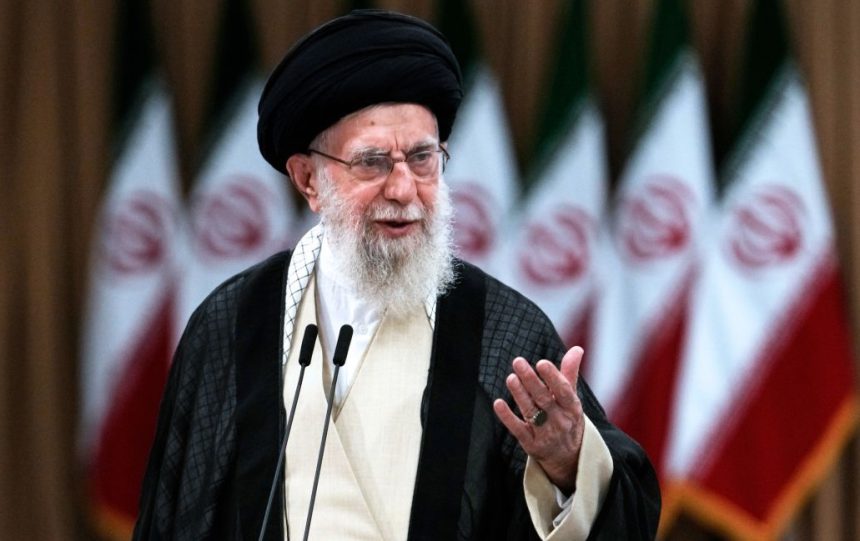
We live in an age when political figures are routinely accused of corruption, nepotism, and treating public office like a family business. Against that backdrop, the image projected by Iran’s late Supreme Leader, Ayatollah Ali Khamenei, stood apart. His supporters point to an austere lifestyle, a politics grounded in religious conviction, and a view of leadership as a trust before God rather than a privilege to be exploited.
Whatever one thinks of his politics, there is something worth noting about leaders who present themselves as answerable to a higher authority. Belief in God, in the Prophets, in a Day of Judgment, can instill a sense of accountability that outlasts election cycles and opinion polls. Genuinely held, that kind of faith tends to discourage the pursuit of personal wealth and unchecked power.
Iran’s Foreign Minister, Abbas Araghchi, wrote on X that Khamenei left behind no palaces, no bank accounts, and no fortune after 47 years in power, no yachts, no hidden billions, no golden thrones, just a life spent serving people. Analysts who study Iran told the Financial Times that Khamenei had spoken privately about the possibility of assassination and seemed to regard his own survival as secondary to that of the Islamic Republic.
That tension surfaced again in a striking detail shared at the India Today Conclave in New Delhi. Abdul Majid Hakeem Ilahi, described as a representative of Iran’s Supreme Leader, said Khamenei refused to leave his Tehran residence for a bunker even as tensions with Washington and Tel Aviv escalated. He would only do so, Khamenei reportedly insisted, if safe shelter could be guaranteed for all 19 million residents of the city. Read it as moral symbolism or as political theatre, either way it reinforces the image he wanted projected: a leader unwilling to be seen as separate from the people he governed.
Modern politics, more often than not, tells a different story. Across democracies and authoritarian states alike, political dynasties keep flourishing. Leaders talk endlessly about “country first” while allegations of corruption, conflicts of interest, and family enrichment become almost routine. Public office, too often, is treated as an inheritance rather than a trust.
Israel offers its own version of this contrast. The country has weathered repeated corruption scandals, and its own attorney general has indicted Prime Minister Benjamin Netanyahu on bribery, fraud, and breach of trust across three separate cases, according to the BBC. Separately, the International Criminal Court has issued arrest warrants tied to the broader war, concerning allegations of war crimes rather than domestic corruption. Many analysts have argued, publicly and pointedly, that prolonging the war serves Netanyahu’s own political survival, with ordinary Israelis absorbing the consequences of decisions shaped by personal calculation.
The United States is not exempt from similar questions. During the Iran conflict, market analysts and journalists pointed to unusually well-timed bets on oil prices, stock indexes, and prediction markets, prompting scrutiny over who may have profited from the crisis. At the same time, Representative Jamie Raskin launched a House Judiciary investigation into potential conflicts of interest involving Jared Kushner, whose investment firm, backed largely by Gulf sovereign wealth funds, continued to expand while he served as a senior adviser. The fact that Kushner is President Donald Trump’s son-in-law only deepened concerns about the blurred lines between public office and private gain.
For ordinary Americans, the issue is straightforward: when diplomacy, political power, and financial interests become intertwined, public trust inevitably suffers. The line between serving the national interest and serving personal interests becomes dangerously thin.
The contrast sharpens further when one looks at several Gulf monarchies, where immense personal wealth, dynastic privilege, and global investment portfolios coexist with a heavy reliance on foreign powers for national security. Palaces, offshore assets, and elite lifestyles project an image of strength, yet the survival of these regimes has long depended on foreign military bases, strategic partnerships, and external security guarantees. That dependence raises an uncomfortable question about sovereignty: when a nation’s defence is largely outsourced, how much of its power is truly independent? The recent U.S.-Israel-Iran confrontation, which exposed the vulnerabilities and strategic constraints of the region despite decades of security partnerships, served as a reminder that wealth and external patronage cannot by themselves guarantee either security or genuine sovereignty.
And yet, we keep splitting the world into two competing moralities. In the West, and among its allies, American and Israeli leadership is treated as inherently legitimate simply because it wears the label of democracy. Across much of the Global South, that same leadership looks like injustice dressed up in democratic language, and Iran’s defiance reads, to many, as the more principled stand. Both camps are certain they hold the moral high ground. Both are, in their own way, right and wrong at once.
An independent reading doesn’t have to choose a side in that binary. It can step outside it entirely. This is the post-truth era, where narrative often outruns fact, and where “good” and “bad” have become less a matter of evidence than of which side of the map you’re standing on.
Understanding Khamenei’s leadership honestly, at a moment when Iran is mourning his death, is itself a kind of tribute, not necessarily to agreement, but to the seriousness with which his life and choices deserve to be examined.