


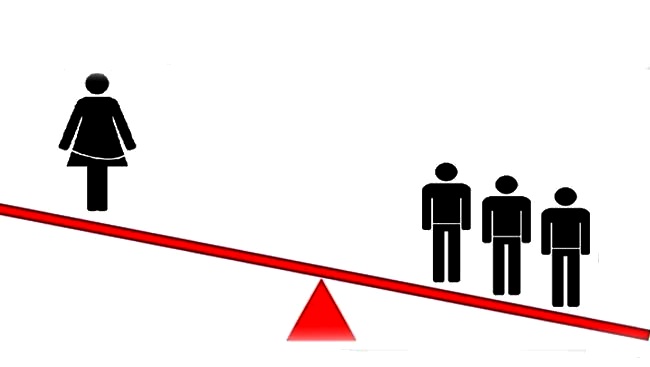
Child Sex Ratio set to fall to little over 800 girls per 1,000 boys in Uttarakhand, all Utilisation certificates of the Nanda Devi Kanya Yojana are without date, stamp and reference number
BeyondHeadlines News Desk
New Delhi: Asian Centre for Human Rights in its report, “The State of Female Foeticide in Uttarakhand“, stated that as per the latest reports of the Annual Health Survey (AHS) conducted by the Registrar General & Census Commissioner of India, child sex ratio i.e. number of girls per 100 boys, is all set to fall drastically to a little over 800 by 2021 census. The sex ratio at birth (SRB) as per the AHS was respectively 861 in 2011-2012 and 867 during 2012-2013 in Uttarakhand. If under-five mortality rate (U5MR) of 48 deaths per 1,000 births in India is taken into account in Uttarakhand context, the CSR in Uttarakhand would have reduced to 813 in 2011-2012 and 819 in 2012-2013. Uttarakhand has the 7th lowest Child Sex Ratio (CSR) in the age group of 0-6 years among 35 States/UTs of India as per 2011 census with CSR of 890 girls per thousand boys.
As per the statement of Health Minister of India Mr J P Nadda before the parliament on 3 March 2015 during 2009 to December 2014, not a single conviction was secured under the Pre-conception and Pre-Natal Diagnostic Techniques (Prohibition of Sex Selection) Act (PCPNDT Act), 1994 in Uttarakhand.
On the implementation of the Nanda Devi Kanya Yojana (NDKY) launched in 2009 and renamed as Hamari Beti Hamara Abhiman (HBHA) in 2014, the report stated that Uttarakhand govt failed to achieve its primary objectives to reduce gender imbalance in child sex ratio, prevent female foeticide and provide social and economic security to the girl child. The scheme itself is designed not to have any impact. The NDKY is extended only to Below Poverty Line (BPL) families while the Above Poverty Line (APL) families who use and can afford sex selective abortion are completely left out. Even for the BPL families, the NDKY covered only 4.97% of the BPL families. As per the BPL survey conducted by the Government of Uttarakhand during 2011-2012, there were a total of 6,19,718 BPL families but as per the Uttarakhand government’s own admission, in 5 years from 01.01.2009 to 31.12.2015, only 30,830 girls or 4.97% of the BPL families were given benefits under the NDKY. In terms of those born, as per 2011 census, a total of 2,50,803 females in the age group of 0–2 years or an average of 83,601 girls are born annually in Uttarakhand. If only 30,830 beneficiaries were extended benefits under the NDKY from 01.01.2009 to 31.12.2015, it implies that 6,166 girls were given benefits annually against the birth of 83,601 girls i.e. 7.37% of the girls born annually.
There are serious doubts whether actual beneficiaries are benefitting at all under the Nanda Devi Kanya Yojana. The utilization certificates (UCs) of the NDKY provided to Asian Centre for Human Rights by the authorities under the Right to Information Act seem to have been prepared only to be shared under the RTI Act. Except one UC submitted by District Program Officer (DPO), Almora, all other UCs have no date, reference number and official stamp. In the absence of all these, authenticity of the UCs is highly doubtful.
ACHR has filed a complaint with the National Human Rights Commission of India to address the findings of the report.