


Mental illness is one of India’s most pressing yet overlooked health crises. Nearly one in seven Indians faces a mental-health condition, but stigma, poor awareness, and limited care keep most suffering in silence. Urban stress, academic pressure, financial insecurity, and social media comparison intensify anxiety—especially among youth—while digital culture often deepens isolation and emotional detachment.
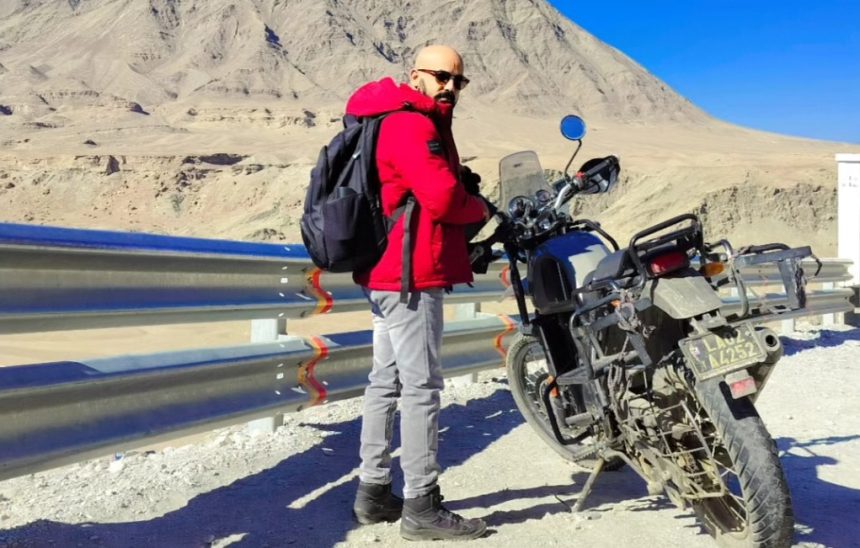
In this context, Dr. Istikhar Ali, a sociologist and public health researcher, is embarking on a 3,500-kilometre solo motorcycle journey from Delhi to Kerala and back.
Dr. Istikhar holds an MPhil and a PhD in Social Medicine and Community Health from Jawaharlal Nehru University (JNU). His research explores the intersections of ageing, social exclusion, and mental health, with a focus on the social determinants shaping psychological well-being.
He previously worked as a researcher on the NIH-funded “Harmonized Diagnostic Assessment of Dementia – Longitudinal Aging Study in India (LASI-DAD)”, a collaboration between the University of Southern California and AIIMS, New Delhi, that examines cognition and dementia among India’s elderly. To further his expertise, he is also pursuing a course on Policy Development and Advocacy in Global Health at the University of Washington.
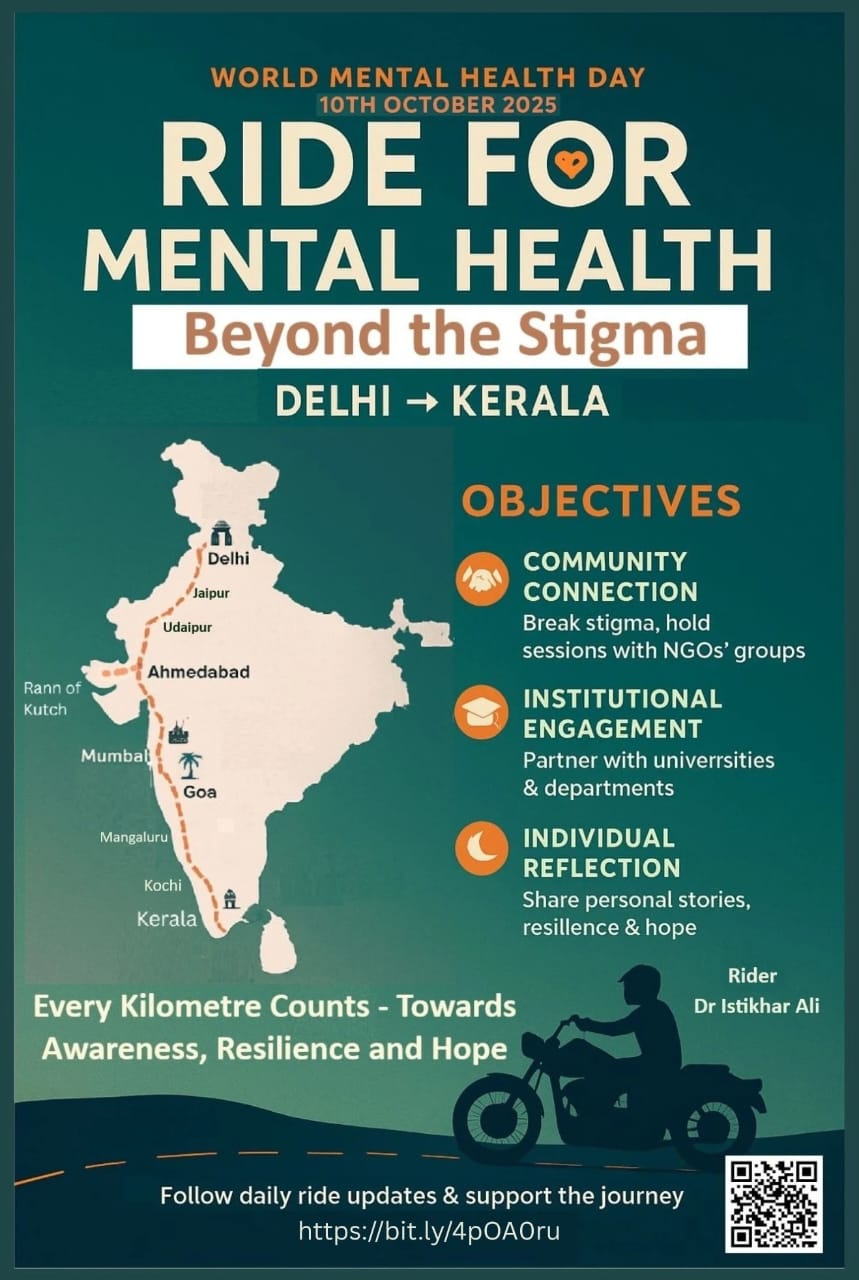
Dr. Istikhar’s campaign, titled Ride Beyond the Stigma, will begin on World Mental Health Day (October 10). More than a bike ride, it is a symbolic journey to turn research and lived experience into public dialogue, awareness, and action. As Dr. Istikhar puts it, “Ride Beyond the Stigma is not just a journey on the road—it’s a journey into the mental landscape of India.”
Sugandha Priya spoke with him exclusively for BeyondHeadlines. Here are some highlights from that conversation:
Doctor, what is the main purpose behind this bike ride?
This journey has three interconnected goals. First, I want to observe firsthand how mental health experiences vary across urban, semi-urban, and rural India. Second, I aim to understand how social, economic, and institutional factors shape people’s mental well-being in their everyday lives. And third, I hope to gather real stories from youth, students, and local communities—so that national-level research can be grounded in lived reality.
How did you come up with the idea for this bike ride?
One thing I saw very clearly while working in Delhi is that mental health is often perceived as an individual failing, not a structural problem. However, the real pressures come from economic uncertainty, communalism, hyper-competitiveness, and social media. All of these combine to put a mental burden on people that is often not realized, and unfortunately, services are limited, and social acceptance is also low. That is why I thought, why not break this silence, see the real facts, and talk to people directly. In other words, this journey of mine is a means of observing the facts, breaking the silence, and starting a dialogue.
What inspired you to delve deeper into the topic of mental health?
When I started my fieldwork, one thing stood out—stressors like poverty, urban lifestyles, job insecurity, and communal tensions have become commonplace. People have become so accustomed to their suffering that they have come to view it as normal.
Is this a problem that only affects young people, or do older adults also suffer?
Older adults are affected as well. For instance, memory loss or cognitive decline is often dismissed as a normal part of aging, even though it can be a serious mental health issue in its own right.
What has your academic research revealed about this?
My research—including work on studies like LASI-DAD—has shown one thing clearly: mental health is never just an individual problem. It reflects the broader social fabric. Whether it’s exam and employment pressures for youth or memory loss in the elderly, silence and neglect are pervasive across all ages, classes, and social connections. That’s why I strongly believe we need comprehensive, community-based mental health responses—systems that support individuals rather than leaving them to cope alone.
Doctor, social media is often cited as a major contributor to depression these days. What’s your take on this?
Absolutely. Social media amplifies comparison, creates unrealistic expectations, and deepens emotional isolation. Many young people feel they are constantly falling behind—as if running an endless race. This relentless pressure can even make them hesitant to seek help, because they fear being seen as weak.
How will your project engage with social media?
We want to use social media in a positive way—as a platform for empathy and awareness. I’ll share daily travel stories, short videos, and reflections from my journey—including motor breakdowns and small successes—to show that the path of mental health is much like a journey: sometimes smooth, sometimes bumpy, but life is about keeping moving forward.
In addition, we’ll host Q&A sessions, awareness campaigns, and share real-life stories to normalize conversations about mental health. The goal is to eliminate feelings of inferiority, encourage open dialogue, and make asking for help a sign of strength, not weakness.
How will you connect with people during this journey? Any specific plans?
Yes, I’ve developed a comprehensive strategy. My goal isn’t just to travel—it’s to interact, listen, and learn from people at every stop. First, I’ll visit universities, NGOs, offices, and residential institutions to hold interactive sessions, including storytelling, role-plays, and discussions. This approach makes conversations about mental health engaging and open. Second, I’ll train youth and hostel students as “Mental Health Ambassadors”. They will help peers, listen actively, and spread awareness within their institutions. Third, we’ll run weekly sessions in hostels, covering topics like emotional awareness, stress management strategies, and career guidance. Finally, we’ll create low-cost, locally adapted booklets and training materials in regional languages, so the message reaches small towns and villages—not just big cities—and has a lasting impact, not just a temporary one.
Dr. Sahib, what do you think is the biggest misconception about mental health in India?
The biggest misconception is that mental health is either a sign of weakness or a luxury. Many believe that only wealthy young people experience depression, or that seeking help means a person isn’t strong. The reality is quite the opposite—mental health issues affect people across all classes, incomes, and education levels.
What role do religious and social institutions play in this?
Unfortunately, in many religious or residential institutions, mental illness is often seen as a moral or spiritual failure. This stigma makes people hesitant to seek help, delaying treatment. To truly break these misconceptions, we need to treat mental health as a collective responsibility—it’s not just an individual issue, but a vital aspect of public health.
What do you see as the main causes of depression among today’s youth?
This is a multifaceted problem. Young people face intense pressure from the education system—competitive exams, high expectations, and uncertainty about employment. On top of that, social media has created a constant race of comparison. Everyone presents the best moments of their lives online, which leaves viewers feeling they are falling behind.
Do family or social factors play a role?
Absolutely. Weak family ties, poor communication, and identity-based insecurity—especially among minority youth—can all contribute to depression. My fieldwork has shown that many students struggle with loneliness, anxiety, and deep uncertainty about their future.
Can even small gestures of support make a difference?
Definitely. Sometimes a trained teacher, a kind word from a classmate, or a sincere conversation can significantly reduce suffering and boost morale. Mental health doesn’t always require major interventions—sometimes a little understanding, listening, and support is the most powerful help someone can receive.
You mentioned Muslim youth in your study. How are their mental health challenges different?
The pressure is twofold for Muslim youth. They face identity-based discrimination and social exclusion, while economic uncertainty limits their opportunities. As a result, many feel isolated, lose self-confidence, or become hopeless.
Does the institutional environment also contribute to this stress?
Yes, absolutely. Residential institutions—like madrasas or hostels—often enforce strict discipline but lack career guidance and psychological support. There is little space for conversation, guidance, or emotional expression, which only heightens stress. In such settings, low-cost, culturally appropriate training programs, teacher training, and peer-support initiatives are essential.
Finally, what message would you like to give to young people?
My message is simple: you are not alone. Life, much like this journey, is not a straight road—it has twists, turns, and obstacles. True strength isn’t in hiding your struggles, but in sharing them, seeking help, and supporting others. My fieldwork shows that even a small conversation, a peer’s support, or the attention of a caring teacher can change the course of someone’s life. Mental health is not a luxury—it is a matter of survival.