

ISTANBUL: Türkiye has unveiled plans to push countries toward allocating resources equivalent to at least 5 percent of their GDP to climate security, as it prepares to host the United Nations climate change conference, COP31, in November.
The proposal could become a major part of Ankara’s climate diplomacy in the weeks leading to the summit in the Mediterranean city of Antalya from Nov. 9 to 20.
Türkiye’s Environment, Urbanization and Climate Change Minister Murat Kurum, who is also COP31 president-designate, said governments need to start treating climate change with the same urgency they give to national defence.
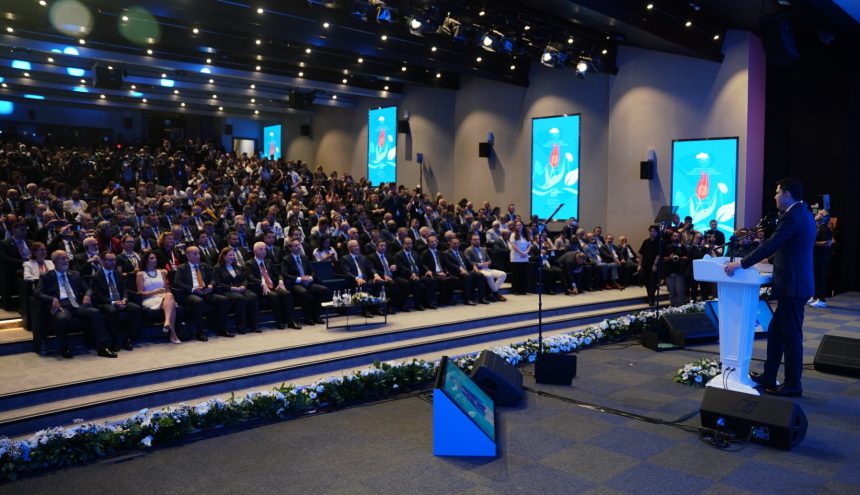
Speaking at the Istanbul Climate Finance Summit on Friday, Kurum pointed to NATO countries’ commitment to increase defence and security-related spending to 5 percent of gross domestic product.
He argued that climate security requires a comparable level of political and financial commitment.
“We expect all countries around the world to allocate at least 5 percent of their national budgets to climate security,” Kurum said while responding to a question after the summit’s opening session.
He suggested that the figure may ultimately need to rise further, potentially reaching 7 percent or even 10 percent.
The proposal reflects Türkiye’s effort to broaden the definition of security ahead of COP31. Ankara argues that floods, droughts, extreme heat, water shortages, wildfires and other climate-related disasters increasingly pose threats to economies and societies comparable to more traditional security challenges.
Kurum questioned the logic of governments dramatically increasing military expenditure without making a similar effort to protect the environment in which their populations live.
“If we do not have a safe world to live in the future, what will be the meaning of the spending we are making to defend our countries?” he asked.
He said the world is already redefining security and that climate investment should become part of that discussion.
Kurum called on governments to devote greater resources to clean energy, electrification, water security, climate-resilient cities and green industries.
“The real issue is not just defending countries, but leaving a world for our children and future generations that is livable and worth defending,” he said.

Trillions Needed for Climate Action
The appeal comes as Türkiye seeks to place climate finance at the center of COP31.
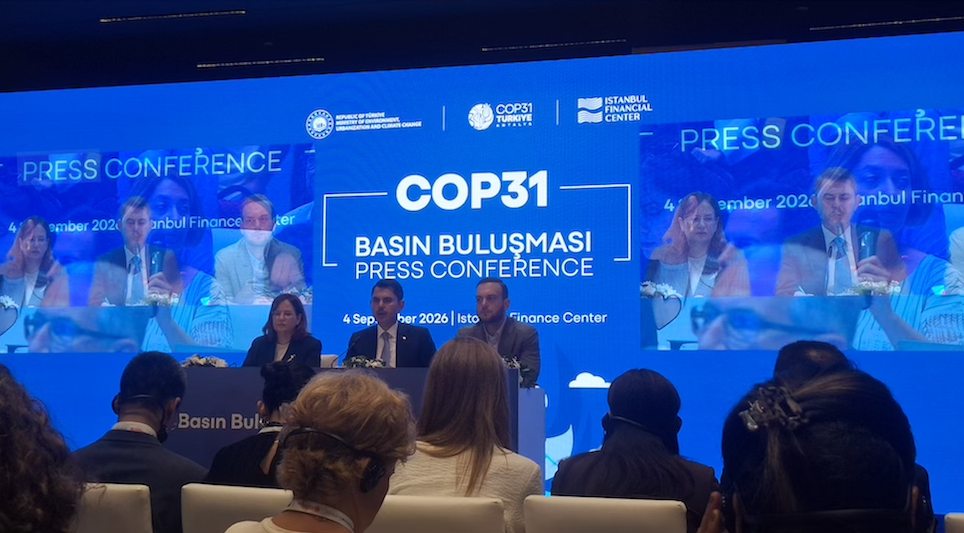
Kurum said global climate finance requirements are now estimated at between $7.5 trillion and $9 trillion, while current financing stands at about $1.9 trillion.
He described the difference as a “huge gap” that governments, financial institutions and the private sector need to close together.
For Türkiye, the financing debate is also about changing the way governments and investors view climate spending.
Kurum argued that money spent today on climate resilience should not be regarded simply as another cost to national budgets. Instead, it should be treated as an investment that can prevent far greater economic and social losses in the future.
He said recent disasters in countries including Nepal and China showed how expensive the consequences of climate change can become when countries are insufficiently prepared.
Responding to a question about Nepal, Kurum said rebuilding after disasters can require enormous financial resources. Investing in resilience and preparedness before disasters strike, he argued, can substantially reduce those costs.
The Turkish minister also presented climate action as an emerging economic opportunity.
He said green transformation and efforts to combat climate change could become one of the world’s biggest new markets.
Countries and companies that invest early, he argued, could gain access to new industries, financing and employment opportunities, while some traditional sectors and business models could shrink or disappear.
Clean and sustainable investment, he said, is likely to become one of the most resilient areas of the global economy.
Turning Promises into Projects
Türkiye is also developing a mechanism designed to address one of the persistent problems in international climate negotiations: the gap between climate commitments announced by governments and projects that can actually attract financing.
Kurum announced that the COP31 presidency has established what it calls the Climate Implementation Bridge.
The initiative is intended to bring countries seeking climate finance together with institutions capable of providing capital and technical assistance.
The mechanism will seek to turn countries’ climate and development priorities into concrete portfolios of projects capable of attracting investment.
Türkiye is working with the United Nations Development Programme on the initiative.
The proposal fits into Ankara’s wider ambition to make COP31 what Kurum calls an “Implementation COP.”
Rather than producing another collection of declarations, Türkiye says it wants the Antalya conference to help convert existing climate commitments into measurable projects and investment.
“We made a promise to humanity as the COP31 Presidency,” Kurum said.
He said Türkiye wants COP31 to transform decisions and commitments made during previous climate conferences into investment and “concrete solutions.”
Türkiye has identified a series of priority areas for COP31, including clean energy, electrification, zero waste, green industrialization, resilient cities, food security and climate finance.
The presidency has also emphasized oceans and seas, education and young people, health, technology and the ability of vulnerable communities and ecosystems to withstand climate shocks.
Cities at Center of Climate Financing
Cities are expected to receive particular attention under Türkiye’s approach.
Kurum announced another initiative called Sustainable Urban Resilience Financing, or SURFF.
The mechanism brings together Türkiye’s Climate Change Presidency, the state-owned development bank İLBANK and the COP31 presidency.
Kurum stressed that SURFF is not intended to create another climate fund.
Instead, it aims to combine financing, project preparation and implementation so municipalities can turn local environmental and infrastructure needs into projects that investors and international financial institutions can finance.
The approach reflects a broader problem facing developing countries and municipalities. They may know what infrastructure they need but often lack the technical capacity or financing structures required to turn those needs into investment-ready projects.
Türkiye says the new mechanism could help bridge that divide.
One of the first examples is emerging close to Istanbul.
Türkiye and the Asian Infrastructure Investment Bank signed a cooperation agreement Friday covering environmental, climate and urban infrastructure projects.
The first phase is expected to include an investment of around 400 million euros for cleaning the Sea of Marmara, including improvements to advanced biological wastewater treatment facilities.
The Marmara Sea has suffered serious outbreaks of marine mucilage, commonly known as “sea snot,” which threatens marine ecosystems and fishing communities.
Türkiye hopes the financing model developed for its cities can eventually be adapted for use by municipalities in other countries.
Private Sector Brought Into COP31
Kurum also stressed that governments cannot close the climate financing gap alone.
He called for much greater participation by banks, institutional investors and businesses.
Türkiye has appointed the Union of Chambers and Commodity Exchanges of Türkiye, or TOBB, as the COP31 presidency’s business representative.
TOBB is expected to host a Business Summit alongside the Leaders’ Summit and Finance Day in Antalya on Nov. 12 and 13.
The aim is to bring financial institutions, investors, companies and project developers into the same venue.
Türkiye hopes such meetings can shorten the distance between climate commitments, available finance and projects that are ready to be implemented.
Kurum said every climate-financing decision ultimately translates into something tangible: a city protected against disasters, a factory transformed, production preserved or lives saved.
Climate Justice Remains Key Issue
Climate justice is also expected to remain a major theme in Antalya.
Developing nations have long argued that they face a disproportionate share of climate damage despite contributing far less to the historical greenhouse gas emissions responsible for global warming.
Many also struggle with high borrowing costs and heavy debt burdens, limiting their ability to finance clean energy, adaptation and resilient infrastructure.
Kurum said Türkiye would keep climate justice and climate finance at the top of the COP31 agenda.
His comments follow months of Turkish diplomatic efforts to position the Antalya conference as a bridge between developed and developing countries.
The COP31 presidency says it wants to strengthen international cooperation while ensuring that the transition toward a lower-carbon economy does not leave vulnerable communities behind.
Türkiye will preside over COP31 while working closely with Australia, which has a major role in leading the negotiations.
The Turkish presidency has also been working with Azerbaijan, which hosted COP29, and Brazil, host of COP30, to maintain continuity between successive climate conferences.
Race Toward Antalya
COP31 will take place in Antalya from Nov. 9 to 20 and is expected to bring tens of thousands of government officials, negotiators, scientists, campaigners, businesses and journalists to Türkiye.
The World Leaders’ Summit is scheduled during the conference, providing a platform for heads of state and government to discuss national priorities and attempt to generate political momentum for climate action.
Türkiye says it wants the gathering to mark a shift from years of negotiating climate targets toward delivering them.
Kurum has repeatedly described the conference as both an “Implementation COP” and a “COP of the Future.”
That ambition will face a difficult global environment.
Wars, geopolitical tensions, debt pressures and growing defence expenditure are competing for government resources at precisely the moment when climate scientists and developing countries are calling for vastly greater investment in adaptation and the energy transition.
Kurum is seeking to turn that competition into the central argument behind Türkiye’s COP31 diplomacy.
If governments consider military spending an investment against threats that may emerge in the future, he argues, climate spending should be treated the same way.
He issued what he described as an open appeal to world leaders from Istanbul.
“It is time to demonstrate a stronger, bolder and more concrete political commitment to addressing climate change,” Kurum said.
For Türkiye, the message ahead of Antalya is that climate security should no longer remain a secondary environmental concern. It should become part of the way governments define national and global security itself.