

Once upon a time, a village was home to people from many tribes. One tribe formed the majority, while the others lived as minorities. One day, a few members of the majority set their eyes on the lands and properties of the minority —lands passed down from their ancestors, which they called waqf. Soon, these majority members spread false propaganda, accusing the minority of waging a so-called “land jihad.”
The village chief, who was close to the conspirators and shared their mindset, amended the laws governing waqf lands on the basis of this propaganda. He reassured the people: “This is all for your good. I am giving you new laws so you may live a better life.” But in truth, the amendments were designed only to seize the waqf lands and further weaken the minority.
The minority community raised its voice. They protested, they pleaded in every corner of the village. Yet the chief’s influence was stronger. At last, with the support of a few justice-loving villagers, the minority turned to the courts. The hearings dragged on: arguments made, objections raised, explanations offered. After a long wait, the court issued its interim decision: “There is no sufficient reason to strike down the law entirely. However, in the interest of justice, certain provisions will be temporarily suspended.”
The minority was left torn: Should they celebrate or grieve? The question lingered in their eyes: Was this justice—or just temporary consolation? Was this victory—or merely a way to make defeat look dignified? They stood before the ruins of their village, lamenting their fate, perhaps asking themselves: “When everything has already been taken, what meaning does a piece of paper called justice really hold? One day, even this Awqaf may vanish…”
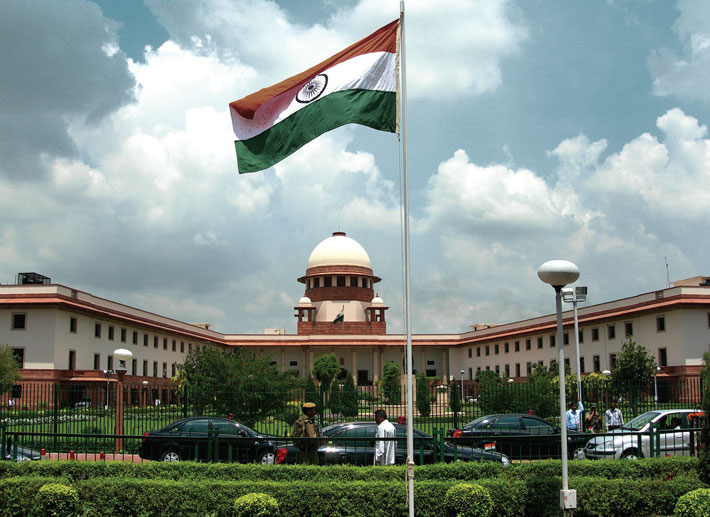
By now, you may have sensed the state of mind of Indian Muslims through this story. I am referring to the recent interim judgment of the Supreme Court on the Waqf Amendment Act 2025. While the ruling has temporarily suspended a few provisions, it has upheld several others that appear equally unjust — almost as if their validity has been endorsed.
In this context, the decision has not fully succeeded in safeguarding the fundamental rights of minorities. The Waqf (Amendment) Bill itself was introduced on questionable grounds—built on the claim that Waqf Boards wield excessive powers and on the assumption that any land they touch automatically becomes Waqf property. Alongside this, a conspiracy narrative was promoted: that Indian Muslims are engaged in so-called “land jihad.” Yet, instead of interrogating this allegation, the Supreme Court’s interim judgment appeared to accept it at face value. This failure to challenge a damaging narrative has only deepened the sense of insecurity among Muslims, particularly at a time when there is already widespread concern about the misuse of state power against minorities. Taken as a whole, the decision cannot be called satisfactory.
Admittedly, the court did place limits on the extraordinary powers previously granted to district collectors under Section 3C—a positive step. But even here, the ruling left significant ambiguities. The court held that a revenue officer above the rank of collector may inquire into whether Waqf land is in fact government land.
At the same time, it acknowledged that revenue officers have no authority to decide questions of land ownership; such matters fall within the jurisdiction of judicial or quasi-judicial bodies such as Waqf tribunals. This reasoning is difficult to reconcile: if a revenue officer cannot determine ownership, why allow the inquiry in the first place? Will such reports merely act as a “hint” that influences the tribunal’s eventual decision? These unresolved questions are perhaps best answered by legal experts, but for now, they leave the minority community with more doubt than reassurance.
In this decision, the Supreme Court has clearly stated that “In the totality of the circumstances, we do not find that any case is made out to stay the provisions of the entire statute. The prayer for stay of the impugned Act is, therefore, rejected. However, while doing so, in order to protect the interest of all the parties and balance the equities during pendency of this batch of matters…”
The judgment stated: “The following part of clause (r) of Section 3 of the Amended Waqf Act — “any person showing or demonstrating that he is professing Islam for at least five years” — shall stand stayed until the rules are framed by the State Government for providing a mechanism for determining the question as to whether a person has been practicing Islam for at least five years or not.”
While the court has temporarily suspended this provision, it has stopped short of declaring it null and void. In practice, this clause paves the way for state surveillance of religious identity, a move that runs contrary to Article 25 of the Indian Constitution, which guarantees freedom of religion.
Should the state have the authority to determine how “Muslim” a person is? This question itself is fraught with danger, as it opens the door to ideological policing and direct state interference in matters of faith.
The judgment also temporarily suspended sub-sections (2), (3), and (4) of Section 3C of the amended Waqf Act. These provisions would have allowed an officer to declare a property as government land and remove it from the Waqf record.
The court, however, ruled that until the tribunal issues its decision — or the High Court orders otherwise — no one shall be evicted from Waqf property. Nor may any changes be made to the Waqf Board or revenue records. In addition, until a final decision is reached, no third-party rights may be created over such properties.
This move provides only temporary protection for waqf properties, but the court stopped short of declaring the entire process unconstitutional. A critical question also remains unanswered, between the enactment of the Waqf Amendment Act 2025 and the delivery of this judgment, what will happen to the many waqf properties that were excluded from the definition of waqf in several states?
Take, for example, the nearly 150-year-old Haji Ismail Haji Habib Musafir Khana in Maharashtra. On April 8, 2025, the Maharashtra State Waqf Board declared it a “non-waqf institution,” even though the very same Board had registered the Musafir Khana as a waqf property on April 9, 2019.
It is important to note that the current central government, while amending the Waqf Act of 1995, has repeatedly stated that it seeks the welfare of Muslims and aims to protect Waqf properties from illegal encroachments. However, the reality is that the government has never taken this issue seriously, and even today, enforcement remains weak. If the government is truly sincere and genuinely concerned about the welfare of Muslims, the first step should be to return Waqf properties that have been illegally taken over by government authorities themselves.
According to information I obtained from the Central Waqf Council under the Right to Information Act on July 20, 2020, there are 18,259 Waqf properties and 31,594 acres of land across India that are under illegal occupation. The same report states that as of July 2020, 1,342 properties and 31,594 acres of land were under the control of various government departments or agencies. These figures do not include data from the Gujarat, Telangana, and Uttar Pradesh Shia Waqf Board.
The pressing questions remain: Will Muslims be forced to abandon their claims to these properties? Will the Waqf Boards be able to take any meaningful action? Alarmingly, the court has remained completely silent on these issues.
When the Waqf (Amendment) Act, 2025 was first challenged before the Supreme Court of India, Solicitor General Tushar Mehta assured the bench that the nature of “Waqf-by-user” properties would remain unchanged. At the time, this assurance was seen as a strong guarantee for India’s Muslim community that their long-standing Waqf-by-user properties—those established through consistent public use rather than formal documentation—would be protected.
However, in its recent judgment, the Court appears to have disregarded this assurance entirely. Even more troubling is that the judgment itself cites discussions suggesting that large-scale encroachments of government land have occurred under the guise of Waqf-by-user. The Court therefore held that removing this provision could not be considered arbitrary, since the change was ostensibly aimed at preventing such encroachments. In effect, the Court refused to stay the removal of the Waqf-by-user clause, accepting the government’s justification at face value.
This is significant because nearly half of all Waqf properties in India fall under the Waqf-by-user category. While some of these sites lack formal documents, their existence is supported by historical records and official revenue entries. Mosques, graveyards, and Eidgahs that have existed for centuries are well known to local communities, often donated by landowners generations ago. To dismiss such places as “government land” simply because a written Waqf-nama (deed) is missing ignores historical and social reality.
Under the amended law, if a district collector reports that a piece of land is “disputed” or belongs to the government, it cannot be registered as Waqf property. Although the government has clarified that this change applies only prospectively—meaning previously registered Waqfs will remain valid—the concern is that countless unregistered Waqfs, especially in small towns and villages, will now be vulnerable. Many of these include centuries-old graveyards and prayer grounds classified as Waqf-by-user, where documentation was never formally required.
This raises a deeper question: by abolishing Waqf-by-user, is the government truly pursuing legal reform, or is it eroding the religious and cultural rights—and the inherited community assets—of India’s Muslims? Although it may be too early to draw firm conclusions, the matter is still under consideration by the Supreme Court. Once a final judgment is delivered, there is hope that the Court will offer greater clarity and a more balanced decision.
This decision also clarifies that “the maximum number of non-Muslim members in the Central Waqf Council (22 members) will be 4, and in the State Waqf Board (11 members) will be 3.”
On the surface, this may appear as a positive development. One could argue that having some non-Muslim members might help bring awareness about Waqf matters to a wider audience. If capable and ethical individuals are appointed, they could provide useful oversight and help maintain checks and balances within the Boards.
However, the reality is more complicated. The possibility of genuinely independent and impartial members seems limited under current conditions. Historically, the Waqf Boards in different states have often been dominated by people aligned with the ruling party or political ideology. This politicization has been a major factor in the mismanagement and weakening of Muslim Waqf properties. In fact, the Boards themselves have caused significant harm to Waqf assets. (It is true that the Muslim community itself also bears some responsibility, having largely remained silent on the protection of Waqf properties, including graveyards. As a journalist, I have consistently highlighted the facts: graveyards are disappearing in Delhi, and in Gurgaon, Muslims were even harassed for offering prayers on the streets. Meanwhile, the Haryana Waqf Board has leased a mosque for non-Muslim use.)
To use an apt analogy: if a mad buffalo enters a field, it can destroy the entire crop. Similarly, the presence of non-Muslims in decision-making roles within minority religious institutions raises serious concerns about institutional autonomy. Should members of the majority religion—particularly those aligned with political ideologies like Hindutva—be allowed to participate in governing a minority religious institution? Such involvement risks violating the administrative rights of minorities under Article 26 of the Indian Constitution and, more broadly, undermines the principle of religious freedom itself. The most troubling aspect of this interim order is that the Supreme Court has upheld this provision of the Modi government as constitutional, even though Article 26 of the Indian Constitution grants religious communities the right to manage their own institutions. Any law that takes away this right is, by definition, unconstitutional. Unfortunately, instead of striking down this provision, the Supreme Court has merely placed certain limits on its application.
At the same time, the court did not suspend Section 23, but merely directed that “to the extent possible, the Chief Executive Officer (CEO) of the Waqf Board — who also serves as the Secretary — should be a Muslim.”
This cautious stance leaves room for concern. It implies that a non-Muslim officer could still be appointed as head of the Waqf Board. Such an appointment would not only go against the religious sentiments of the community but also raise serious questions about the proper representation and autonomy of this minority institution.
The Supreme Court also stated in its judgment, “We clarify that what has been observed by us hereinabove is upon our prima facie consideration for the purpose of examining as to whether an interim stay should be granted or not to the impugned Act or the provision(s) contained therein. The observations made hereinabove will not prevent the parties from making submissions with regard to the validity of the provisions contained in the Amended Waqf Act or any of the provision(s) therein.”
The court has repeatedly clarified that its observations are merely interim and will not influence the final verdict. On the surface, this cautious approach may appear justified. However, it gives the impression that the court may have been hesitant to issue a clear opinion on constitutional and legal matters due to political pressures or the sensitivity of the issue.
Such caution is at odds with the principle of an independent judiciary, particularly when fundamental rights and minority interests are at stake. This interim order has been issued under Article 142 of the Indian Constitution. Article 142 grants the Supreme Court extraordinary powers to pass any order necessary to ensure “complete justice” in pending cases. Yet, justice must not only be delivered—it must also be seen to be delivered. Unfortunately, this principle does not appear to be fully reflected in the present decision. As a result, many Indian Muslims feel unsettled. They are left questioning whether the judiciary, too, is reluctant to take an unambiguous stand. If even the courts cannot provide that clarity, where then lies the hope of justice? In the long run, history will inevitably ask: Was justice reduced to words written in judgments, or did it truly serve as a shield for the vulnerable?
(Afroz Alam Sahil is a freelance journalist and writer. He has extensively reported on Waqf using information obtained through the RTI Act. He is currently working on a book examining the current state of Waqf in India. He can be reached on X at @afrozsahil.)