
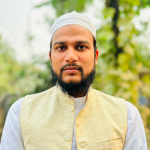
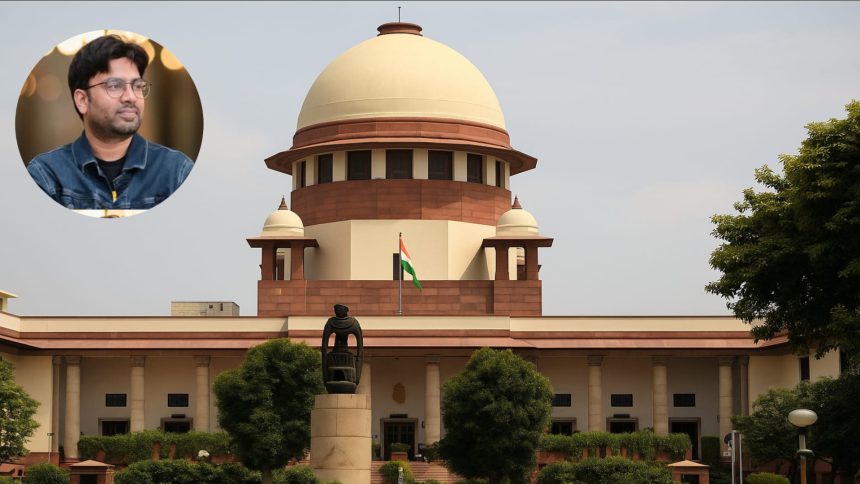
Afroz Alam Sahil is a journalist and author known for his investigative reporting and writings on minorities, waqf properties, and social justice. He is the founder and editor of BeyondHeadlines, an independent online news platform. Sahil has written numerous investigative articles and reports on the management and misuse of waqf properties, and he is currently working on a book exploring the present state of waqf institutions in India.
Ghalib Shams spoke with him in depth for rewaayat.com about waqf and a recent court ruling concerning it. The following are key excerpts from their conversation:
What is your view on the Waqf Act and the recent interim court judgment related to it?
Overall, this interim judgment cannot be considered satisfactory. While some provisions have been temporarily suspended, several others have effectively been upheld, which seems unfair — as though their validity has been accepted without adequate scrutiny. As a result, this judgment has not fully succeeded in safeguarding the fundamental rights of minorities. It has also failed to ease the growing sense of insecurity among Muslims, particularly at a time when the community is deeply concerned about the misuse of state authority.
There is one positive development: the court has curtailed the extraordinary powers granted to the District Collector under Section 3C. However, this has also introduced new ambiguity. The court ruled that an officer above the rank of Collector may conduct an inquiry to determine whether a waqf property is government land. Yet, it simultaneously stated that no revenue officer has the authority to decide ownership — that power lies solely with a judicial or quasi-judicial body, such as a Waqf Tribunal.
This reasoning is confusing. If the officer cannot determine ownership, then why is the inquiry allowed to proceed? Does the officer’s report merely serve as a preliminary opinion that could influence the tribunal’s final decision? These are questions that perhaps only legal experts can answer with clarity.
Why do you think the court exercised such caution?
It’s difficult for me to say with certainty. However, while reading the Supreme Court’s judgment, I noticed that the court repeatedly emphasized that its observations were interim and would not influence the final verdict. On one hand, this judicial restraint is understandable and appropriate in an ongoing case. Yet, the repeated clarifications also create an impression — among both ordinary citizens and those familiar with the law — that the court may be under some political pressure, or is deliberately avoiding taking a firm position on constitutional and legal issues because of the sensitivity of the matter.
Such an approach does not align with the spirit of an independent judiciary, especially when fundamental rights and minority interests are involved. This aspect of the judgment has, understandably, deepened the sense of uncertainty and unease among Indian Muslims. Many within the community are left wondering: if even the judiciary cannot take a clear and decisive stand, then where can justice truly be sought?
What did the court say about “Waqf by User”?
When the Waqf (Amendment) Act 2025 was first challenged in the Supreme Court, Solicitor General Tushar Mehta had assured the bench that there would be no change to the status of “Waqf by User” properties. At the time, his statement appeared to be a strong assurance for India’s Muslims that their historical Waqf by User properties would remain protected.
However, in its recent judgment, the court largely ignored this aspect. What is even more disappointing is that the judgment itself refers to arguments made during the hearings, stating that there has been “large-scale encroachment” of government land under the guise of Waqf by User. The court went on to say that removing this provision to prevent such encroachments could not be considered arbitrary. In effect, the court refused to stay the removal of Waqf by User, reasoning that the step was intended to protect government land.
It is important to note that nearly half of all waqf properties in India fall under the category of Waqf by User. Even where formal documents are missing, revenue records and historical evidence clearly establish their identity and purpose. When a mosque or graveyard has existed for centuries, how can one claim that it is undocumented? Even if a waqf-nama (deed of dedication) has not survived, official records often confirm its long-standing status. Many large graveyards and Eidgahs in towns and villages were historically donated by local landowners — dismissing them as government land simply because no written deed exists is unjust.
Unfortunately, under the new Waqf (Amendment) Act, if a Collector reports that a piece of land is disputed or government-owned, the waqf cannot be registered. The government maintains that this rule is prospective, meaning that previously registered waqfs will remain valid. But the real concern lies with the many unregistered waqfs, which now face the risk of losing protection — particularly in smaller towns and villages where most graveyards are Waqf by User. This could lead to a sharp rise in land disputes.
The crucial question, therefore, is whether the government’s move truly represents legal reform or whether it undermines the religious rights and hereditary properties of Muslims. It may be too early to draw firm conclusions, as the matter is still under judicial review. Once the Supreme Court delivers its final verdict, one can only hope for greater clarity — and fairness — in this regard.
What did the court direct regarding Section 23?
The court did not suspend Section 23 but directed that “as far as possible, the Chief Executive Officer (CEO) of the Waqf Board — who also serves as the Secretary of the Board — should be a Muslim.” At first glance, this may appear to be a reasonable or neutral statement. However, the phrasing also leaves room for the appointment of a non-Muslim officer as the head of the Waqf Board.
This interpretation is concerning, as it runs counter to the religious and cultural sensitivities of the Muslim community. It also raises questions about the appropriate representation and autonomy of a minority religious institution that is meant to manage and safeguard Muslim charitable endowments.
What did the court say about the clause requiring a person to have been a Muslim for at least five years?
The court has temporarily suspended clause (r) of Section 3 of the amended Waqf Act, but has stopped short of declaring it unconstitutional. According to the judgment, the clause will remain suspended until the state government formulates a rule to determine whether an individual has indeed been practicing Islam for at least five years.
The issue, however, is that such a condition effectively enables state surveillance of religious identity, which runs counter to the principle of freedom of religion guaranteed under Article 25 of the Indian Constitution. It raises a troubling question: will the state now decide how “Muslim” a person is? This is a dangerous and deeply ideological precedent — one that risks opening the door to state interference in matters of personal faith and religious practice.
What did the court say about representation? And what is your view on it?
On the surface, the idea of including some Hindu members in waqf institutions might seem positive. One could argue that if sincere and well-intentioned individuals are appointed, their participation could help create a system of checks and balances and promote greater understanding of waqf affairs.
According to the court’s directive, the Central Waqf Council (which has 22 members) may include up to four non-Muslim members, while the State Waqf Boards (which have 11 members) may include up to three non-Muslim members. To some, this may appear as an inclusive and progressive step. However, in practice, it could also prove deeply problematic.
The reality is that in today’s circumstances, the likelihood of truly impartial and well-meaning individuals being appointed is very low. Most appointments tend to reflect the preferences of those in power — and when the intentions of the government itself are in question, it becomes difficult to expect fair representation or genuine reform.
The larger issue here is whether the inclusion of non-Muslims in minority religious institutions undermines their autonomy. Can members of the majority community — especially those affiliated with majoritarian or ideological groups — legitimately take part in the decision-making of a minority religious body? Such involvement risks violating Article 26 of the Indian Constitution, which guarantees every religious denomination the right to manage its own affairs in matters of religion.
The most troubling aspect of this interim order is that the Supreme Court has upheld this provision as constitutional, rather than striking it down. Article 26 clearly protects the self-governance of religious communities, and any law that dilutes this right runs contrary to that principle. By merely placing limits instead of rejecting the provision outright, the court has left open the possibility of interference in minority institutions.
As the saying goes, even a drop of poison can contaminate an entire vessel of milk. Similarly, the inclusion of even a few unsuitable or politically motivated representatives can undermine the integrity and purpose of the entire waqf board.
Has political control harmed the waqf?
Absolutely — that is the undeniable truth. In most states, waqf boards are dominated by members of the political party in power. From nominated members to the chairperson, everyone often shares the same political or ideological affiliation. As a result, waqf institutions have suffered the most damage from within their own governing bodies.
The unfortunate reality is that the waqf boards themselves have contributed significantly to the decline and mismanagement of waqf properties. The Muslim community, too, bears some responsibility, as it has not consistently raised its voice for the protection of waqf assets.
Take something as fundamental as graveyards — even these have been neglected. As a journalist, I have repeatedly reported on how waqf properties, including graveyards, are steadily disappearing across the country. The situation has reached an alarming point: for example, the Haryana Waqf Board once leased out a mosque in Gurgaon to Hindus, at a time when Muslims were being attacked for offering prayers in public spaces nearby.
Today, most waqf boards across various states openly support the government’s amendments to the Waqf Act. Instead of safeguarding waqf interests, they have endorsed changes that directly harm the Muslim community properties. Even worse, many boards have issued subsequent directives that have further weakened the protection of waqf lands and institutions.
The government claims that this Act will benefit Muslims. What is your view?
To understand that, we must first look at the government’s real intention behind introducing these amendments. Where did the idea of changing the Waqf Act originate? It’s worth remembering that the Waqf Act of 1995 was also amended in 2013 — that process took several years, faced opposition, and yet, at that time, the government did engage with the concerns of the community.
But after the change of government in 2014, a new narrative began to spread across the country — a false propaganda campaign branded as “Land Jihad.” Certain groups started claiming that waqf properties represented an enormous landholding, second only to the Railways and the Defence Ministry. Unfortunately, some members of the Muslim community, speaking without full knowledge, repeated similar claims, unintentionally reinforcing this misconception.
The reality, however, is quite different. This idea is based on data manipulation and misleading comparisons. Verified data available online shows that the total land owned by Hindus in just three Indian states far exceeds all waqf properties across the entire country. Yet, the “Land Jihad” narrative was amplified by certain ideological groups, and the government’s messaging has often echoed the same line.
In truth, the underlying goal seems to be the erosion or control of Muslim waqf assets, not their protection. If the government were genuinely concerned about the welfare of Muslims, it would first return the waqf properties that are currently under illegal government occupation — rather than introducing amendments that further weaken Muslim control over their own endowments.
You mentioned that the government itself has occupied waqf properties. Could you elaborate on that?
Yes, of course. This is not merely an allegation — it is a documented fact. Across India, several waqf properties have been occupied by government departments and agencies. According to data obtained from the Central Waqf Council through a Right to Information (RTI) request on July 20, 2020, a total of 18,259 waqf properties, covering 31,594 acres of land, were reported to be under illegal occupation nationwide.
What is even more striking is that, as per the same report, 1,342 of these properties — accounting for 31,594 acres — were specifically in the possession of various government bodies and agencies as of July 2020.
It’s important to note that these figures are incomplete. They do not include data from the Shia Waqf Boards of Gujarat, Telangana, and Uttar Pradesh. If those records were added, the real scale of encroachment would likely be significantly higher, underscoring the seriousness of the issue.
Why is there relatively little media coverage on waqf issues? Is it considered an undesirable topic?
Not at all. The media has reported on waqf, but much of the coverage has been negative rather than balanced or constructive.
One major reason is that the Waqf Boards themselves often generate more negative stories than positive ones. Additionally, some individuals and organizations doing meaningful work related to waqf are either not reaching the media or are overlooked. Unfortunately, the media has at times played a role in amplifying misleading narratives, such as the so-called “Land Jihad” propaganda.
Reporting on waqf is also challenging for several reasons. First, there are significant financial and political interests involved. Journalists who investigate waqf matters can face political pressure, social opposition, and even intimidation from the boards themselves. Second, some Muslim community leaders may prefer to suppress scrutiny to avoid exposing mismanagement or corruption.
As a result, coverage of waqf often takes a back seat. Yet, in reality, this issue is of critical public interest because it directly affects the future and welfare of millions of Muslims across the country.
During your reporting, which story of misuse or corruption of waqf properties shocked you the most?
Sadly, much of my reporting revealed the systematic destruction and neglect of waqf properties. Take Delhi, for example. Information obtained through Right to Information (RTI) requests was alarming: there are 86 waqf properties in Delhi whose monthly rent ranges from just one to eleven rupees. Even more disturbing is the disappearance of graveyards, which has left me deeply concerned that in the coming years, Muslims in Delhi may struggle to find proper burial spaces.
Yet, surprisingly, this issue has received little public attention. For instance, while Muslims in Gurugram (Gurgaon), Haryana, were reportedly being beaten for offering Friday prayers on the streets — a matter that gained international attention — I uncovered another shocking fact. The Haryana Waqf Board itself had leased several mosques, graveyards, shrines, and other waqf properties to non-Muslims.
The numbers are staggering: in Gurgaon alone, there are 35 mosques registered under the Waqf Board. Upon investigation, I found that 21 were illegally occupied by non-Muslims, one mosque had been replaced by a primary school, and another had become a gurdwara. Eleven mosques still existed but were in poor condition, some reduced to ruins. During my visit, I even saw that buffaloes and other animals were being tied up in some of these mosques.
This combination of neglect, misuse, and illegal occupation reveals the urgent need for accountability and protection of waqf properties.
Are these issues not known to Muslim leaders?
Everyone is aware of them, but very few are willing to take action. Unfortunately, many leaders are more interested in being featured in newspapers than in protecting waqf properties. If given the opportunity, some of these same individuals could even end up benefiting from the very mismanagement they publicly decry.
For example, when I decided to document Delhi’s graveyards, the Delhi Waqf Board provided data showing there are 562 graveyards in the city. I compiled a complete list, which is still available on our website. I then asked several Muslim leaders to help, even by just providing someone to ride a bike so we could visit these sites and verify their existence. But no one volunteered.
Disappointing incidents like this occur repeatedly, and this apathy and inaction remain the biggest obstacles in protecting waqf properties.
What positive role could waqf play if used properly?
Waqf is fundamentally an Islamic welfare system, designed to support the weaker sections of society and improve education, healthcare, and other social services. If waqf resources had been effectively utilized, there would be no shortage of schools, and families would not have to purchase land for burials — a financial burden that disproportionately affects ordinary Muslims.
The key to unlocking the positive potential of waqf is to view it not only as a religious endowment but also as a tool for socio-economic development. When waqf income is used transparently for education, scholarships, hospitals, orphanages, and women’s welfare, it can quietly bring about a transformative impact on society.
Why has awareness about waqf not been created?
Awareness depends largely on the media, educational institutions, and civil society. People need to understand that waqf is not merely a system for providing land for mosques or graveyards; it is a dynamic institution that could serve as an alternative to modern welfare mechanisms.
The tragedy is that the positive potential of waqf has rarely been questioned or highlighted. Before the recent Waqf Amendment Act, very few scholars or community leaders spoke about it. Hardly any Friday sermons addressed the subject, and discussions about leveraging waqf for social and economic development were almost nonexistent.
Have the recent activities of Muslim organizations helped raise awareness?
The truth is, the situation remains largely unchanged. Most efforts are limited to social media posts, while very little happens on the ground. What is truly needed is for people to visit their local areas and inquire directly with the Waqf Board: How much land exists? Where is it? What is its condition? Such efforts could uncover many hidden realities.
If every community member took responsibility for protecting the waqf properties in their area, significant change would be possible. I have repeatedly encouraged people to use the Right to Information (RTI) Act to ask these questions. While hundreds expressed interest online or called to ask about the process, hardly anyone has taken practical action.
In your view, what is the biggest obstacle?
Today, the greatest obstacle is the Waqf Board itself. It lacks transparency and accountability. If it functioned honestly, waqf resources could generate sufficient income to run schools, hospitals, orphanages, and even provide fair salaries to Imams.
The problem is that the community has never questioned the Waqf Board directly. Instead, criticism has been aimed mostly at the government, while the individuals appointed to the Board go unchecked. As a result, corruption is widespread in nearly every state Waqf Board.
I believe the time has come for people to hold the Waqf Board and local trustees accountable: How much land exists? How much rent is being collected? How is the income being spent? This responsibility must extend not only to the public but also to religious leaders, who should emphasize the importance of accountability alongside spiritual guidance. If action is delayed, the control and future of waqf properties could easily slip out of our hands.
After this decision, there have been mixed reactions, including condemnation. What is your view?
Condemnation has its place, but condemning alone is not enough. The court’s decision must be examined in terms of both its positive and negative aspects. Legal experts should analyze the ruling to understand its nuances and determine the appropriate legal course of action.
At the same time, the community must reflect on its own role. How honest and responsible are we in managing waqf properties? Criticism rings hollow if individuals themselves occupy waqf land or mismanage resources, while claiming to speak for the welfare of ordinary Muslims. The public often asks: “What is our benefit?” This can only be answered through practical steps and accountability, not statements or rhetoric.
Finally, what is your message?
The simple truth is that the government has exploited our weaknesses, but the real responsibility lies with us. We have never seriously held the Waqf system accountable or created awareness at the local level. Our leaders have often limited themselves to statements, while the public has rarely made an effort to read or understand the Waqf Act.
Regrettably, waqf has never been explained in terms of Sharia principles or social virtues, nor has the importance of accountability been emphasized. If we had paid attention when problems first arose — questioning why rents were so low or why revenues had not increased since independence — much could have been prevented.
My point is simple: the responsibility is ours. Even today, action is possible. If there is any waqf land or property in your area, start by gathering information. File Right to Information (RTI) requests, review records, and raise questions about any irregularities. This is the true way to protect the waqf. Without public vigilance, no law or court ruling can bring meaningful reform. The bitter reality is that a lot has already been lost.
This interview with Afroz Alam Sahil was first published in Urdu. You can read it in Urdu here: rewaayat.com