
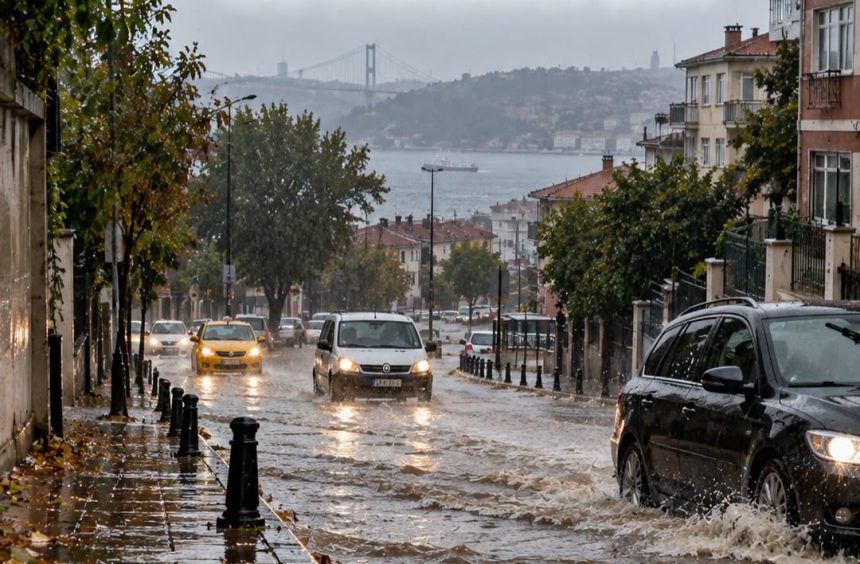
On October 14, 2026, Istanbul experienced torrential rain. At the time, it seemed like nothing more than an ordinary downpour to me. By evening, however, I learned on social media that the city had experienced its heaviest rainfall in 84 years. Flooding affected many low-lying areas. Landslides occurred in several places, while roads, homes, and underpasses were submerged. Vehicles were swept away, and three people lost their lives, with several others reportedly missing. According to the authorities, nearly 3,000 people were evacuated to safety, some of whom were accommodated in government guesthouses. It was only then that I realized the rain I had initially dismissed as ordinary was anything but. Yet there had been no waterlogging anywhere near my home, nor were there any visible signs of trouble on the surrounding streets to suggest just how severe the downpour had been.
On the morning of October 15, several friends called to check on my well-being. After speaking with them, I decided to step outside and see how the surrounding areas had been affected. I saw no signs of trouble. The roads were still damp, but it was hard to imagine that the city had experienced record-breaking rainfall just a day earlier. I was particularly surprised to see municipal workers in various places, busy washing the streets.
Meanwhile, reports in local newspapers revealed that thousands of personnel, rescue teams, and heavy machinery had been deployed while the rain was still falling. Everything, from pumping out floodwater to cleaning the streets, was being carried out with urgency. The aim was to restore normal life as quickly as possible and keep public transport running. According to official figures, 8,564 personnel and 2,325 vehicles and machines were involved in relief and restoration efforts.
Amid all this, one thing caught my attention. Several videos surfaced on social media showing people enjoying the rain. Some were dancing in the streets, getting completely soaked, while others were simply savouring the weather.
On one hand, there was the devastation caused by the rain. On the other, the authorities were working to restore normal life in the city as quickly as possible. It was then that a thought crossed my mind: What happens when it rains where we live?
I remember the rains from my childhood. On many occasions, rainwater would enter my brother’s shop and warehouse, causing losses worth thousands. Here in Türkiye, however, systems are in place to help people recover from such losses, including government assistance and insurance.
Mahinur Özdemir Göktaş, the Minister of Family and Social Services, has announced emergency disaster relief funds for families affected by the heavy rains. The Ministry of Agriculture and Forestry is also assessing the losses suffered by farmers. According to reports, officials are planning to compensate farmers for livestock losses and provide essential supplies, including animal feed, fodder, and greenhouse covers.
I still remember a particular rainy day in Delhi. Shortly after the rain began, I was travelling to Jamia in a rickshaw. Just past the Batla House bus stand, the rickshaw suddenly overturned into the water. I suffered a head injury and scraped my arms and legs. Fortunately, the injury was toward the front of my head.
I remember another incident in Delhi. During a downpour, a friend’s father and brother were on their way to New Delhi Railway Station when a tree fell on their auto-rickshaw on Zakir Hussain Marg. My friend’s father died on the spot. A few days later, his brother also succumbed to his injuries.
These incidents remain etched in my memory and continue to trouble me. That is why, as I see and read about how the authorities in Istanbul responded to such an intense downpour, it is only natural for me to think of our own cities.
I understand that no one can prevent heavy rainfall. Nature is beyond human control. However, better preparedness, coordination among different departments, and timely action can certainly help minimise the loss of life and property. In India, especially in Delhi, such promptness and coordination are rarely seen in the aftermath of heavy rains.
In contrast, Türkiye’s Minister of Environment, Urbanization and Climate Change, Murat Kurum, attributed the heavy rainfall to changing weather patterns driven by climate change. He said cities could no longer rely solely on historical data when preparing for future disasters. He stressed the need for better drainage systems, regular clearing of riverbeds and canals, and a reassessment of flood risks. He also urged central and local authorities to work together to make Istanbul more resilient to disasters.
“These responsibilities can no longer be deferred,” Kurum said emphatically. He stressed the importance of preparing cities for even more severe weather events in the future.
It is worth noting that Kurum is the president-designate of COP31, which is being held in Antalya, Türkiye. I had the privilege of meeting him in my capacity as a journalist at the Istanbul Climate Finance Summit.
Further heavy rain was forecast for Istanbul on Saturday, October 17, and Sunday, October 18. The municipality had already deployed its teams. This showed that the authorities were not only working to deal with the aftermath of the previous rainfall but also preparing for the rain ahead.
After all, the real test of any administration comes when circumstances are difficult. The question is not how heavy the rain was, but how well the authorities had prepared for it and how quickly they responded when the crisis struck.
Rainfall is beyond human control, but preparedness and accountability in dealing with its consequences are firmly in the hands of the administration. I wish we could see the same in India, too!
However, in my view, the experience of the rainfall in Istanbul should not be reduced to a comparison between the administrations of India and Türkiye. It raises a much bigger question, one that cities around the world are grappling with today: in an era of climate change, extreme rainfall, flooding and other natural disasters can no longer be treated as rare exceptions.
In this context, Türkiye’s hosting of COP31 takes on even greater significance. Setting ambitious targets and making bold promises at international climate conferences is important, but their real value will be measured by how effectively they protect the lives and safety of ordinary people.
The swift response on the streets of Istanbul after the downpour made me reflect on a crucial reality: we may not be able to control nature, but protecting human lives in the face of its growing unpredictability is our responsibility. It is also a choice. This is a lesson that leaders around the world must understand.